Does a Free Web Version Cannibalize App Sales? How to Measure It

On this page
Will a free web version hurt my app sales?
It might move some buyers from the app to the web, and it might bring in people who would never have found the app. Which one wins depends on your product, so measure it: it's cannibalization only if your total paying users or revenue (web plus app) go down, not just the app's share. Set a baseline, tag every path from the web to the app, launch in some countries first, and read app sales next to total paying users after four weeks.
Tools that do this
-
Free: App Store Connect shows downloads from web referrers; Google Play's referrer API passes the referrer URL to your app; your web analytics counts signups. You compare them by hand.
-
Web visits, web-to-app installs and app purchases in one view: an MMP. Airbridge Core includes tracking links for web pages and ties app trials and renewals from RevenueCat, Adapty or Superwall to the source that drove them. Try it free for 30 days, then from $40 per month.
What "cannibalize" means here
An indie developer asked this exact question in a widely watched video. The answer depends on which number you look at:
-
App sales can drop while the business grows, because some buyers now pay (or start) on the web.
-
Total paying users is the number that tells you whether the web version took money off the table.
So decide up front: you'll judge the web version on total paying users and total revenue, and use app sales only to see where people moved.
Step 1: Take a baseline (two to four weeks)
Before launch, write down weekly numbers for:
-
App installs, split by source (App Store search, web referrer, ads)
-
App trial starts and new paying subscribers
-
Total revenue and revenue per paying user
-
Branded search volume, if you track it
If your numbers swing a lot week to week, a longer baseline makes the comparison fairer.
Step 2: Tag every path from the web to the app
Once the web version is live, some people will use it and then install the app. You want to see that path, not lose it in "organic."
-
Put a tracking link behind every "Get the app" button, banner and QR code on the web version.
-
On iOS, App Store Connect already separates downloads by source, including web referrer.
-
On Android, Google Play's Install Referrer API lets your app read the referrer URL of the install (Android Developers).
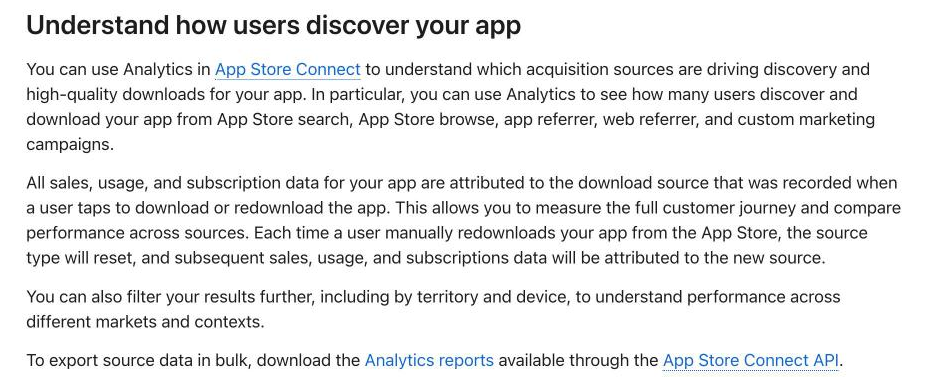
App Store Connect separates downloads by source, including web referrer. Source: Apple Developer.
Want to see how Free web version cannibalize app sales works with your data?
Get hands-on with Airbridge and see real results.
Try It Free →Step 3: Launch in some countries first
A before-and-after comparison can be thrown off by a holiday, an ad push or an app update. A holdout is cleaner: launch the web version in a few countries and keep it closed (or hidden from search) in a few similar ones for four weeks. Then compare how app sales and total paying users moved in each group.
If a country split isn't practical, change one thing at a time and keep other changes (pricing, big ad pushes) out of the test window.
Step 4: Read the result
After four weeks, put two numbers side by side: did app sales go down, and did total paying users go up?
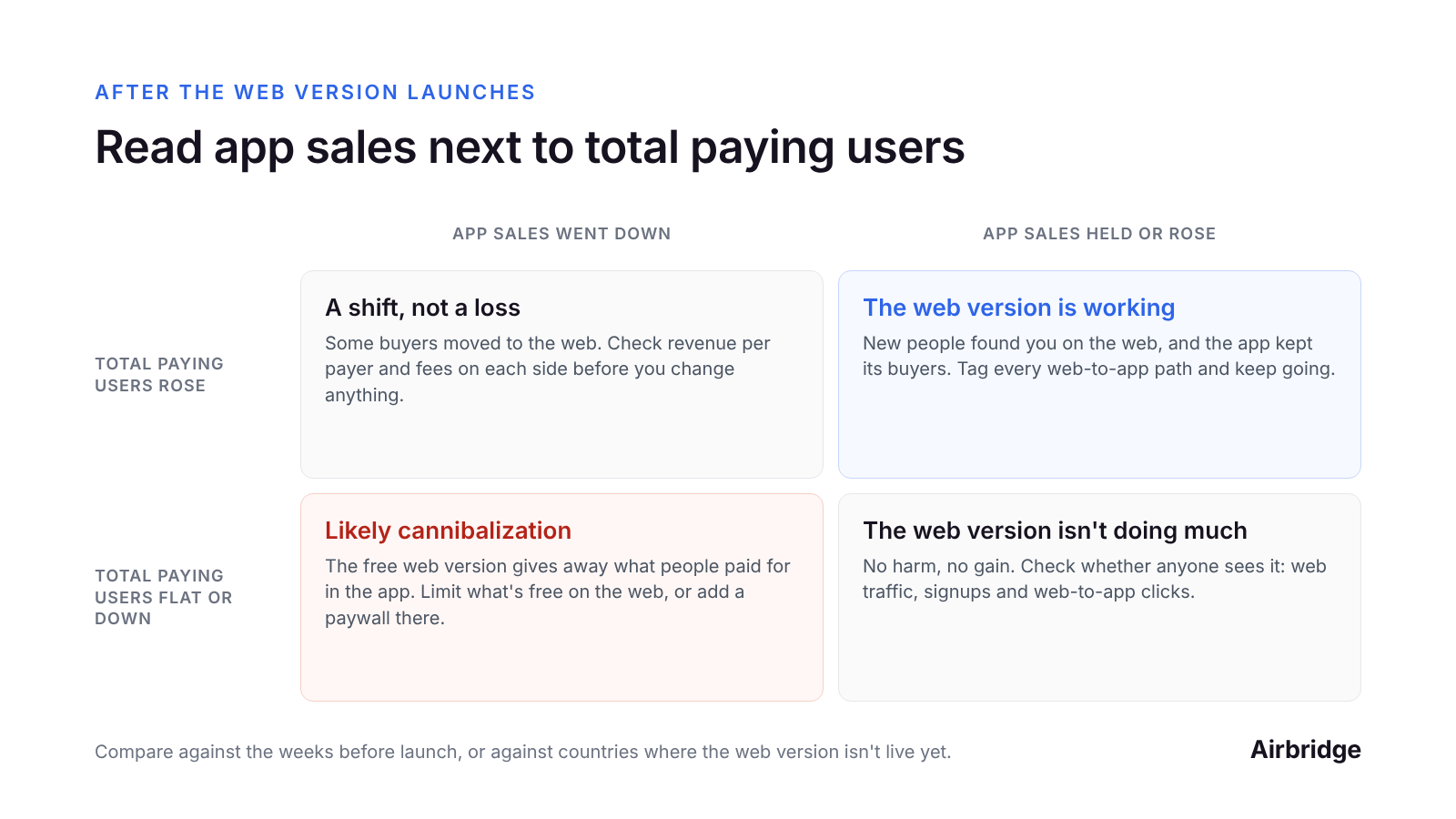
How to read app sales next to total paying users after launch.
-
Likely cannibalization (app sales down, total flat or down): the free web version gives away what people used to pay for. Limit what's free on the web, add a paywall there, or point the web version at a different job (for example, read-only access or sharing).
-
A shift, not a loss (app sales down, total up): look at revenue per paying user and costs on each side before you change anything.
-
Working (app sales held, total up): keep it, and keep tagging web-to-app paths so you can see what drives them.
-
Not doing much (no change): check whether anyone actually sees the web version before you judge it.
Common questions
Does a web version hurt App Store rankings?
Apple describes how search ranking works only in general terms. What you can measure is App Store search downloads before and after launch; if they hold steady, the web version isn't pulling people away from the store.
How long should I test a free web version?
At least four weeks after launch, plus a baseline before. Subscription decisions take a trial length or longer to show up.
Should the web version be free or paid?
That's the question the test answers. Many apps start with a limited free web version and keep the full experience behind a subscription that works on both.
How do I track users who sign up on the web and later install the app?
Use a tracking link behind every "Get the app" button, and log the same user ID on the web and in the app so you can join the two.
The bottom line
A free web version cannibalizes your app only if total paying users or revenue fall. Baseline first, tag every web-to-app path, launch in some countries first, and read app sales next to the total.
When you want web visits, web-to-app installs and app purchases in one place, Airbridge Core includes tracking links for web pages and ties trials and renewals to the source that drove them. The Core Plan is built for subscription apps: try it free for 30 days, then from $40 per month.
Ready to transform your mobile growth?
Learn how Airbridge helps leading brands measure and optimize every touchpoint.
“While working with Airbridge, we have learned that MMM is a crucial attribution model for post-privacy era marketing to predict future performance and optimize the budget.”