Creator Brief Template for Apps: Make Conversions Trackable Without a Hard CTA

On this page
A creator brief template that keeps conversions trackable
Creators know their audiences don't like ads. So most keep the app mention natural. One founder who works with several creators described what that means in practice: "most creators are not doing hard CTAs. There's a link in bio for most but it doesn't drive traffic."
That isn't a creator problem. A marketer who studies creator formats put it well: "it isn't creators job to bring you customers. It's their audience but you have to provide the right brief and format for their audience to convert."
In short
-
Don't ask for a hard sell. Brief the small details that let viewers find you and let you count them:
-
Say and show the app name
-
One soft call to action
-
A link where it can be tapped
-
A code only if it unlocks something
-
Posting dates spaced apart
-
Clear ad disclosure
-
-
Measure with a link, an onboarding question and the lift after each post.
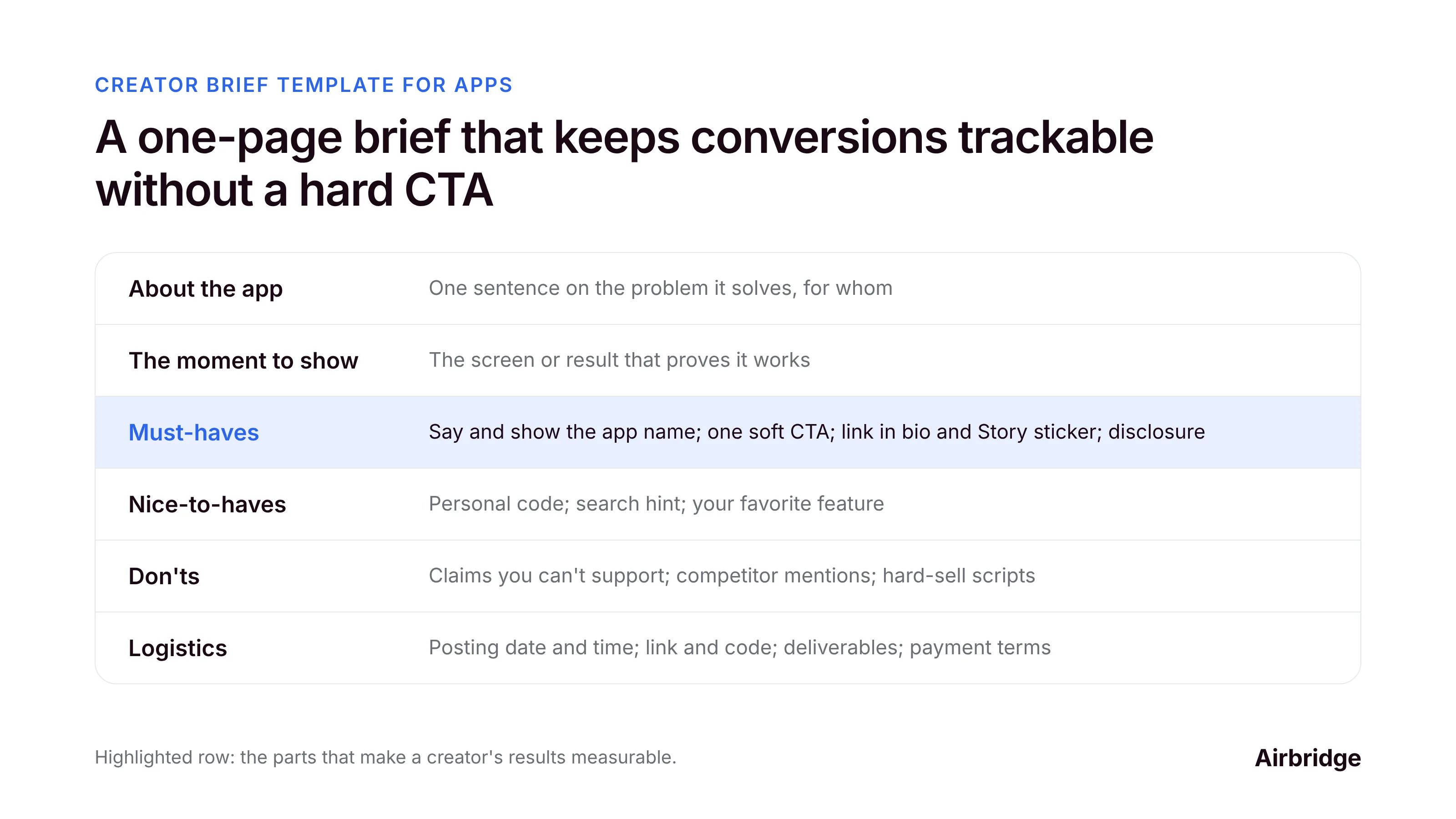
A simple brief template
| Section | What to include |
|---|---|
| About the app | One sentence on the problem it solves, for whom |
| The moment to show | The screen or result that proves it works |
| Must-haves | Say and show the app name; one soft CTA; link in bio and Story sticker; disclosure |
| Nice-to-haves | Personal code; search hint; your favorite feature |
| Don'ts | Claims you can't support; competitor mentions; hard-sell scripts |
| Logistics | Posting date and time; link and code; deliverables; payment terms |
The rest of this guide explains each must-have and why it matters for tracking.
Why the brief decides what you can measure
Most viewers who act on a creator video don't tap a link. They remember the app and search for it later. If they can't remember the name, or spell it, they can't find you, and you can't credit the creator. A good brief makes the search path easy and leaves a trace for each path you can track.
Want to see how Creator brief template for apps works with your data?
Get hands-on with Airbridge and see real results.
Try It Free →The trackable creator brief: a checklist
1. Make the app name unmissable
-
Say the exact app name out loud at least once.
-
Show it on screen as text, ideally with the App Store or Google Play icon.
-
If the name is hard to spell or shared with other apps, add a search hint: "search [App name] [category]".
2. One soft call to action
Ask for one natural line, not a pitch. For example: "It's called [App name], it's free to try," or "Link's in my bio if you want to try it." One clear next step beats three.
3. Put the link where it can be tapped
Links in TikTok and Instagram captions and comments aren't clickable, and YouTube Shorts descriptions and comments don't have clickable links either. Ask for:
-
A tracking link in the creator's bio for the campaign period.
-
An Instagram Story with a link sticker on posting day.
-
For long-form YouTube, a link in the description.
4. Use a code only if it unlocks something
A personal code helps catch people who search, but only if typing it gets them something, like a longer trial. Ask the creator to say and show it. Expect codes to undercount, as we explain in our post on creator promo code tracking.
5. Show the app doing its job
The best-converting creator videos usually show the app solving a real problem in the first seconds, in the creator's own words. Give creators the problem and the moment to show; let them choose the words.
6. Agree on posting dates
Space creators at least three to four days apart, so you can read each post's effect separately. Get the posting date and time in writing.
7. Clear disclosure
Paid creator content needs to be disclosed clearly. In the US, the FTC explains what creators should do in its guide Disclosures 101 for Social Media Influencers. Use the platform's paid partnership label too. Clear disclosure protects you and the creator.
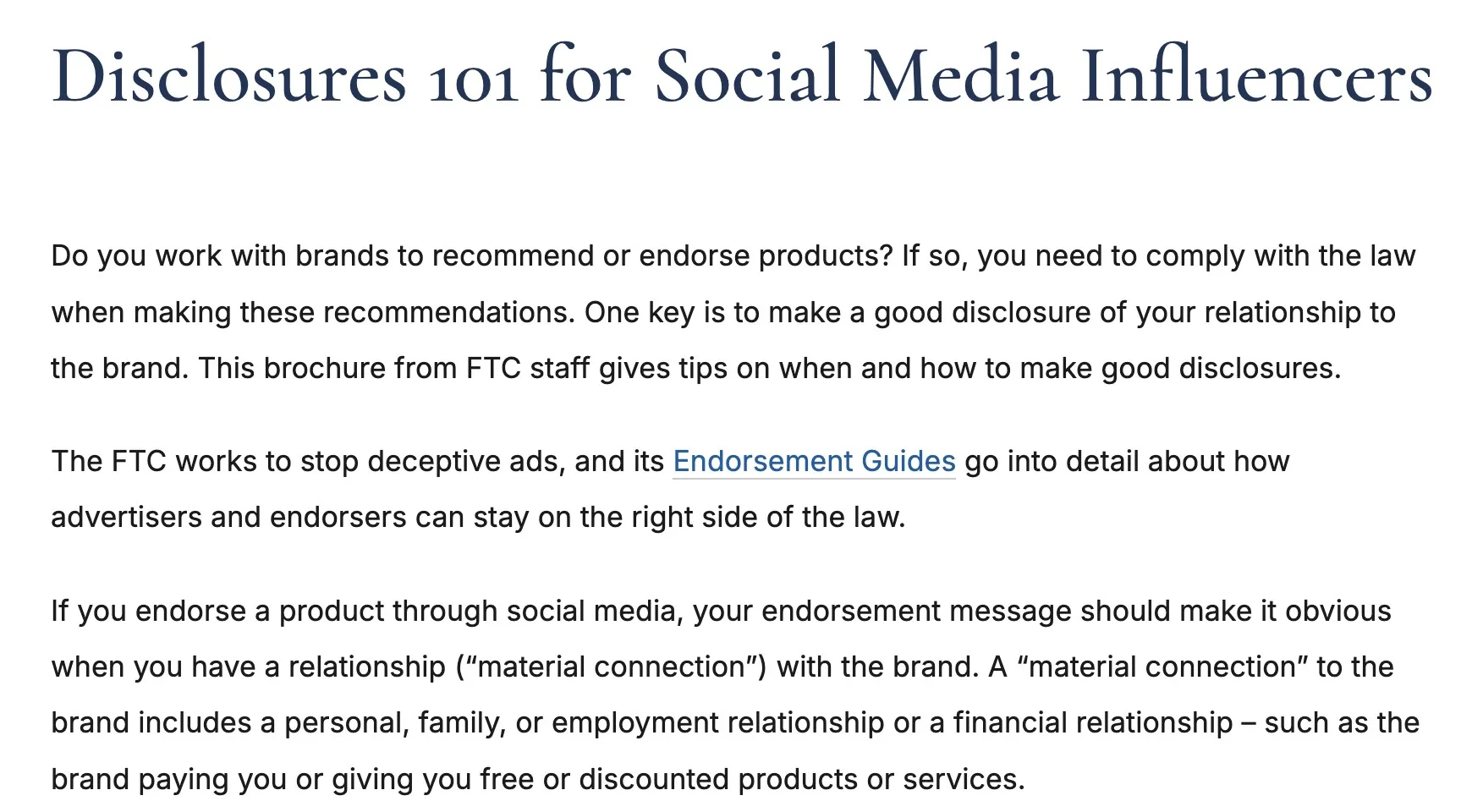
The FTC's Disclosures 101 guide asks creators to make any material connection with a brand obvious, such as payment or free products. Source: Federal Trade Commission
How to measure the result
After each post, read three signals: link installs and trials, mentions in your onboarding question ("Where did you hear about us?"), and the lift in trial starts over the next seven days. We cover how they fit together in Creator Attribution for Apps: How to Credit Installs When Viewers Skip the Link.
Creator brief FAQ
What should a creator brief for an app include?
The problem the app solves, the moment to show on screen, the exact app name to say and show, one soft call to action, link placement, an optional code, posting dates and disclosure rules.
Should creators use a hard call to action for apps?
Usually not. A natural mention with the app name said and shown often works better and feels more authentic. One soft, clear next step is enough.
Where should creators put app links?
In their bio and in an Instagram Story link sticker. Links in TikTok and Instagram captions and comments, and in YouTube Shorts descriptions and comments, aren't clickable. Long-form YouTube descriptions can carry links.
Do creators need to disclose paid app promotions?
Yes. Paid content should be clearly disclosed. In the US, see the FTC's guidance for influencers, and use each platform's paid partnership label.
How do I measure a creator video if few people tap the link?
Combine the link with an onboarding question and the lift in trial starts after the post, and compare creators on cost per trial and cost per subscriber.
Copy, adapt, send
You don't need creators to sell hard. You need them to make your app easy to find and easy to count. Brief the name, one soft CTA, a tappable link, an optional code, spaced dates and clear disclosure, then measure with three signals.
Airbridge gives each creator their own tracking link and shows installs, trial starts, subscriptions and revenue per creator in one dashboard, across iOS and Android. The Core Plan is built for subscription apps, and you can try it free for 30 days, then from $40 per month.

Ready to transform your mobile growth?
Learn how Airbridge helps leading brands measure and optimize every touchpoint.
“While working with Airbridge, we have learned that MMM is a crucial attribution model for post-privacy era marketing to predict future performance and optimize the budget.”