Bot Clicks on Tracking Links: Clean Your Click Data Before You Judge a Creator


On this page
Why bot clicks distort creator results
A creator's link shows 300 clicks. Installs: 12. Did the audience lose interest between tap and store, or were many of those clicks never people at all?
Often it's the second. One founder who checked his numbers found that "most raw clicks turned out to be bots." We see it in our own data too: in a small batch of outreach links we sent last month, 4 of 9 raw clicks came from our own tests and automated link previews, not from the people we wrote to.
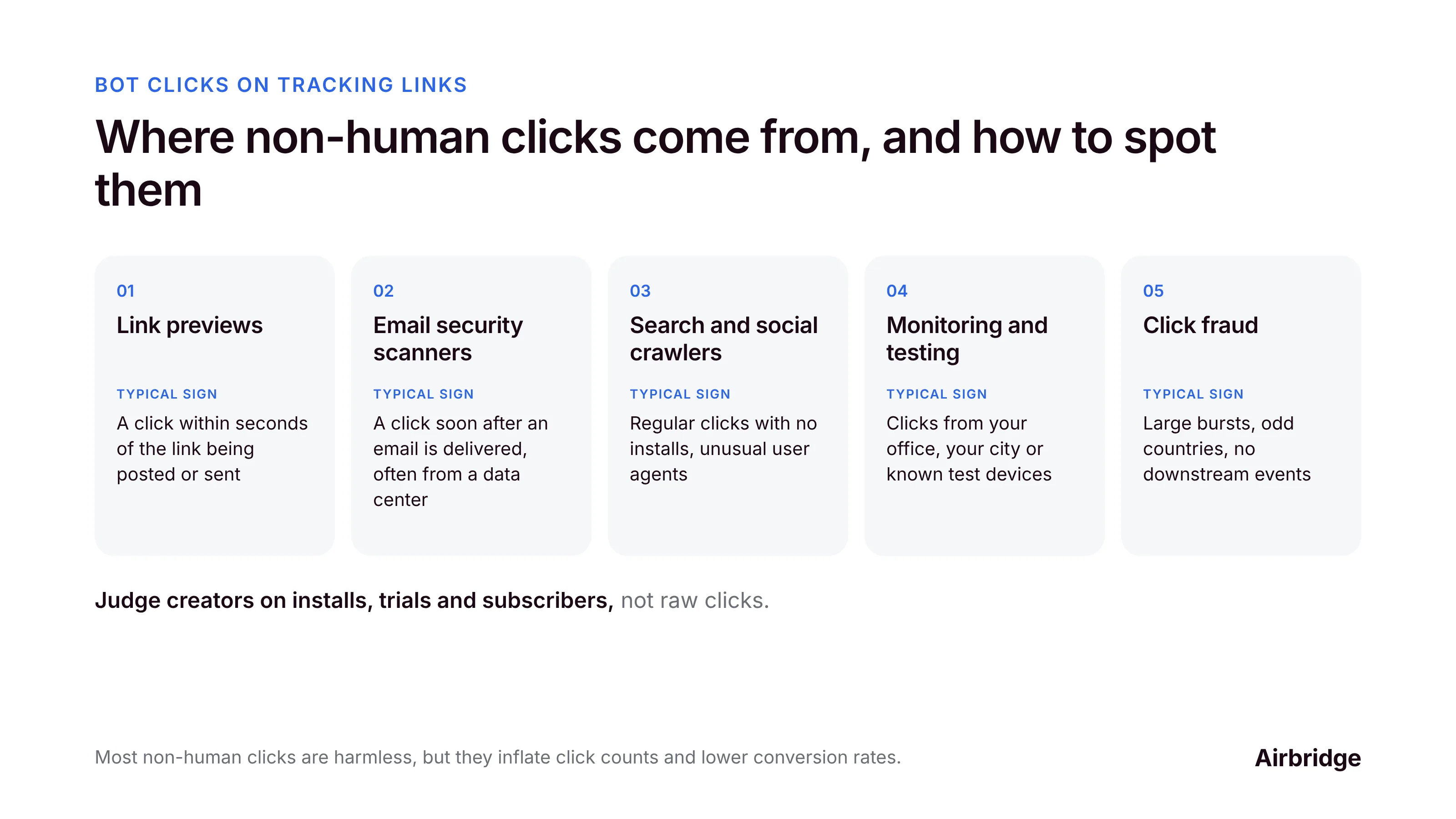
Where non-human clicks come from
| Source | What happens | Typical sign |
|---|---|---|
| Link previews | Messaging apps and social platforms fetch a link to build a preview card | A click within seconds of the link being posted or sent |
| Email security scanners | Corporate email systems open every link to check it's safe | A click soon after an email is delivered, often from a data center |
| Search and social crawlers | Bots index pages that contain your link | Regular clicks with no installs, unusual user agents |
| Monitoring and testing | Your team, your QA, uptime checks | Clicks from your office, your city or known test devices |
| Click fraud | Deliberate fake clicks to inflate results | Large bursts, odd countries, no downstream events |
Most non-human clicks aren't malicious. They're a side effect of how the internet checks and previews links. They still distort click-based reports.
Why clicks are the wrong scoreboard
Even human clicks are a weak signal for creator value. Many viewers search the App Store instead of tapping, and some who tap never install. Clicks sit at the top of the funnel, where noise is highest and value is lowest.
The numbers that matter are further down: installs, trial starts, paying subscribers and cost per subscriber. Those are much harder to fake by accident.
How to clean click data when you do read it
-
Exclude your own tests. Tag internal test devices, or note the times you tested each link.
-
Ignore clicks within seconds of posting or sending. These are usually previews or scanners.
-
Watch for data-center traffic. Clicks from cloud hosting providers are rarely people browsing.
-
Check geography. Clicks from countries the creator doesn't reach deserve a closer look.
-
Look for bursts. Dozens of clicks in a minute with no installs is a red flag.
-
Compare click-to-install rates across creators. A creator with far more clicks per install than everyone else needs a closer look.
Many attribution tools apply some of these filters automatically, but it's still worth knowing what's in your numbers.
Want to see how Bot clicks on tracking links works with your data?
Get hands-on with Airbridge and see real results.
Try It Free →What to put in creator reports instead
| Metric | Why it's better than clicks |
|---|---|
| Installs from the link | A real device installed the app |
| Trial starts | A person showed intent to pay |
| Paying subscribers | The outcome you pay creators for |
| Cost per subscriber | Compares creators on value, not volume |
Add onboarding survey mentions to catch people who searched the store instead of tapping, so creators with "low clicks" aren't undervalued.
Key points
-
Link previews, email security scanners, search crawlers, monitoring tools and your own tests all register as clicks.
-
Don't judge creators on clicks. Judge them on installs, trial starts and subscribers.
-
When you do read clicks, filter out obvious non-human traffic and your own tests first.
Bot clicks FAQ
Why do my tracking links show clicks but no installs?
Often because many clicks aren't people: link previews, email scanners, crawlers and your own tests. Some real visitors also leave the store page without installing. Judge links on installs and trials, not clicks.
Do link previews count as clicks?
They can. When a messaging app or social platform builds a preview, it fetches the link, which many systems record as a click.
Do email security scanners click links?
Many corporate email systems open links in incoming emails to check them, which can register as clicks shortly after delivery.
How do I stop bots from inflating my creator link clicks?
You can't stop all of them, but you can filter tests, instant clicks, data-center traffic and bursts, and you can judge creators on installs, trials and subscribers instead.
Is a high click-to-install gap a sign of fraud?
Not necessarily. It's more often previews and scanners. Look at timing, geography and bursts before drawing conclusions, and compare with other creators.
Judge creators on what happens after the click
Clicks are the noisiest number in creator marketing. Clean them before you read them, and never use them to decide who to renew. Installs, trials and subscribers tell you who actually brought value.
Airbridge follows each creator link through install, trial start and subscription, so your creator reports start from outcomes, not raw clicks. The Core Plan is built for subscription apps, and you can try it free for 30 days, then from $40 per month.
Ready to transform your mobile growth?
Learn how Airbridge helps leading brands measure and optimize every touchpoint.
“Airbridge understands the essence of what it has to offer as an MMP. Its objective, transparent, and accurate performance analysis allows marketers to realize the true impact of their efforts.”