
Death Clock Revenue & Ads
A longevity app that predicts your death date from health data and a blood test, then suggests habits to add years.
 Hyunjong Choi
Published Oct 19, 2026Updated Oct 19, 202610 min readPricing play
Est. monthly revenue
$41K
↑ 229.7% vs prev. period
Downloads / month
19K
↑ 215.7% vs prev. period
Rating
4.8
17.4K ratings · Health & Fitness
Meta ads running
39
228 found · median 28
Death Clock revenue and downloads trend
Est. monthly revenue
$44K ↑ 258.9% in 90 days
Jul 22, 2026: $12KOct 18, 2026
Monthly downloads
20K ↑ 238.5% in 90 days
Jul 22, 2026: 5.9KOct 18, 2026
Daily third-party estimates, 89 days ending Oct 18, 2026. Revenue changed +259% and downloads +238% over the period. Meta ads live went from 29 to 44 between Aug 31, 2026 and Oct 17, 2026.
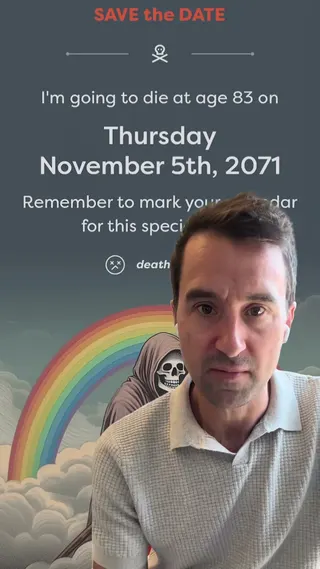
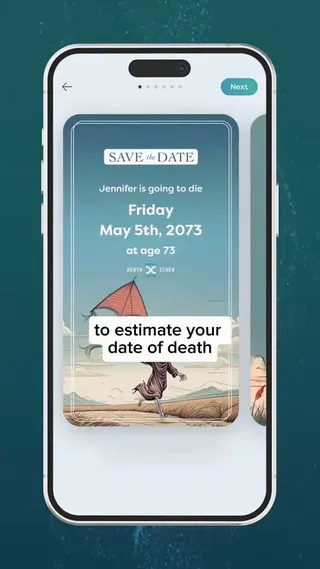
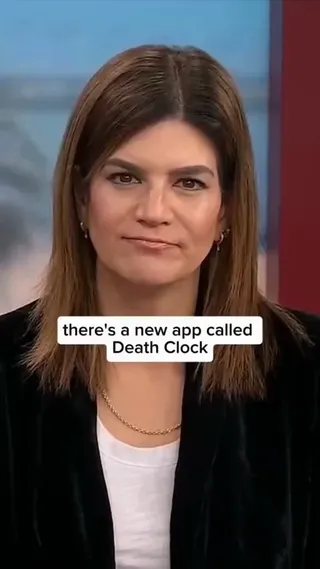
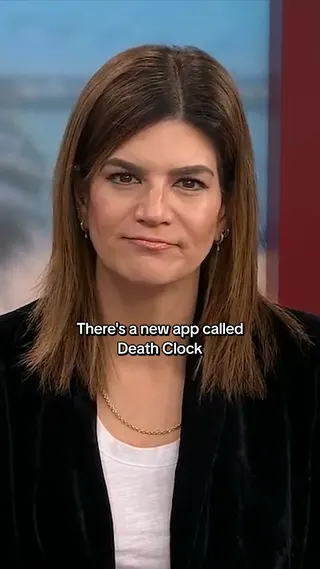
Death Clock Meta ads: 39 active, longest running 43 days
Top 13 by days live out of 228 found (13 video and 0 image creatives). Tap any one to open the original in the Meta Ad Library.
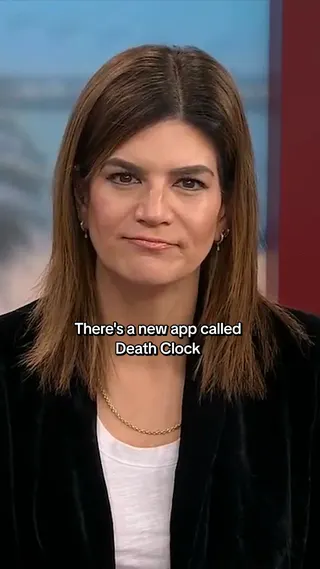
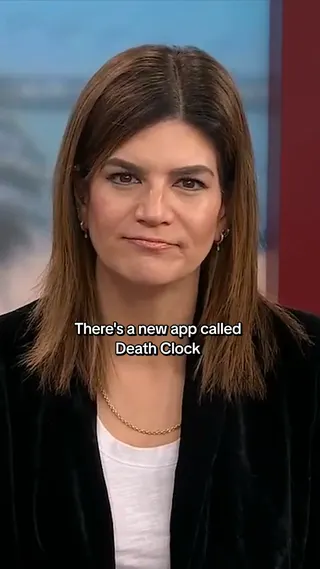
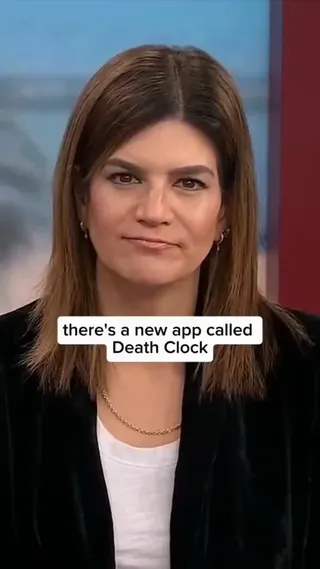 #143 days liveApp StoreAd copy“Death Clock tells you your death date, then shows how many years you could add. Free blood test to start.”Why it worksDeath Clock tells you your death date, then how many years you could add, free blood test; video, 43 days.
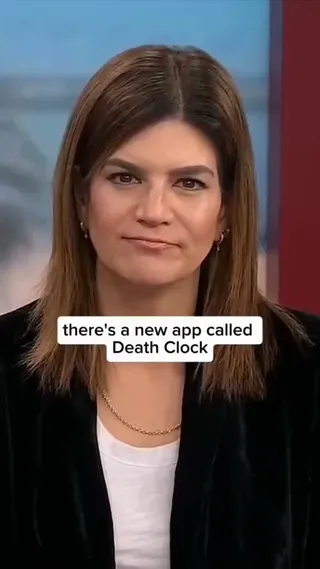 #243 days liveApp StoreAd copy“Death Clock tells you your death date, then shows how many years you could add. Free blood test to start.”Why it worksSame death date and free blood test line on a second video to the App Store; 43 days.
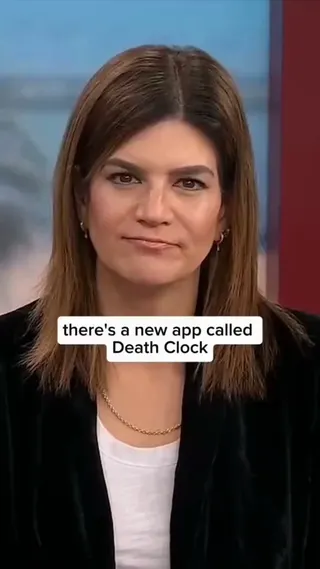 #343 days liveApp StoreAd copy“Death Clock tells you your death date, then shows how many years you could add. Free blood test to start.”Why it worksThird video under the death date hook, linking to the App Store; 43 days live.



10 more Meta ads are locked
Unlock freeAds from the Meta Ad Library as of Oct 16, 2026. Store data from the App Store.
Your Death Date, A Free Blood Test, Then A Membership
Death Clock is a longevity app from Most Days Inc that predicts your death date and suggests ways to add years. As of Oct 2026 it makes an estimated $41K a month on an estimated 19K downloads. Every top ad says Death Clock tells you your death date, then offers a free blood test to start, and estimated revenue rose 258.9% over 89 days.
Key takeaways
- All 13 top Meta ads use one line, your death date, how many years you could add and a free blood test to start, all to the App Store.
- Memberships cost $9.99 a month or six yearly prices from $39.99 to $99.99, including a $99 Baseline with a 3-Day Trial and a $49/yr Digital Only plan.
- The cheapest annual costs 33% of 12 monthly payments, and yearly prices sit 2.5x apart.
- It runs 39 active Meta ads, 1.4x the Health & Fitness median of 28, plus 593 Apple Search Ads creatives.
- Of 200 recent reviews, 97 (48.5%) mention paying and 83 are negative; 145 are one-star, many about a $99 charge after the trial.
Full teardown
Unlock 10 more Meta ads
Unlocked. Everything on this page is open now.
What Death Clock does differently
A morbid hook that converts
13 of 13
top ads use the death date line
Digital, AI and lab tiers
2.5x
spread between yearly prices
Trial charges in reviews
48.5%
of 200 reviews mention price or subscription
The measurement gap
258.9%
estimated revenue growth over 89 days
1. A morbid hook that converts
Death Clock tells you your death date, then shows how many years you could add. Free blood test to start. That single line runs on all 13 top ads, every one a video to the App Store, live for 42 to 43 days. The hook works on curiosity and fear in one sentence, then turns hopeful with years you could add, and a free blood test removes the cost of trying. Live ads rose from 29 to a 101 peak on Sep 20 before settling at 44. A provocative question, a hopeful answer and a free first step get the install, but the follow-through has to match the promise.
2. Digital, AI and lab tiers
Ten purchases carry 7 distinct prices across several memberships. Death Clock AI Membership comes monthly at $9.99 or yearly, and yearly prices run $39.99, $49.99, $59.99, $69.99, $79.99 and $99.99, a 2.5x spread. Names spell out the tiers: $49/yr Digital Only (Annual) and a $99 Baseline, 3-Day Trial, which pairs the blood test with a membership. The cheapest year costs 33% of 12 monthly payments. That ladder yields an estimated $2.16 per download, and revenue rose from $12K to $44K over 89 days. The digital versus lab split gives two price points, but the trial has to say clearly what it renews into.
3. Trial charges in reviews
The blood test offer leaves a trail in reviews. Of the latest 200, 97 mention price, trial or subscription and 83 of those are negative, and 145 are one-star. One reviewer says $99 was taken before they could find a cancel button; another says the app forces a paid renewal at the end of setup. A few are positive, praising that the app gives a result before asking for a monthly fee, unlike weight loss apps. The store rating is still 4.8 across 17.4K ratings. A smaller app with a trial tied to a physical test should show the renewal price on the same screen as the free offer.
4. The measurement gap
Death Clock grew estimated revenue 258.9% in 89 days with one death date hook and a free blood test, plus 593 Apple Search Ads creatives. The question is which source brings a member who renews the $49 digital or $99 baseline year, rather than one who takes the free test, gets charged and files a dispute.
How much does Death Clock cost?
10 in-app purchases, 7 distinct prices, annual plans from $39.99 to $99.99. Prices as listed on the US App Store, Oct 16, 2026.
| Monthly | $9.99 |
|---|---|
| Annual | $39.99 · $49.99 · $59.99 · $69.99 · $79.99 · $99.99 |
| Other | $99.99 |
Death Clock vs the Health & Fitness median
| Death Clock | Median | |
|---|---|---|
| Est. monthly revenue | $41K | $60K |
| Downloads / month | 19K | 20K |
| Meta ads running | 39 | 28 |
| Rating | 4.8 | 4.7 |
| Lowest annual price | $39.99 | $49.99 |
Median of 147 Health & Fitness apps with active Meta ads in our set. See the Health & Fitness hub ›
What Death Clock users say about paying
Of the 200 latest reviews, 97 (48.5%) mention price, trial or subscription and 83 of those are negative, mostly about trial charges near $99 and no clear way to cancel.
Latest 200 US reviews, Apr 20, 2025 to Oct 14, 2026
Mention price, trial or subscription
48%97 of 200 reviews, 83 of them 1 or 2 stars
I have a fair bit of health anxiety and guilt about lifestyle factors within my control (I drink and smoke and I mostly hate vegetables! sorry!) so I tried this…
Been giving all my data to weight loss apps, but they all make you sign on for $30/mo or so before they tell you when you’ll lose to your goal. DC gives you it …
How to measure a playbook like Death Clock's
Death Clock runs one hook with a free blood test and sells six yearly prices, so the useful number is which source brings a member who renews.
- 01
Connect RevenueCat to see revenue by channel
Every purchase and renewal joins the install it came from, so each channel shows real revenue, not only installs.
- 02
Compare markets, not only campaigns
With several price points, the same campaign earns different revenue per country. Break revenue down by country and channel together.
- 03
An annual buyer and a monthly buyer look the same at install. Retention by channel shows which source keeps paying.
Measure this on your own app with Airbridge Core
From $40+/mo · 30 days free · no sales call
How we built this teardown
- Revenue and downloads are third-party app intelligence estimates as of Oct 16, 2026. Store intelligence estimates for a single app can be off by 30% or more. Treat them as a range, not a figure from the developer. Daily revenue and download series cover 89 days ending Oct 18, 2026.
- Ads come from the public Meta Ad Library. "Days live" counts days since an ad first appeared. Spend and audience breakdowns start from Meta's EU transparency figures; country splits outside the EU are modeled.
- Prices, ratings and ranks come from the App Store (US storefront) on the same date. Prices differ by country and by paywall offer. Review stats use the latest 200 US reviews from Apple's public review feed.
- Category medians are computed across 147 Health & Fitness apps with active Meta ads in our set of 860 subscription apps.
- Written by Hyunjong Choi. Ads, prices and estimates are refreshed every 30 to 90 days. Updated Oct 19, 2026.
Top Health & Fitness apps by estimated revenue
All 110 ›| # | App | Est. revenue / mo | Ads live |
|---|---|---|---|
| 1 |  StravaStrava Inc. | $15M | 330 |
| 2 |  AllTrailsAllTrails, Inc. | $6M | 166 |
| 3 |  RunnaStrava Inc. | $4M | 1,100 |
| 4 |  CalmCalm.com, Inc. | $3M | 659 |
| 5 |  Cal AIViral Development LLC | $2M | 823 |
| 117 | Death ClockMost Days Inc | $41K | 39 |
Similar apps
 Catzy
 Speediance
 Gymproluxe
 RelaxWatch
Frequently asked questions about Death Clock
How much does Death Clock make?
Death Clock makes an estimated $41K a month as of Oct 2026, 0.7x the Health & Fitness median of $60K, or an estimated $2.16 per download. These are third-party estimates, not figures from Most Days Inc.
How much does Death Clock cost?
Memberships cost $9.99 a month or $39.99 to $99.99 a year on the US App Store, including a $99 Baseline with a 3-Day Trial.
How many ads does Death Clock run?
It has 39 active Meta ads out of 228 found, 1.4x the category median of 28, plus 593 Apple Search Ads creatives.
How fast is Death Clock growing?
Over 89 days estimated revenue rose 258.9%, from $12K to $44K, and estimated downloads from 5.9K to 20K.
Is the Death Clock blood test free?
Its ads offer a free blood test to start, and the price list includes a $99 Baseline plan with a 3-Day Trial.
What do reviews say about Death Clock?
The latest 200 reviews average 1.84 stars with 145 one-star ratings, mostly about charges. The store rating is 4.8 across 17.4K ratings.
Who makes Death Clock?
Most Days Inc makes Death Clock. It launched on May 28, 2024, is 29 months old and was last updated on Oct 8, 2026.
Try Airbridge Core free (no sales call)
The install is visible, the subscriber is not. Airbridge Core closes that gap: connect Meta, TikTok, Google and Apple Ads, add one tracking link per creator, plug in RevenueCat, Superwall or Adapty, and each campaign shows revenue instead of installs. The Core plan starts at $40 a month after 30 free days. Start your free trial.
Start Core free
Hyunjong Choi LinkedIn
Go-to-market, Airbridge Core
Works on go-to-market for Airbridge Core, the self-serve attribution plan for subscription apps. Writes these teardowns from public App Store data, the Meta Ad Library and third-party estimates.
About Airbridge
Airbridge is a mobile measurement partner for Meta, Google, TikTok and Apple Ads, with native RevenueCat, Superwall and Adapty integrations. Subscription teams like NOICE cut measurement setup time by 75% after switching.