NOICE
Subscription & AI AppsAbout NOICE
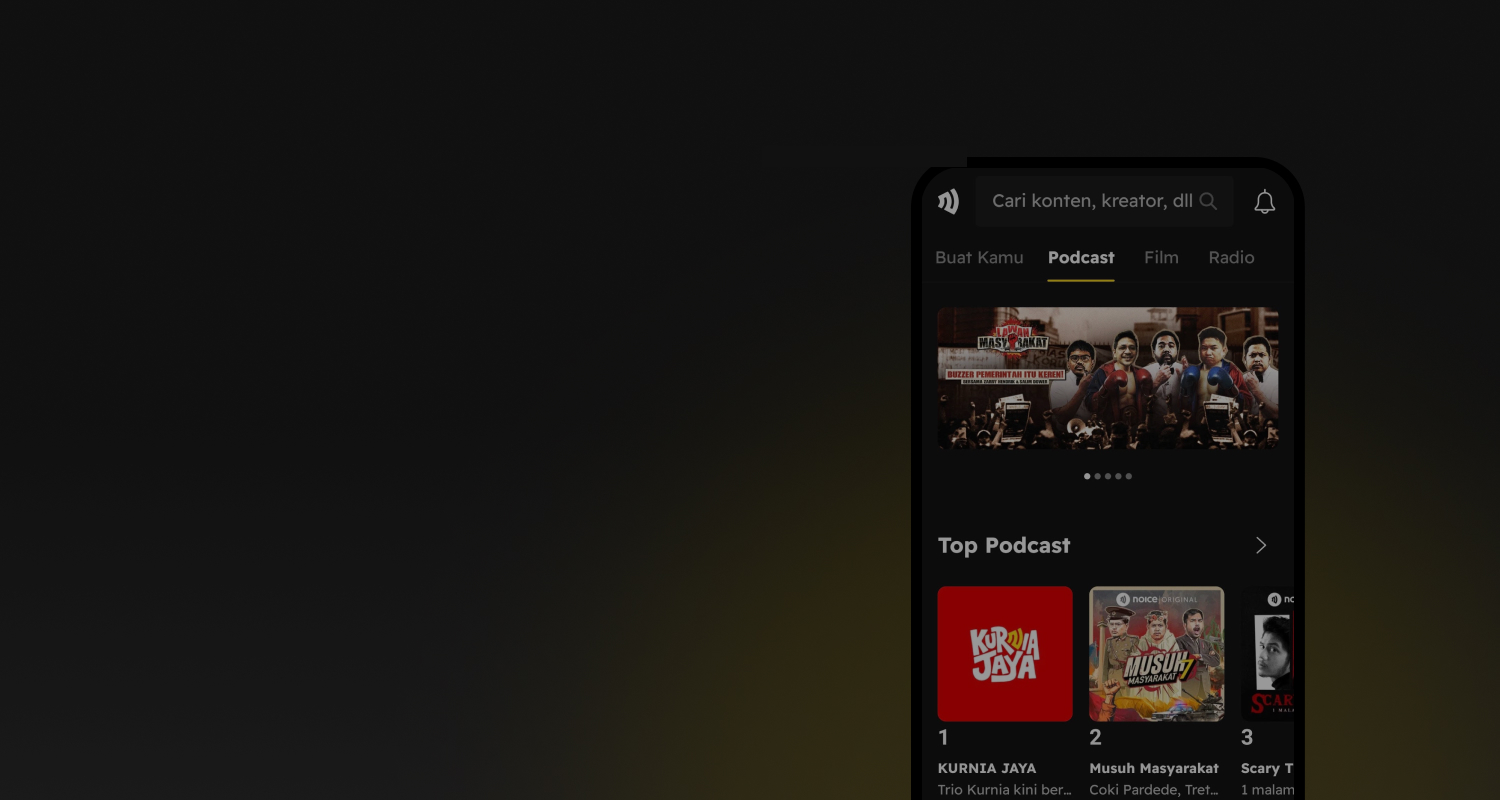
NOICE is an Indonesian audio and video platform with more than 5 million app downloads and over 10,000 titles, including podcasts, audiobooks, audio series, films, and radio. Users can subscribe to the full original catalog or buy individual titles.
Faiz, Growth Manager on NOICE's Product team, runs performance marketing across Meta, TikTok, and Google Ads. His role also covers attribution, event taxonomy, CRM lifecycle, and BigQuery reporting.
To measure campaign performance, NOICE needed to connect acquisition data with what users did and spent inside the app. But getting that measurement setup ready had previously required significant time and engineering effort.
The Challenge: Six Weeks to Get Measurement Running
NOICE's previous measurement implementation took roughly six weeks end to end and involved around five people.
The SDK work itself was not the main bottleneck. Most of the time went into:
-
Back-and-forth on event definitions
-
Vendor support cycles
-
Debugging attribution numbers that did not match
-
Finding additional gaps after go-live
Deep link and re-engagement handling was not fully implemented, so some retargeting conversions were not attributed where they should have been.
Revenue also needed more structure. Content purchases, subscriptions, and coin transactions were flowing into the same bucket, without currency normalization or safeguards against bad values.
Even after the initial implementation, NOICE still had work to do before the data was ready to use with confidence.
The Solution: Core Setup in Days With One Engineer per Platform
When NOICE evaluated Airbridge, two things mattered most: how much of the technical plumbing the SDK handled natively, and whether the documentation was clear enough for engineers to work independently.
Airbridge's SDK handled deferred deep links, deep link handlers, push token registration, uninstall tracking, and SKAN configuration out of the box.
The guides also mapped cleanly onto a standard event and revenue model, so NOICE's engineers did not have to reverse-engineer how the integration was intended to work.
The team assigned roughly one engineer to Android and one to iOS, with both platforms running in parallel.
Each engineer wrapped the Airbridge integration behind one internal helper for their platform and rolled it out across the app's modules.
The implementation moved quickly:
-
iOS: core SDK setup in about 1–2 days
-
Android: SDK plumbing itself in a couple of days
-
Broader Android integration: about a week and a half from kickoff to core go-live
Most of the additional Android time went into NOICE's own event and revenue modeling, not the Airbridge SDK.
Compared with other measurement and analytics SDK integrations of similar scope, NOICE estimates that Airbridge was about 75% faster.
The team also completed the core integration without pulling in additional developers or needing hands-on support from Airbridge.
More Time for Event and Revenue Design
Because the SDK setup was quick and mostly self-serve, NOICE could spend more of its implementation time on the data model itself.
The team:
-
Normalized revenue to Indonesian rupiah (IDR)
-
Added safeguards against bad revenue values
-
Separated content purchases, subscriptions, and coin transactions
-
Refined its event taxonomy
This meant NOICE went live with clean, attribution-ready revenue data instead of having to fix data quality later.
“Because the SDK setup was quick and self-serve, we could spend our time on what actually determines measurement quality, getting the event taxonomy and revenue reporting right: normalizing revenue to IDR, guarding against bad values, and cleanly separating content, subscription, and coin transactions.”
Faiz, Growth Manager, NOICE
The Result: From Setup to Usable Measurement Faster
With Airbridge, NOICE got through the core integration quickly and could focus more of its time on getting the underlying measurement model right.
Because the revenue model was already structured during implementation, Airbridge cohorts could be used without another round of cleanup first.
Today, NOICE uses Airbridge data for app campaign reporting and pulls LTV cohorts across Google, Meta, and TikTok.
“The thing that stood out for us was how little the integration cost us in people and calendar time — one engineer per platform, days rather than weeks, and we never had to pull in additional developers to unblock anything.”
Faiz, Growth Manager, NOICE
Spend Less Time Setting Up Measurement
Use Airbridge Core Plan to connect campaigns with in-app activity and revenue, with a setup designed to keep engineering work lean.
Ready to achieve similar results?
Join leading brands that trust Airbridge to drive measurable growth.