
Volume Booster Revenue & Ads
Boosts phone volume and bass with a 10-band equalizer, presets and 3D effects for music, video and calls.
 Hyunjong Choi
Published Oct 19, 2026Updated Oct 19, 202611 min readPricing play
Est. monthly revenue
$21K
↑ 2.4% vs prev. period
Downloads / month
52K
↑ 2.4% vs prev. period
Rating
4.3
7.4K ratings · Music
Meta ads running
11
53 found · median 8
Volume Booster revenue and downloads trend
Est. monthly revenue
$21K ↓ 4.2% in 90 days
Jul 22, 2026: $22KOct 18, 2026
Monthly downloads
52K ↓ 4.1% in 90 days
Jul 22, 2026: 54KOct 18, 2026
Daily estimates from AppKittie, 82 days ending Oct 18, 2026. Revenue changed -4% and downloads -4% over the period. Meta ads live went from 19 to 11 between Sep 4, 2026 and Oct 18, 2026.
Volume Booster Meta ads: 11 active, longest running 40 days
Top 13 by days live out of 53 found (5 video and 7 image creatives). Tap any one to open the original in the Meta Ad Library.
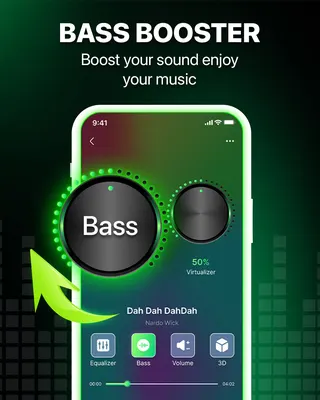 #140 days liveApp StoreAd copy“Your phone isn't always loud enough. Boost your volume, enhance bass, and enjoy clearer sound for music, videos, games, and calls. One tap is all it takes!”Why it worksImage saying your phone is not loud enough and promising more volume and bass in one tap, 40 days.
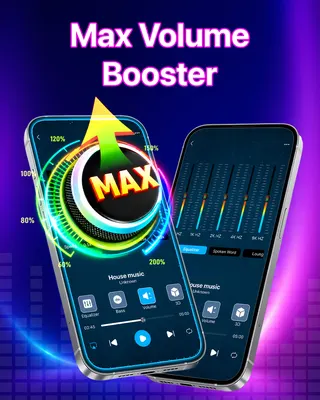 #240 days liveApp StoreAd copy“Your phone isn't always loud enough. Boost your volume, enhance bass, and enjoy clearer sound for music, videos, games, and calls. One tap is all it takes!”Why it worksSecond image with the same one tap volume and bass line, 40 days, App Store link.
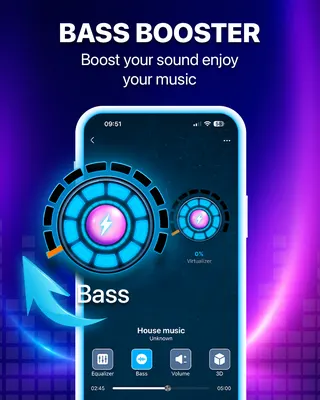 #340 days liveApp StoreAd copy“Your phone isn't always loud enough. Boost your volume, enhance bass, and enjoy clearer sound for music, videos, games, and calls. One tap is all it takes!”Why it worksThird image of the identical louder sound pitch, 40 days.
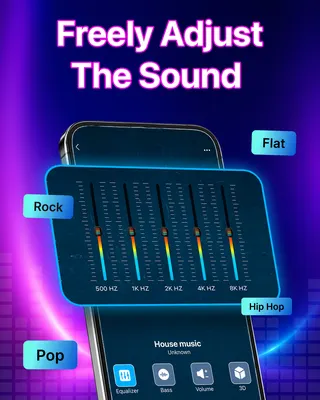

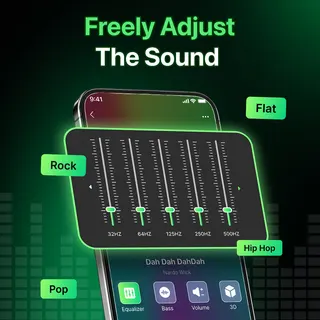
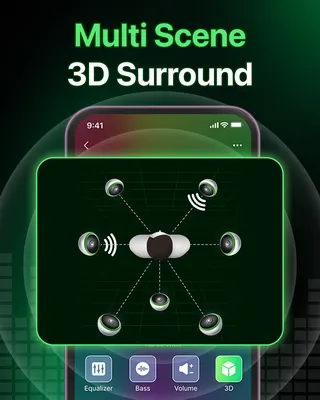
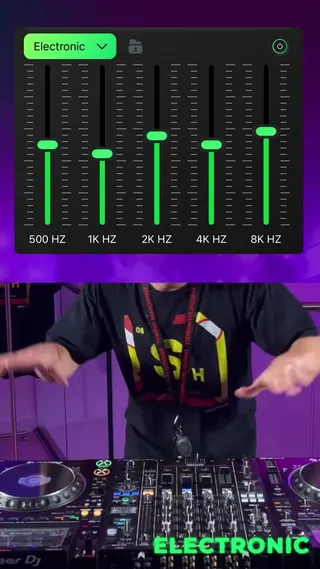

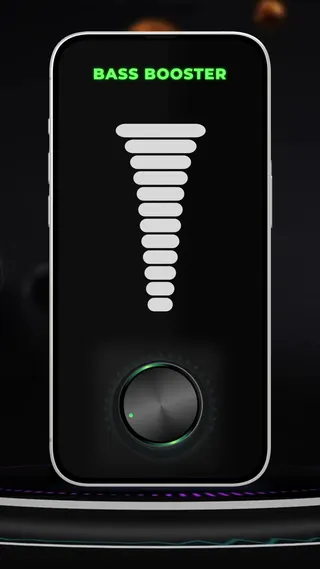
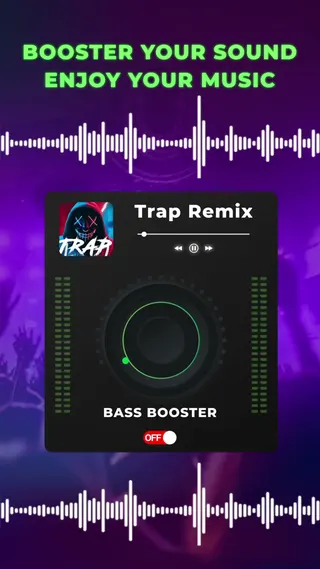
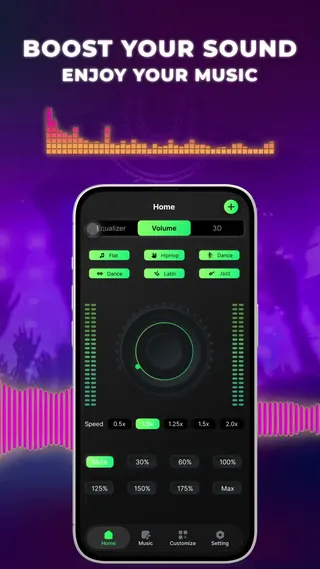
10 more Meta ads are locked
Unlock freeAds from the Meta Ad Library via AppKittie, snapshot Oct 16, 2026. Store data from the App Store.
A One Tap Promise and Reviews at 1.5 Stars
Volume Booster - EQ Amplifier, from Nguye Thi Hien, raises playback volume and adds a 10-band equalizer, bass boost and 3D effects. As of Oct 2026 it makes an estimated $21K a month on an estimated 52K downloads, an estimated $0.4 per download. Every top ad promises louder sound in one tap, while the latest 147 reviews average 1.5 stars.
Key takeaways
- 11 Meta ads are live, 1.3x the Music median of 8, with 53 found over time. All 13 top ads ran 32 to 40 days.
- All 13 top ads use 1 line about boosting volume and bass in one tap, split 7 images, 5 videos and 1 with no media.
- Premium costs $4.99 a week, $9.99 a month or $29.99 a year, sold as Volume Booster and Bass Booster plans. The annual equals 25% of 12 monthly payments.
- Over 82 days, estimated downloads went from 54K to 52K (-4.1%) and estimated revenue from $22K to $21K (-4.2%).
- The latest 147 reviews average 1.5 stars with 121 one-star. 43 (29.3%) mention price, trial or subscription, and all 43 are negative.
Full teardown
Unlock 10 more Meta ads
Unlocked. Everything on this page is open now.
Where Volume Booster spends on Meta
Audience and spend estimates built on Meta Ad Library data (reported for ads shown in the EU, with other countries modeled), lifetime of the ads found. The biggest audience is 18-24, taking 49.0% of spend.
Est. spend
$157.2
Reach
14.7K
Avg. CPM
$10.69
Ads delivered
53
Spend by age
Spend by gender
Top countries by reach
| Country | Reach | Spend | Share |
|---|---|---|---|
| United States est. | 4.5K | $96.09 | 61.1% |
| Romania | 2.2K | $8.41 | 5.35% |
| Hungary | 1.1K | $5.17 | 3.29% |
| United Kingdom | 756 | $10.02 | 6.37% |
| Czechia | 631 | $3.08 | 1.96% |
Rows marked est. are modeled by AppKittie from Ad Library coverage, not reported by Meta.
What Volume Booster does differently
Three prices, two names
25%
annual as share of 12 monthly
One line, mostly images
13 of 13
top ads share one copy line
Every pay mention is angry
43 of 43
pay mentions in reviews are negative
The measurement gap
1.5
average of the latest 147 reviews
1. Three prices, two names
The price list is simple: $4.99 a week, $9.99 a month and $29.99 a year, with the annual at 25% of 12 monthly payments. The same plans appear under two names, Volume Booster Premium and Bass Booster Premium, so one app covers two search intents. $29.99 sits below the Music median annual price of $42. The weekly plan is the likely earner, a small charge for someone who wants louder sound tonight. Estimated revenue per download is $0.4, and revenue is 0.2x the category median on 0.8x the downloads. For Volume Booster, the dual naming brings search reach, but a weekly charge means the core promise is judged in the first minute.
2. One line, mostly images
The ads say one thing: your phone isn't always loud enough, boost your volume, enhance bass and enjoy clearer sound for music, videos, games and calls, one tap is all it takes. All 13 top ads use it. Unusually for this set, 7 are still images, 5 are video and 1 has no media, and all link to the App Store. They ran 32 to 40 days. A static image works because the promise is one action, and louder sound is hard to show in a silent feed anyway. Live ads fell from 20 at the Sep 10, 2026 peak to 11. For Volume Booster, the 1.5 star reviews suggest the product does not yet do exactly what the line says.
3. Every pay mention is angry
The store rating is 4.3 from 7.4K ratings, but the latest 147 written reviews average 1.5, with 121 one-star and 14 five-star. 43 mention price, trial or subscription, 29.3%, and every one is negative. Reviewers report 11 ads before reaching the equalizer, a boost that does not work with streaming video or YouTube, constant crashes, and a 3-day trial that charged at once. iOS limits how far an app can boost system audio, so the one tap promise sets up disappointment. Unless the promise stays within what the platform allows, the reviews will undo Volume Booster's ad budget.
4. The measurement gap
Volume Booster sells a $4.99 week on one Meta line promising louder sound in one tap, while all 43 recent pay mentions are negative. Which ad and plan bring a user who keeps paying, and how many weekly buyers cancel after the first charge? Install counts cannot show whether the ads earn back their cost.
How much does Volume Booster cost?
6 in-app purchases, 3 distinct prices. Prices as listed on the US App Store, Oct 16, 2026.
| Weekly | $4.99 |
|---|---|
| Monthly | $9.99 |
| Annual | $29.99 |
Volume Booster vs the Music median
| Volume Booster | Median | |
|---|---|---|
| Est. monthly revenue | $21K | $100K |
| Downloads / month | 52K | 67K |
| Meta ads running | 11 | 8 |
| Rating | 4.3 | 4.6 |
| Lowest annual price | $29.99 | $42 |
Median of 44 Music apps with active Meta ads in our set. See the Music hub ›
What Volume Booster users say about paying
Of the latest 147 reviews, 43 (29.3%) mention price, trial or subscription, and all 43 are negative, citing ads, crashes and a trial that charged at once. The window averages 1.5 stars.
Latest 147 US reviews, Aug 10, 2023 to Oct 8, 2026
Mention price, trial or subscription
29%43 of 147 reviews, 43 of them 1 or 2 stars
This app is innovative in crashing excessively. The app becomes almost unusable, due to its excessive habit of crashing. It would play about 4 songs, then it wo…
I wanted to boost my music that I’m listening to on YT Premium (background music) The app doesn’t communicate with YT so I tried to do a work around and downloa…
How to measure a playbook like Volume Booster's
Volume Booster runs 11 Meta ads on one line into a $4.99 weekly plan. Measuring it means tracking how many weekly buyers renew after the first charge.
- 01
Connect RevenueCat to see revenue by channel
Every purchase and renewal joins the install it came from, so each channel shows real revenue, not only installs.
- 02
Compare markets, not only campaigns
With several price points, the same campaign earns different revenue per country. Break revenue down by country and channel together.
- 03
An annual buyer and a monthly buyer look the same at install. Retention by channel shows which source keeps paying.
Measure this on your own app with Airbridge Core
From $40/mo · 30 days free · no sales call
How we built this teardown
- Revenue and downloads are third-party estimates from AppKittie, snapshot Oct 16, 2026. Store intelligence estimates for a single app can be off by 30% or more. Treat them as a range, not a figure from the developer. Daily revenue and download series cover 82 days ending Oct 18, 2026.
- Ads come from the public Meta Ad Library. "Days live" counts days since an ad first appeared. Spend and audience breakdowns start from Meta's EU transparency figures; country splits outside the EU are AppKittie models.
- Prices, ratings and ranks come from the App Store (US storefront) on the same date. Prices differ by country and by paywall offer. Review stats use the latest 147 US reviews from Apple's public review feed.
- Category medians are computed across 44 Music apps with active Meta ads in our set of 860 subscription apps.
- Written by Hyunjong Choi. Ads, prices and estimates are refreshed every 30 to 90 days. Updated Oct 19, 2026.
Top Music apps by estimated revenue
All 25 ›| # | App | Est. revenue / mo | Ads live |
|---|---|---|---|
| 1 |  PandoraPandora Media, LLC | $15M | 55 |
| 2 |  Amazon MusicAMZN Mobile LLC | $14M | 218 |
| 3 |  DeezerDEEZER SA | $8M | 132 |
| 4 |  SunoSuno Inc. | $7M | 781 |
| 5 |  Ultimate GuitarUltimate Guitar | $3M | 55 |
| 33 | Volume BoosterNguye Thi Hien | $21K | 11 |
Similar apps
 Vocal Remover
 Hello Piano
 Sibelius
 Banger
Frequently asked questions about Volume Booster
How much does Volume Booster make?
Volume Booster makes an estimated $21K a month on about 52K monthly downloads as of Oct 2026, by AppKittie estimates. That is 0.2x the Music median of $100K.
How much does Volume Booster cost?
Premium costs $4.99 a week, $9.99 a month or $29.99 a year on the US App Store.
How many ads does Volume Booster run?
11 active Meta ads as of Oct 2026, 1.3x the Music median of 8, with 53 found over time.
How fast is Volume Booster growing?
It is flat. Over 82 days to Oct 18, 2026, estimated downloads went from 54K to 52K and estimated revenue from $22K to $21K.
Who makes Volume Booster?
Nguye Thi Hien publishes the app. It launched on Apr 5, 2023, making it 42 months old, and was last updated Aug 9, 2026.
What do Volume Booster reviews say?
The latest 147 reviews average 1.5 stars with 121 one-star, mostly about ads, crashes and paying without a working boost.
Try Airbridge Core free (no sales call)
The install is visible, the subscriber is not. Airbridge Core closes that gap: connect Meta, TikTok, Google and Apple Ads, add one tracking link per creator, plug in RevenueCat, Superwall or Adapty, and each campaign shows revenue instead of installs. The Core plan is $40 a month after 30 free days. Start your free trial.
Start Core free
Hyunjong Choi LinkedIn
Go-to-market, Airbridge Core
Works on go-to-market for Airbridge Core, the self-serve attribution plan for subscription apps. Writes these teardowns from public App Store data, the Meta Ad Library and AppKittie estimates.
About Airbridge
Airbridge is a mobile measurement partner for Meta, Google, TikTok and Apple Ads, with native RevenueCat, Superwall and Adapty integrations. Subscription teams like NOICE cut measurement setup time by 75% after switching.