Why Real-Time Cross-Platform Tracking Improves Ad Performance for Subscription Apps


In 2026, manual ad performance reporting is no longer just inefficient.
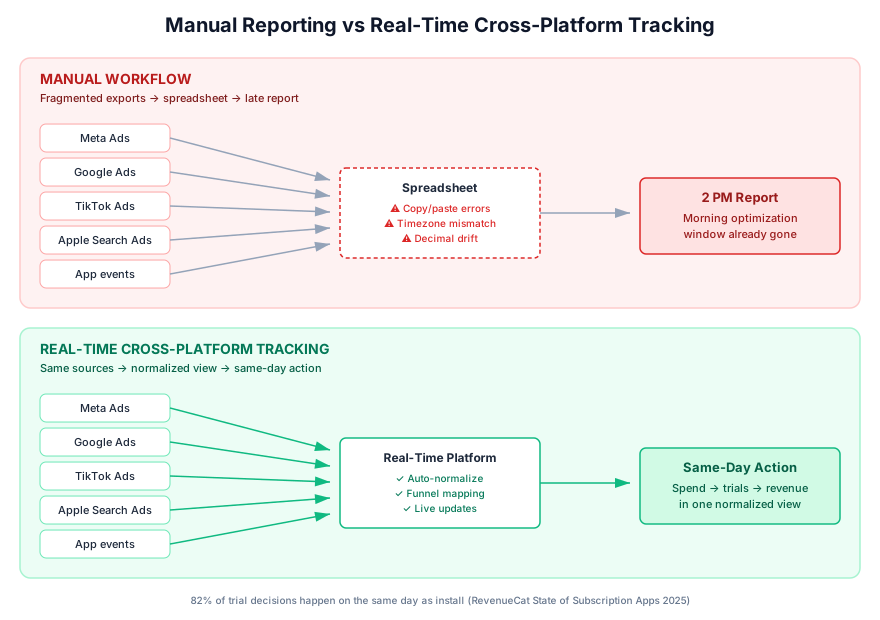
A single copy-paste mistake, mismatched timezone, or inconsistent naming convention can distort ROAS and delay the decisions that matter most. The bigger problem is timing. By the time the spreadsheet is cleaned up, normalized, and shared, the best window for same-day optimization is often gone.
That is why real-time cross-platform performance tracking matters now. Let's dig into it.
Key Takeaways
-
Manual ad reporting is now a growth risk, not just an efficiency problem. One copy-paste error, broken formula, or misplaced decimal can distort ROAS and lead teams to scale weak campaigns or pause profitable ones.
-
Cross-platform data is too fragmented for spreadsheets to handle reliably at scale. Different time zones, currencies, attribution windows, and update cycles across Meta, Google, TikTok, Apple Search Ads, and programmatic channels make manual reconciliation slow and fragile.
-
82% of trial decisions happen on the same day as install (RevenueCat State of Subscription Apps 2025). A report that arrives at 2 PM has already missed the audience it was meant to inform.
-
Teams running structured experiments see up to 40x revenue lift versus teams that don't experiment (Adapty State of In-App Subscriptions 2026). Slow reporting kills the ability to experiment at all.
-
Real-time tracking only matters when it connects spend to revenue. Marketers need one normalized view that ties channel spend to installs, trials, subscriptions, and revenue, not just faster dashboards.
Why Traditional Ad Performance Reporting Fails for Subscription Apps
The operational reality in 2026: marketers are still expected to make same-day budget decisions, but many teams are working from reports stitched together hours after spend has already been deployed.
The issue is no longer dashboard convenience. It is whether the team can trust the numbers early enough to act on them. Three factors make the old way of analyzing data obsolete.
1. Human Error in Manual Reporting
Manual reporting works until complexity increases. As more campaigns, creatives, regions, and revenue events are added, the workflow becomes fragile. One copy-paste error, one spreadsheet version conflict, or one late-night mistake can distort the numbers and push the team toward the wrong decision.
The real risk is that these mistakes often look credible. A missed row, a broken formula, or a misplaced decimal can make ROAS appear stronger or weaker than it actually is, leading teams to scale weak campaigns or cut profitable ones.
Common manual-reporting failure points:
-
Copy/paste errors across channel exports
-
Decimal mistakes that distort ROAS, CAC, or payback calculations
-
Spreadsheet version conflicts across team members
-
Late-night reporting fatigue that reduces QA discipline
2. Data Fragmentation Across Platforms
Cross-platform reporting is difficult even without manual mistakes because each platform reports data differently. Meta Ads, Google Ads, TikTok Ads, Apple Search Ads, and programmatic channels can all vary by timezone, currency, attribution window, and update speed.
That is where Excel breaks down. The spreadsheet becomes a manual normalization layer, and every extra adjustment adds risk. The usual fragmentation issues include:
-
Time zone mismatch: one source closes the day earlier or later than another
-
Currency mismatch: spend and revenue require manual normalization
-
Attribution mismatch: platforms claim conversions under different windows
-
Update-cycle mismatch: one dashboard is near-live while another lags behind
3. Optimization Happens Too Late
The bigger issue is timing. Even if the spreadsheet is accurate, it often arrives too late to act on. If reporting is finished by 2 PM, the morning optimization window is already lost and underperforming campaigns may have already burned the budget.
For subscription apps, that delay is especially costly. RevenueCat's analysis of 75,000+ subscription apps found that 82% of trial decisions happen on the same day as install (SOSA 2025). When reporting depends on manual cleanup, the audience that matters most for today's spend has already made their decision before the report lands.
That delay also weakens the feedback loop between spend and revenue. Teams react slower, waste more budget, and take longer to find what actually scales.
How Real-Time Cross-Platform Tracking Works
Real-time cross-platform tracking works by pulling data from ad channels, app events, and revenue signals into one system that updates fast enough for same-day decisions. Instead of reviewing each platform separately, marketers get one view of performance across the full journey, from ad spend to subscription revenue.
1. What the workflow looks like
| Step | What happens | Why it matters |
|---|---|---|
| Data ingestion | Pulls spend and performance data from ad channels | Centralizes fragmented channel data |
| Event tracking | Captures installs, sign-ups, trials, and subscriptions | Connects traffic to real outcomes |
| Normalization | Aligns timezone, currency, and attribution logic | Makes channel comparisons reliable |
| Reporting | Updates dashboards quickly | Helps teams act on today's data |
| Optimization | Budgets and creatives are adjusted faster | Reduces wasted spend |
2. It collects data from multiple sources
The first layer is data collection. A tracking platform pulls in performance data from channels like Meta Ads, Google Ads, TikTok Ads, and Apple Search Ads, then connects that with app and product events such as installs, sign-ups, trial starts, and subscriptions.
That matters because ad platforms can show spend and clicks, but they usually stop short of showing the full revenue outcome. To evaluate ad performance properly, teams need both acquisition data and downstream conversion data in the same place.
3. It normalizes the data
Once the data is collected, it needs to be standardized. Different platforms may use different time zones, currencies, attribution windows, and naming structures. A real-time tracking system cleans that up so teams can compare channels on a like-for-like basis.
Without this layer, cross-platform reporting stays inconsistent. One dashboard may look strong simply because it updates faster or attributes more aggressively, not because it is actually driving better results.
4. It connects ad spend to the funnel
The next step is funnel mapping. The platform links channel-level spend to user actions across the conversion path:
-
Install
-
Sign-up
-
Trial start
-
Subscription
-
Revenue
This is what turns reporting into decision-making. A campaign may generate cheap installs, but if those users do not start trials or subscribe, the apparent efficiency is misleading. Adapty's 2026 analysis of 16,000+ apps found that teams running structured experiments achieve up to 40x more revenue than teams that don't experiment (Adapty State of In-App Subscriptions 2026). That advantage is impossible to capture without a feedback loop that connects spend to subscription outcomes in time to act.
5. It updates fast enough for action
The point of real-time tracking is not constant monitoring for its own sake. It is to shorten the time between performance change and optimization. If one creative starts losing efficiency in the morning, the team should be able to catch it before half the day's budget is gone. If one channel starts driving stronger trial-to-paid conversion, budget should be moved while that signal still matters.
Start measuring what matters — for free
Airbridge Core Plan gives growing teams real attribution, deep linking, and audience tools at no cost.
Start Free for 30 Days →What to Look for in a Real-Time Cross-Platform Tracking Platform
A good platform should reduce reporting work, standardize messy inputs, and help teams move from spend to revenue without guessing.
1. Cross-platform normalization
If a platform cannot align timezone, currency, naming conventions, and attribution logic across channels, it will not solve the actual reporting problem. Google Ads, for example, lets advertisers set different conversion windows, which shows why raw platform numbers are not naturally comparable.
2. Full-funnel event tracking
The platform should connect ad spend to the events that matter after the click. For subscription apps, that usually means install, sign-up, trial start, subscription, and revenue. Google publishes a list of recommended events for measurement that is a useful starting reference. Event-based measurement is the foundation; without it, teams are still optimizing for shallow metrics like clicks or installs.
For early-stage paid UA budgets, trial start is usually the most useful event to send back to ad platforms as the optimization signal. It carries enough volume to train the algorithm, and it sits close enough to the paying event to indicate real intent. Install is too noisy to optimize against, and subscription start is too sparse at small budgets to give the algorithm a stable target.
3. Revenue and retention visibility
A platform should not stop at acquisition. Marketers need to see whether users convert, retain, and generate revenue over time. Cohort and retention reporting matters because early conversion volume can look strong while long-term value stays weak.
4. Fast enough to support same-day action
Fresh data only matters if the team can act on it. The platform should update quickly enough to catch wasted spend before the day is over, and it should be explicit about gaps that live data cannot close yet. iOS SKAN postbacks can lag 24 to 72 hours, so a 9 AM dashboard should label which numbers are deterministic versus which are still pending, not paper the difference over to look faster than it is.
5. Export and integration fit
The platform should fit the team's workflow, not force workarounds. That means checking whether it supports the channels you use, whether it connects to the rest of your stack, and whether you can get the data out in a usable form as reporting needs grow.
How Airbridge Enables Real-Time Cross-Platform Ad Performance Tracking
Airbridge Core Plan is built for early-stage paid UA teams that need to answer one practical question in real time: are paid users converting into subscriptions, and which channels are driving value?
If your team is spending across major ad platforms but still relying on manual reporting to connect spend to trials, subscriptions, and revenue, Core Plan is designed to shorten that loop. It supports the 4 major self-attributing networks (Google, Meta, Apple Search Ads, and TikTok) and connects channel spend to subscription-funnel events such as install, sign-up, start trial, subscribe, and order complete inside Funnel, Retention, and Revenue reports.
What that looks like in practice for a paid UA team in week one and beyond:
-
Day 1: Connect Meta and Google, see channel-level spend in one normalized view
-
Day 3: Compare same-day cost per trial across channels, not just cost per install
-
Day 14: Identify which channel's trials retain past Day 7 inside the Retention report
-
Day 30: Shift budget based on revenue contribution by channel, not install volume
| What Core Plan helps with | What that means for marketers |
|---|---|
| Standard event tracking for the subscription funnel | See whether paid traffic moves into trials and subscriptions |
| Coverage across Google, Meta, Apple Search Ads, TikTok | Monitor major paid channels in one measurement setup |
| Funnel, Retention, and Revenue reports | Judge performance beyond installs and clicks |
| Cost data upload and attribution rules | Compare channels with cleaner, more usable data |
Start with One Channel, Then Tighten the Feedback Loop
The fastest way to find out if your team has a tooling problem is small. Export one week of Meta and Google spend into a single sheet. If reconciling timezone, currency, and attribution windows takes more than 90 minutes, the bottleneck is reporting infrastructure, not headcount.
From there, decide what real-time visibility is worth to the team. If a 4-hour reporting lag is costing more than one optimization cycle per day, a platform like Airbridge Core Plan is built to compress that loop, taking raw channel data to a subscription-revenue view in time for same-day decisions.


Ready to see what Core Plan can do?
Free attribution, deep linking, and audience tools — built for teams that are ready to grow.