How to Grow Your Subscription App: 5 Proven Elements for Scaling Revenue in 2026
The subscription app market continues to grow — but the economics have shifted. Customer acquisition costs are rising, users are more skeptical about recurring payments, and free trials alone are not driving enough conversions. Successful apps like Calm, Noom, and Headspace have proven that recurring revenue models work. The question is what separates the apps that scale from those that plateau.
The distinction comes down to five elements. Not five independent optimizations — a system where each element multiplies the others. Teams that treat paywalls, pricing, onboarding, ASO, and UA as separate workstreams improve individual metrics. Teams that connect them build compounding growth.
Key Takeaways
- The paywall is your highest-leverage conversion point. Hard paywalls convert at 10.7%, freemium at 2.1% — but the right model depends on your app and your traffic sources.
- Pricing is psychology, not math. The same app can convert dramatically better by changing how the price is presented — not the price itself.
- Onboarding is a growth function, not a product function. Users decide to pay in their first or second session. Failed onboarding eliminates conversion opportunities permanently.
- ASO and ASA multiply each other. Keywords validated through ASA testing often succeed organically. Running them separately leaves growth on the table.
- Paid UA should optimize for subscriptions, not installs. A $2 CPI channel that produces $100 cost per subscriber is worse than a $5 CPI channel that produces $25. The event you optimize for determines the users you get.
1. Paywalls That Actually Convert
Let’s be honest. Most users never advance past the paywall — this single screen determines whether users churn from free trials or commit to recurring payments.
The data tells a clear story: hard paywalls convert at 10.7%. Freemium converts at 2.1%. That is a 5x difference — but it does not mean hard paywalls are always better. Hard paywalls self-select for high-intent users. Freemium converts a massive audience at a lower rate. Soft paywalls — trial-based models — sit in between. For health and fitness apps, trial-to-paid rates average 35.0%, well above the 25.6% global average.
The mistake many teams make is treating the paywall like an afterthought. They build it once, slap on a price, and move on. But top subscription apps treat it like a living, breathing sales funnel. They run A/B tests constantly. They swap headlines, tweak button copy, test colors, and even rework the order of information.
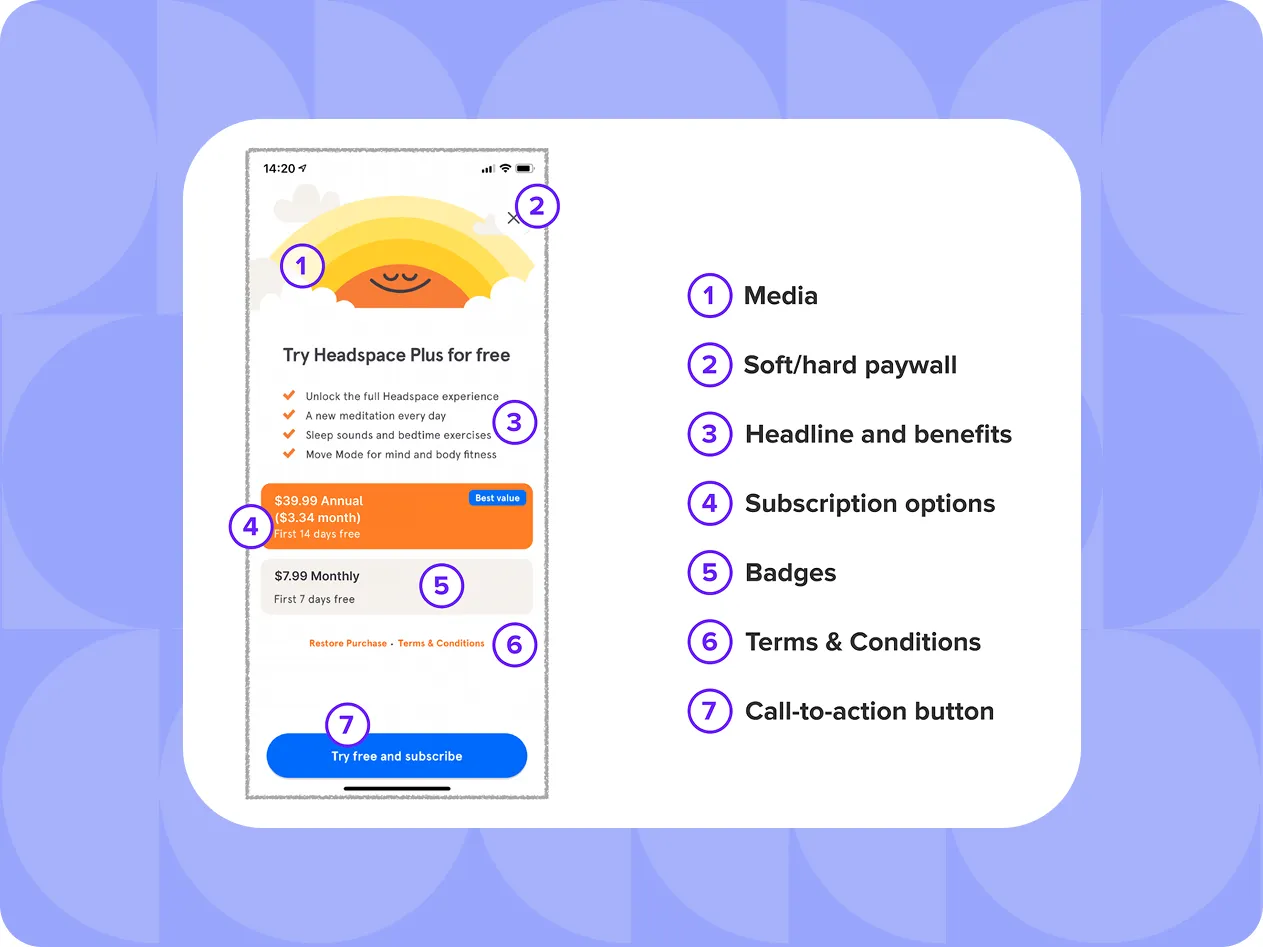
Top-performing subscription apps treat paywalls as active sales funnels requiring continuous A/B testing. Teams regularly test headlines, button copy, colors, and information sequencing.
For example, a simple wording change from “Unlock lifetime insights” to “Unlock everything for a lifetime” lifted conversion rates by 10.4%. That is proof that small adjustments create measurable revenue gains.
Key Implementation Strategies:
- Frequency: Display paywalls more often than instinct suggests. Ensure 100% of users encounter the paywall — the fastest revenue improvement is eliminating the users who never see it.
- Triggers: Deploy different paywalls for first-time users, repeat visitors, or checkout abandoners.
- Content: Test longer-form layouts with prominent CTAs and social proof.
- Hooks: Leverage time-limited discounts, personalized messages, or testimonials.
The common mistake: choosing a paywall model without measuring its performance by channel. A hard paywall might convert well overall — but if 80% of your Meta traffic bounces at the gate, you are paying for installs that never see your product.
Deep dive: Hard Paywall vs Soft Paywall vs Freemium: Which Model Actually Converts?
2. Pricing That Matches User Segments
Pricing is the intersection of psychology and revenue mechanics. Success requires understanding what different user segments perceive as valuable — not just what the app costs to build.
Hashtag Expert's founder Zach Shakked discovered this firsthand. Younger users on Snapchat and TikTok rejected his $20/year plan but embraced $2.99/week — resulting in higher conversions and overall revenue growth. The product did not change. The framing did. Similarly, reframing "$60 per year" as "$5 per month billed annually" increased conversions by 38% in another app.
Practical Application:
- Three tiers: Always offer three pricing options. Use the decoy effect to highlight your preferred plan.
- Channel-aware pricing: Adjust pricing by acquisition channel, geographic tier, or user demographic. A price point that works for ASA traffic may not work for TikTok traffic.
- Presentation matters: Weekly, monthly, and annual framing trigger different psychology. Test which framing works for each segment.
- Retention offers: Introduce seasonal deals, first-time discounts, and reactivation offers for lapsed users.
The connection to measurement: pricing changes affect cost per subscriber (CPS) — but most teams only see the blended result. Without channel-level data, you cannot tell if a pricing change lifted Meta conversions but dropped Google conversions. You need per-channel CPS to evaluate pricing tests.
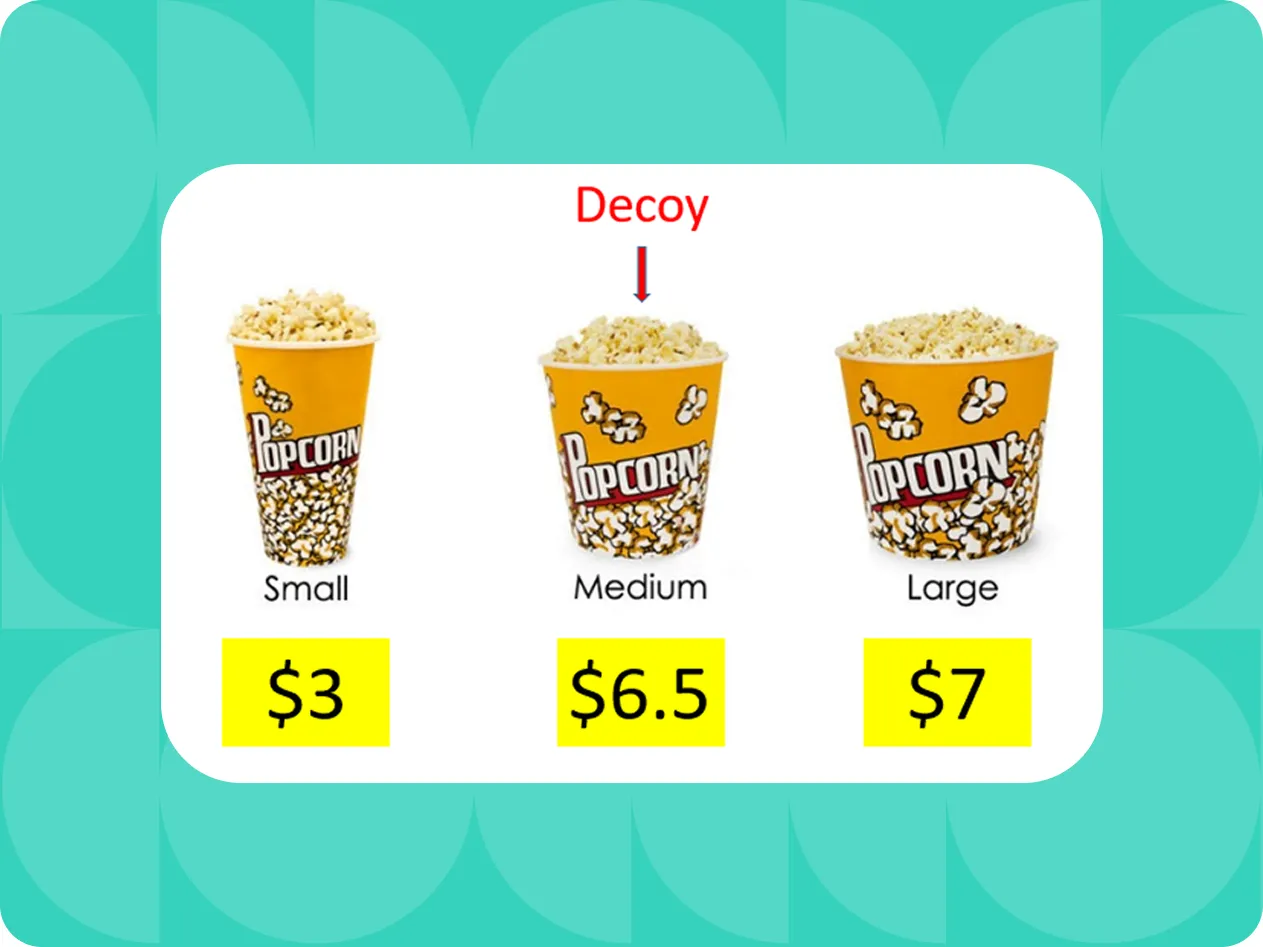
👉 Pro tip: Treat pricing like ad creative. Test it often and adapt it to audience behavior.
3. Onboarding That Activates Subscribers Fast
Here’s a tough truth. Users typically make purchase decisions during their first or second session. Failed onboarding eliminates conversion opportunities permanently.
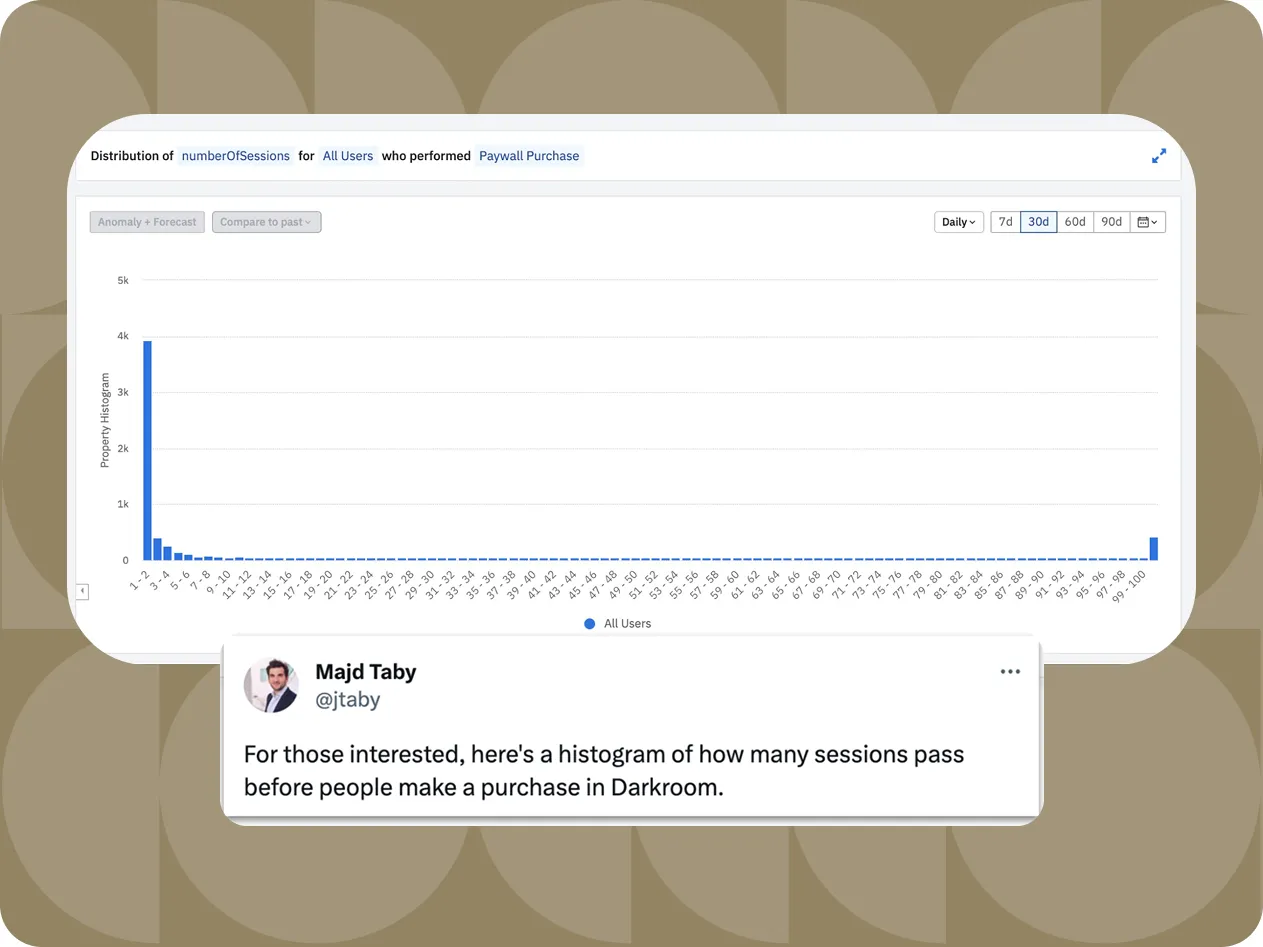
This requires close collaboration between marketing and product teams. Slow signup screens, unclear free trial messaging, or missing value propositions at launch severely impact trial-to-paid conversion rates. One subscription app doubled revenue to $2,000/month simply by refining onboarding and paywall flows — without increasing downloads or ad spending.
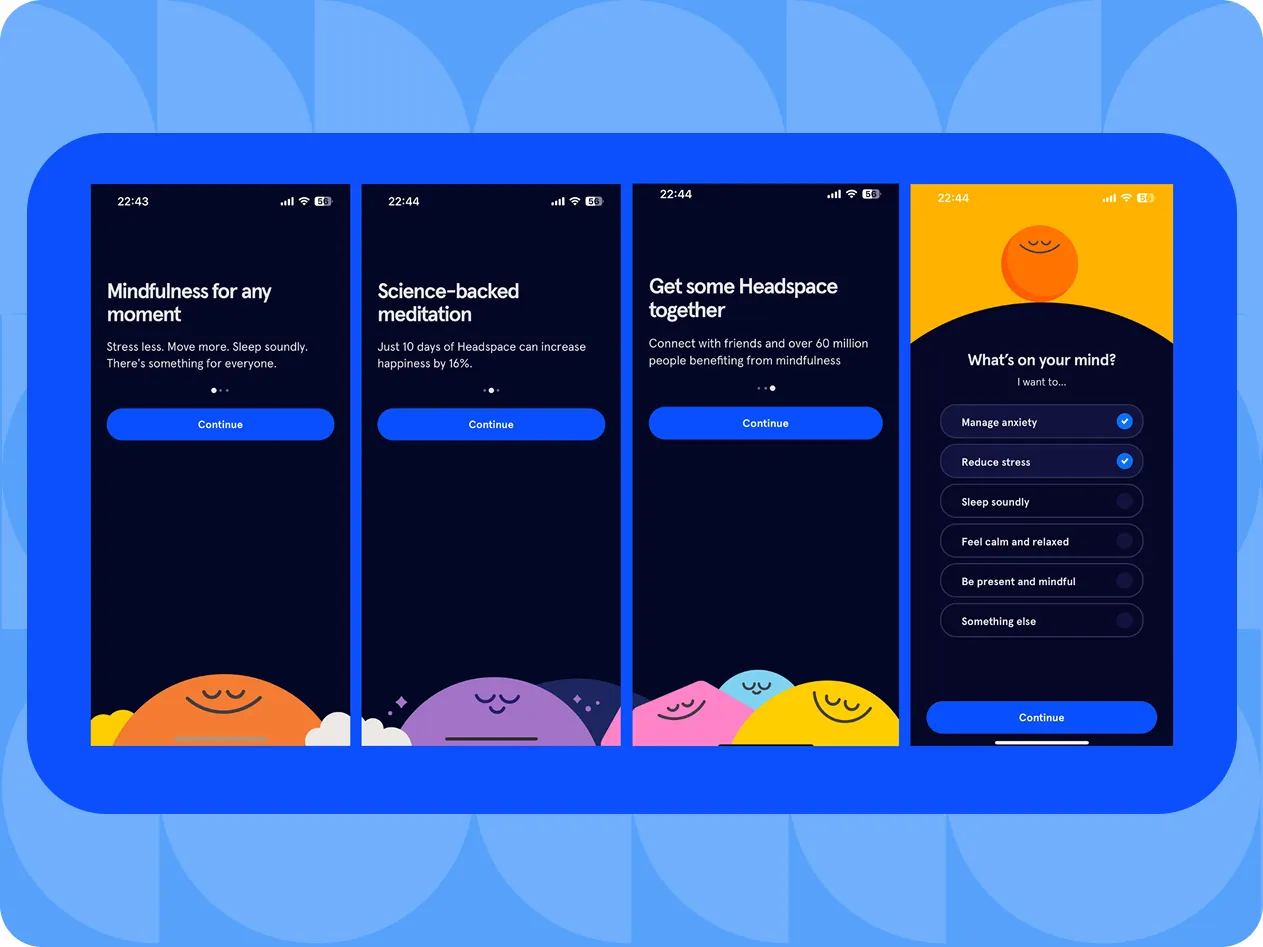
Critical Focus Areas:
- Short, intuitive signup flows. Every unnecessary screen is a drop-off point.
- Emphasize value early. Progress tracking for fitness apps, matches for dating apps — show users what they get before asking them to pay.
- Deep links to high-value features. Direct trial users to the features that drive retention, not the features that are easiest to build.
- Habit loops before trial expiration. Daily reminders, streak mechanics, and progress notifications trigger engagement before the payment decision.
The trial quality connection: onboarding quality directly affects the signal you send to ad platforms. If your onboarding produces users who start a trial and cancel in 10 minutes, those impulse cancellers become the algorithm's success signal. Over 4–8 weeks, this degrades targeting quality — CPI stays flat, but CPS climbs. Qualified trials — a 2–4 hour delay before sending the trial event — filter out impulse cancellers so the algorithm learns from genuinely engaged users.> Which channels produce subscribers who stay — and which produce trials that cancel? See trial-to-paid rates by channel. Start with 15K free attributed installs.
%%CTA|Try It Free|https://app.airbridge.io/signin?from=blog-inline|See which growth lever moves your subscription revenue most.%%
Want to see how Subscription app works with your data?
Get hands-on with Airbridge and see real results.
Try It Free →4. ASO and ASA That Feed Each Other
Discovery drives subscription app growth. App Store Optimization (ASO) provides sustained, organic reach while Apple Search Ads (ASA) accelerates growth. When executed together, ASA improves metrics including tap-through rate and conversion rate, which subsequently enhance ASO rankings — creating a growth multiplier.
For subscription marketers, ASA and ASO should not operate as separate functions. Keywords validated through ASA testing often prove successful in organic ASO strategies.
The Organic Multiplier:
There is always a segment of users who see your ad, do not click, but search your app name in the App Store. This brand search lift is the "organic multiplier" — and for established apps like Calm and Headway, brand search volume frequently exceeds keyword-driven searches.
Early-Stage Budget Allocation:
Early-stage apps should prioritize ASA — keyword-driven, intent-rich, and manageable. One case study showed $800 ASA spend generating $3,000 return: $2,000 direct attribution and $1,000 organic lift. Meta Ads follow naturally once economics improve, beginning with broad campaigns and refining through interest clusters.
The measurement gap: ASA drives installs with high intent. Meta drives volume. But without channel-level attribution, you cannot compare trial-to-paid rates between the two — and you are making budget decisions based on CPI instead of cost per subscriber.
5. Paid UA That Focuses on the Right Events
Modern subscription app growth moves beyond optimizing for installs alone. High-performing teams target deeper funnel events — trial starts, qualified trials, and subscriptions.
The event you optimize for determines the users you get. Send Install events, the algorithm finds installers. Send Subscribe events, it finds subscribers — but only if you have enough volume. Meta requires 50 conversions per ad set per week. Google needs approximately 10 per day per campaign. TikTok needs 50 events or 7 days of data.
The Event Hierarchy:
- Install — highest volume, weakest signal. The algorithm finds downloaders.
- Start Trial — mid-funnel signal. More intent, but includes impulse cancellers.
- Qualified Trial — filtered signal. A 2–4 hour delay removes users who cancel immediately.
- Subscribe — strongest signal, lowest volume. Only works at scale.
The common pitfall: prioritizing low-cost installs that never convert. A $2 CPI that looks efficient by install metrics can cost $100 per subscriber when only 2% of installs convert. Meanwhile, a $5 CPI channel can cost $25 per subscriber if 20% convert. CPI alone reverses judgment on which channel is actually working.
Practical UA Strategies:
- Build multiple lookalike audiences for experimental validation.
- Rotate creative consistently to prevent audience fatigue. AI tools (Eleven Labs for text-to-speech, Creatify for ad variations) enable rapid creative testing without substantial production costs.
- Segment campaigns by platform — Meta, TikTok, and Google require different creative formats, different event volumes, and different optimization strategies.
- Tie optimization to events correlating with actual revenue — not installs.
Deep dive: Which Conversion Event Should Your App Send to Each Ad Platform?
The Optimization Multiplier
Here is the exciting part. You do not need millions in UA spend to see growth. Sharing in the Jetstream session with Airbridge, Steve P. Young from App Masters has tracked apps that went from
- $250 to $1,000 a month with just 15 daily downloads
- $30 to $2,000 a month with only 50 daily downloads
The gains came from optimizing paywalls and onboarding — not from increasing ad spend. This demonstrates the multiplier effect: each element amplifies the others. Superior onboarding drives trial starts. Better paywalls boost conversions. Refined pricing increases ARPU. Efficient UA sustains the cycle.
But the multiplier is invisible without measurement. You cannot know whether a paywall change improved conversions from Meta traffic or Google traffic without channel-level data. You cannot tell whether a pricing test lifted ARPU on ASA users or TikTok users without per-channel attribution. You cannot validate whether qualified trials improved cost per subscriber without connecting install source to subscription outcome.
Channel-level measurement is the layer that makes the other five elements visible. Core Plan tracks Install, Start Trial, and Subscribe as standard events with attribution across Meta, Google, Apple Search Ads, and TikTok. With native RevenueCat and Adapty integration via S2S, subscription events flow into attribution regardless of where payment occurred.
Wrapping Up
Subscription apps scale globally without logistics constraints, deliver recurring revenue, and measure more straightforwardly than e-commerce through CAC and LTV analysis. But winning requires executing the five elements as a connected system:
- Test paywalls continuously — and measure conversion by channel.
- Segment and refine pricing — and track how pricing changes affect CPS by channel.
- Approach onboarding as growth work — and validate trial quality with qualified trial signals.
- Run ASA and ASO in tandem — and compare trial-to-paid rates across discovery channels.
- Optimize UA for subscriptions, not installs — and use the right conversion event for each platform.
These five elements are compounding forces. When executed together with channel-level measurement, each one multiplies the impact of the others. That is how you build a subscription business that grows — not just runs campaigns.
Subscribe to Success with Airbridge
Each of the five elements above compounds — but only when you can see how they connect by channel. Airbridge Core Plan is the measurement layer built for subscription apps:
- Full-funnel attribution by channel. Track Install, Start Trial, and Subscribe as standard events with attribution across Meta, Google, Apple Search Ads, and TikTok — so you can see which channels produce paying subscribers, not just installs.
- Paywall and pricing validation by traffic source. The Actuals Report shows conversion rates at each funnel stage by channel. When you A/B test a paywall or change pricing, see which channels respond — instead of reading blended averages.
- Trial quality measurement. Compare trial-to-subscribe rates by channel to identify where impulse cancellers are concentrated — and validate whether qualified trial signals are improving algorithm quality.
- Cost per subscriber by channel. Move beyond CPI. Core Plan calculates the metric that actually determines channel profitability — cost per subscription — by connecting install source to subscription outcome.
- Native RevenueCat and Adapty integration. Subscription events flow into attribution via S2S regardless of where payment occurred — in-app or web checkout. No custom event setup required.> Start with 15K free attributed installs. All features included. →


Ready to transform your mobile growth?
Learn how Airbridge helps leading brands measure and optimize every touchpoint.