Trends & Insights
Why Subscription Churn Happens: Top 5 Cancellation Reasons Forecast for Mobile Apps in 2026
2026
.
1
.
29
By
Hoang Ngoc
Subscription growth is no longer the strategic challenge — retention is.
By 2026, the subscription economy will have matured. Acquisition costs continue to rise while acquisition rates have declined, pushing teams toward retention-first growth strategies.
Recurly reports that return acquisitions now make up around 20% of new subscribers, highlighting the growing importance of keeping users longer rather than constantly replacing them.
However, churning remains a structural issue, even for high-performing apps. Industry benchmarks by MarketingLTB suggest an average monthly churn of 5–7%, with annual churn exceeding 30% in the absence of strong retention strategies.
For mobile subscription apps, the pressure is even higher, with up to 30% of annual subscribers canceling within the first month after conversion, according to RevenueCat.
Rather than accepting churn as inevitable, leading teams are breaking it down into actionable root causes tied to product usage, lifecycle timing, pricing, and user behavior.
Below are the five most common cancellation drivers in subscription apps today—and what to do about them.
Perhaps the most under-discussed driver is value decay after the initial conversion.
Many apps succeed at getting users past onboarding and even past their first billing cycle. However, subscribers often plateau shortly thereafter. Across subscription services broadly, 37% of cancellations occur because people stop using the product — a clear signal from this cancellation survey data that subscribers aren’t finding ongoing utility.
This isn’t just a churn metric; it’s a measurement gap. Top performing teams monitor value milestones well beyond activation — for example, how deeply users engage with high-value features at 30, 60, and 90 days.
Airbridge’s take 💡
Instead of viewing churn as a post-hoc KPI, think of engagement trends as leading indicators. If usage flattens before renewal, intervention — such as contextual lessons, personalized nudges, or feature tours — can re-spark momentum before churn happens.
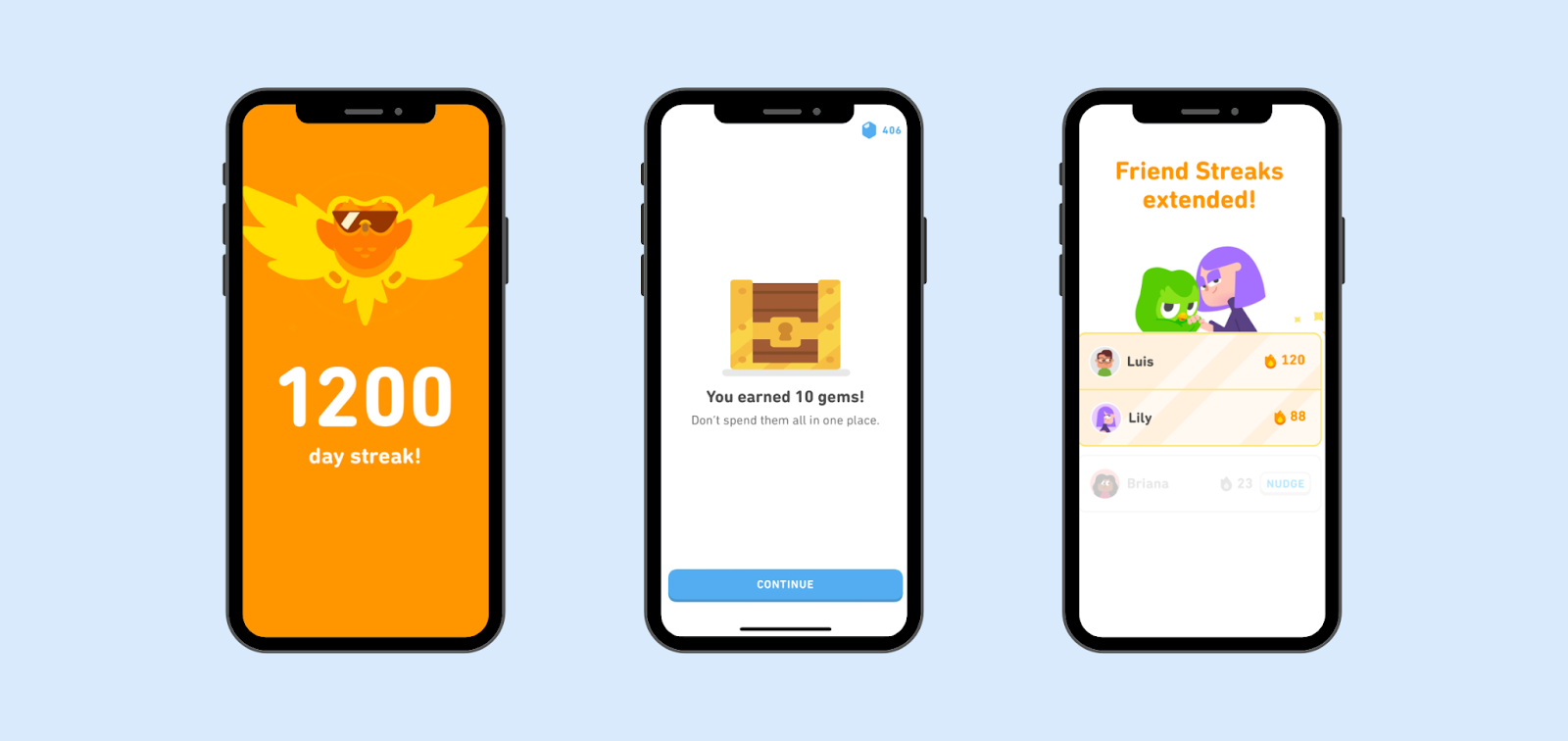
This pattern has been widely observed in language learning and productivity apps. For example, Duolingo continuously uses a combination of gamification features — including streaks, rewards, and social competition — to turn learning into a daily habit and boost long-term engagement.
Subscription fatigue is no longer a fad — it’s a macro-consumer behavior.
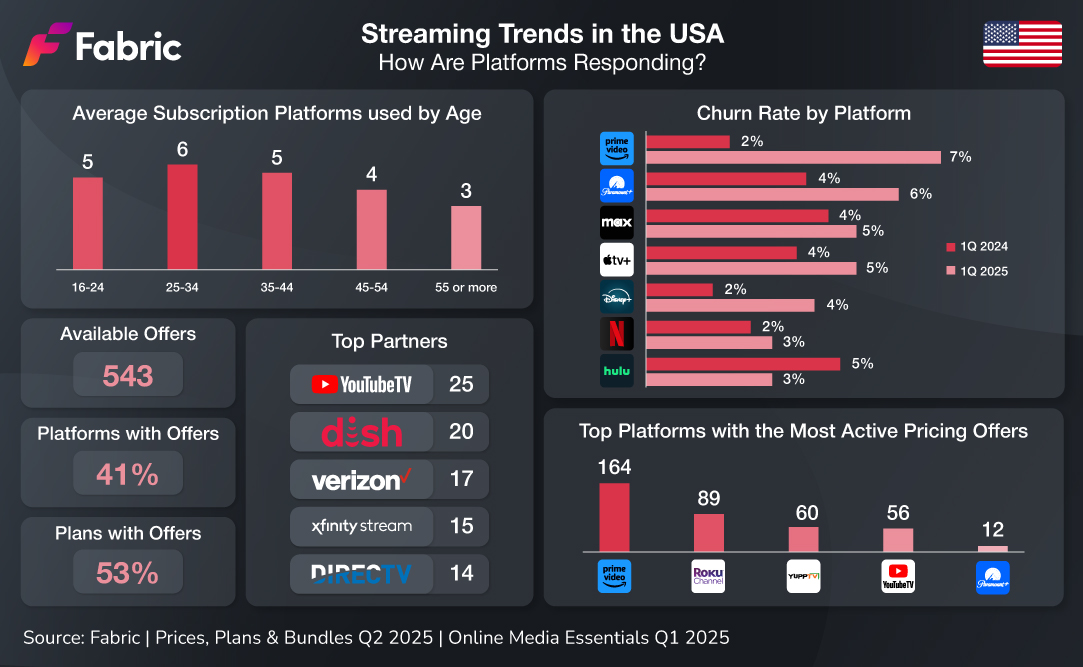
Consumers are tightening budgets, rationalizing recurring expenses, and reassessing perceived value. In the United States alone, about one-third of streaming users reported canceling one or more services, citing pricing pressure and “too many subscriptions” as leading factors.
Crucially, churn attributed to pricing concerns isn’t always about cost per se — it’s often a value perception issue. According to cancellation survey data, roughly 35% of churners cite value-related concerns, making it one of the top explicit reasons subscribers pull the plug.
Streaming services provide a clear illustration of this behavior. Platforms like Netflix and Disney+ have seen waves of “subscribe–cancel–resubscribe” behavior as users sign up for specific content releases and leave when perceived value drops.
This pattern reflects a broader shift toward intentional, short-term subscription usage rather than long-term commitment.
Airbridge’s take 💡
In practice, modern pricing strategies that mitigate churn include tiered plans aligned to usage intensity, flexible billing cycles, and pause options that let users step down instead of leaving entirely. Recurly’s subscription data shows that pause options surged by 68% year-over-year, with over $200M generated from paused subscribers who later reactivated.
More features do not automatically translate to more loyalty.
As subscription apps evolve, they risk overwhelming users with options before those options demonstrate value. When users feel unsure about what matters most, they disengage and ultimately churn.
This phenomenon aligns with broader product behavior research: users often abandon apps when they don’t quickly form habits or derive recurring value signals. That’s why nearly 40% of cancellations come from insufficient usage or low engagement levels.
Airbridge’s take 💡
The solution is intelligent feature discovery and contextual relevance. Instead of showing every capability up front, leading subscription apps guide users through progressively higher-value moments based on behavior patterns. This is why cohort-based onboarding, feature staging, and adaptive UX flows are now core retention tactics.
Productivity tools like Notion have spoken openly about the trade-off between flexibility and complexity. While advanced users thrive on customization, newer or lighter users can feel overwhelmed, and multiple UX articles describe how the platform’s flexibility often translates to cognitive load for newcomers.
This is why Notion has increasingly invested in templates and guided starting points to reduce early friction.
Users expect personalization, but with privacy constraints tightening, delivering it has become more nuanced.
Generic lifecycle messaging feels stale, and irrelevant communication amplifies churn risk. At the same time, app ecosystems are losing access to traditional identifiers, forcing teams to rethink personalization logic.
The good news? Internal, first-party behavioral signals (like session frequency, feature engagement, and event sequences) enable product-centric personalization without compromising privacy.
Carefully sequenced messaging — for example, nudges tied to usage thresholds or inactivity patterns — has been shown to meaningfully decrease cancellations and improve retention.
Airbridge’s take 💡
In other words, personalization isn’t about deeper targeting, but better timing and relevance using the data you already own.
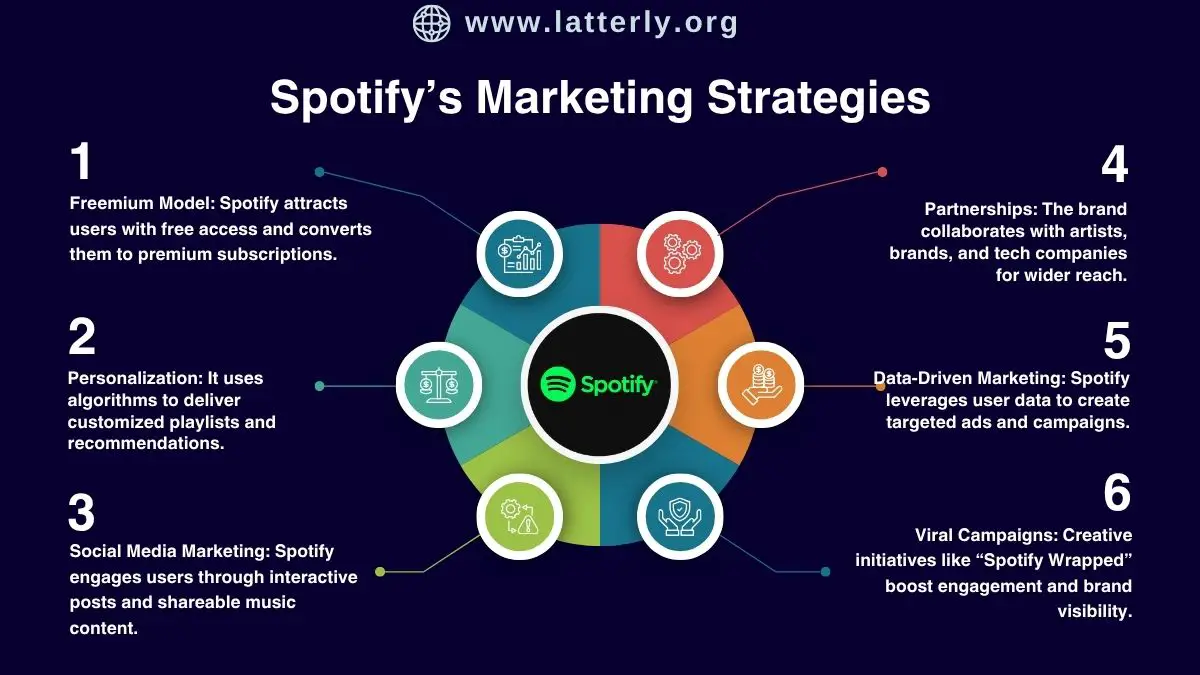
Spotify is often cited as a benchmark for personalization built on first-party behavior rather than external identifiers. Features like Discover Weekly and Daily Mix demonstrate how relevance and timing—based on listening patterns—can drive long-term engagement even as privacy constraints increase.
Treating cancellation as a dead end is a lost opportunity.
Churn events are rich with signals about pricing pain points, feature gaps, or usage drop-offs. Yet many apps still rely on generic exit surveys or one-size-fits-all retention offers that don’t address the underlying cause.
Airbridge’s take 💡
Data suggests that over half of subscribers would consider returning if offered a personalized incentive, highlighting the value of strategically designed re-engagement paths.
Timing is everything. Immediate, untargeted win-back pushes often miss the mark. Instead, leading subscription teams wait for signals of renewed intent—such as an app revisit—before re-engaging users.
Wellness apps like Calm and Headspace treat cancellation as a pause, not a failure, focusing on timely, context-driven re-engagement during periods of heightened need rather than pushing instant discounts.
Identifying churn reasons is only useful if teams can detect them early and act on them accurately. That’s where measurement plays a quiet but critical role.
Airbridge supports churn analysis by helping subscription apps move from high-level churn rates to behavioral, cohort-based insights across the user lifecycle. Instead of treating cancellation as a single event, teams can examine how engagement, feature usage, and revenue signals evolve leading up to churn.
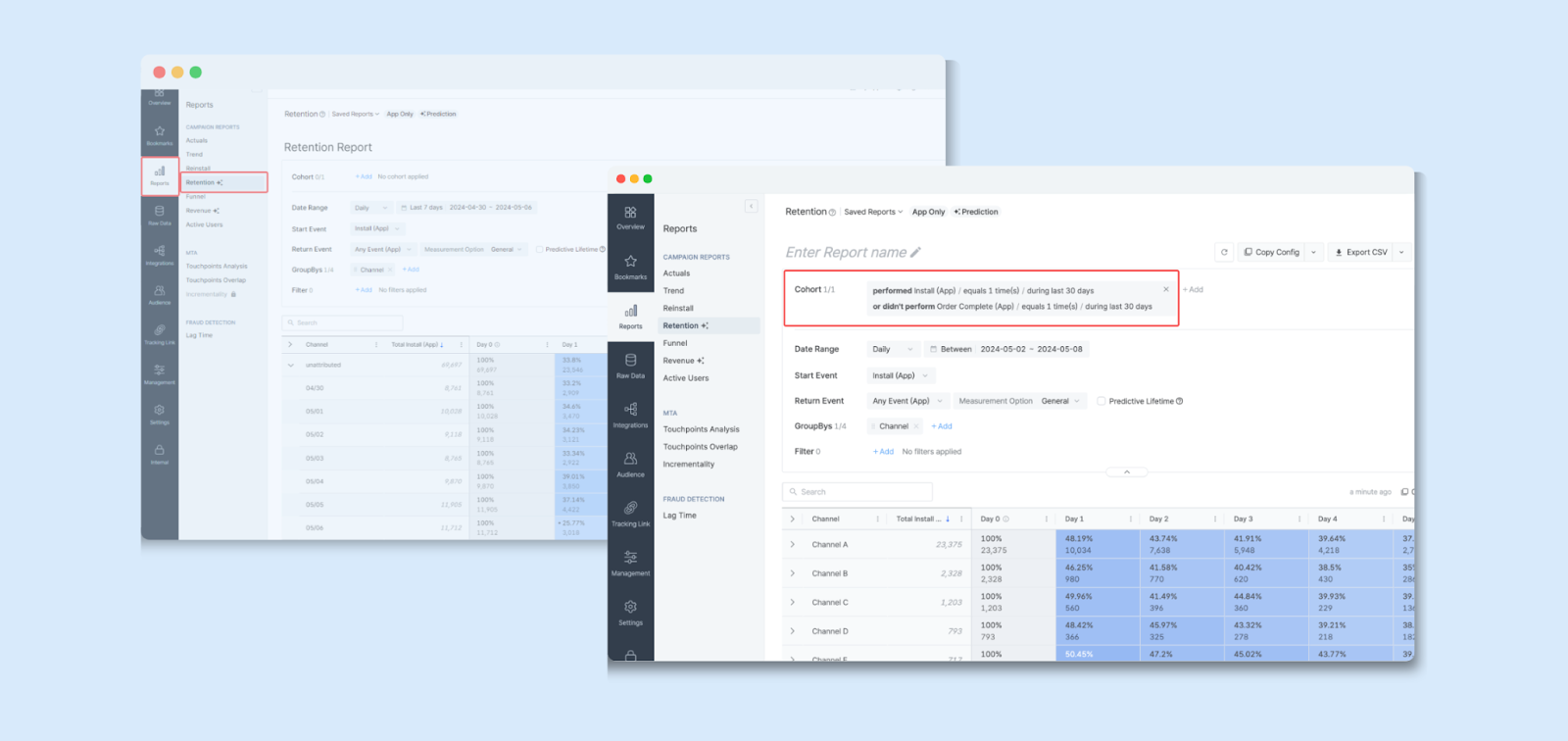
In practice, Airbridge helps teams:
Rather than replacing strategy, Airbridge provides the measurement foundation that allows teams to make churn a proactive, data-driven decision rather than a reactive metric.
See how Airbridge helped big names reduce churn rate, improve retention and overall campaign effectiveness with the case studies below: