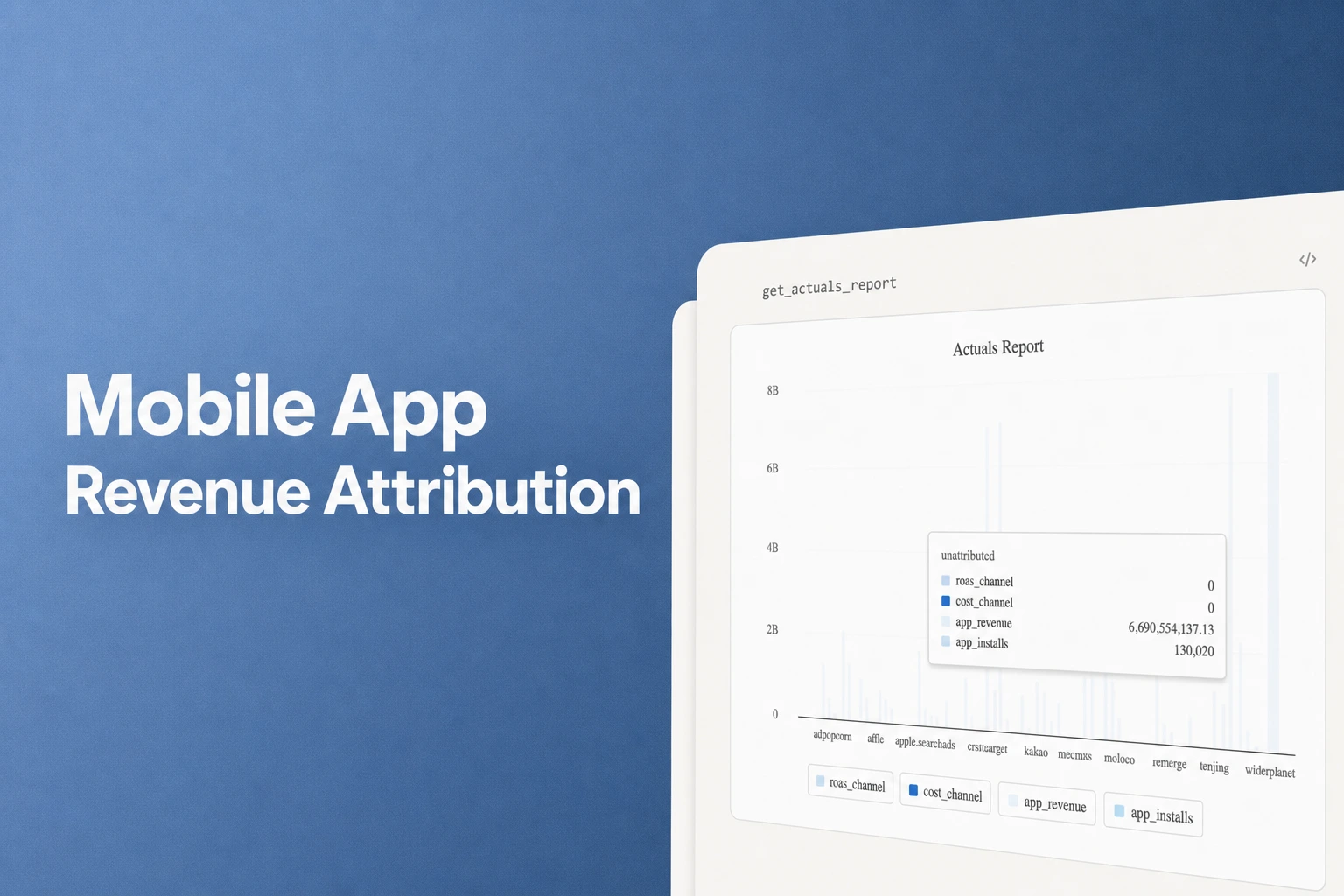
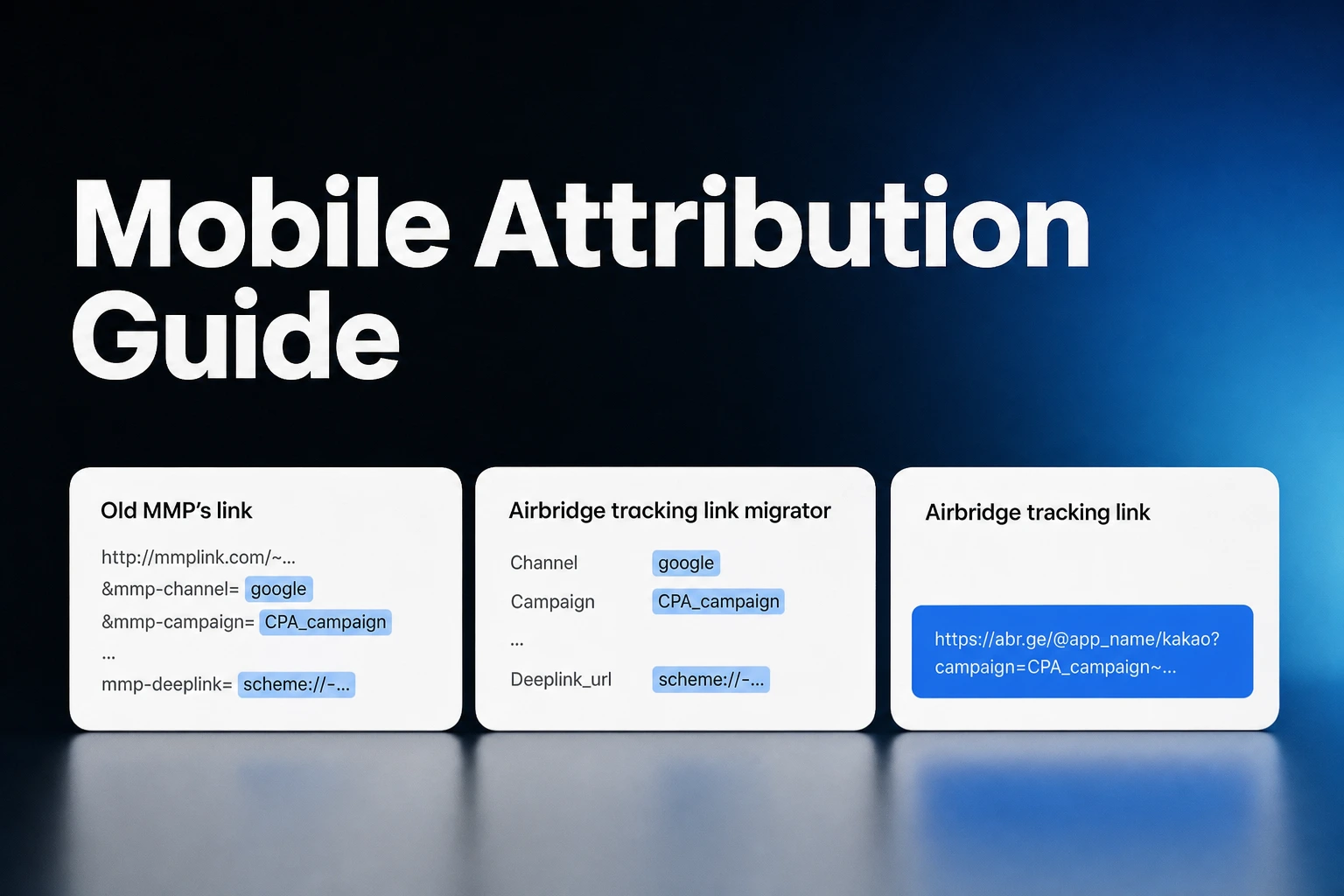
6 MMPs to Evaluate for a Production-Data Trial
Compare six MMPs by production-trial limits, subscription-event access, and parallel-test requirements; Airbridge Core suits subscription teams.
For a live-data bake-off, shortlist vendors by the production path they document.
- Airbridge Core pairs a 30-day free trial with campaign-linked trial conversions, payments, renewals, and refunds.
- Kochava publishes live-app attribution with monthly allowances of 10,000 attributed conversions and 500,000 app events.
- AppsFlyer publishes a 12,000-conversion Welcome Package and instructions for a controlled multiple-MMP comparison.
- Adjust, Singular, and Branch publish different free-entry limits, so match each offer to your app’s volume and test scope.
- Keep your current attribution and postback setup in place until your ad networks and engineers approve a parallel design.
For a subscription team, a useful trial ties an attributed install to the events that show whether an acquired user becomes a paying subscriber and stays one. For a subscription team, that means seeing an attributed install alongside the events that turn a paid acquisition into a trial, first payment, renewal, or refund.
Airbridge Core is a strong candidate when subscription outcomes are central: its official plan page offers a 30-day free trial and describes campaign-linked subscription events from RevenueCat, Adapty, or Superwall. Kochava and AppsFlyer are compelling starting points when the published free conversion allowance drives the decision. AppsFlyer is also a practical reference for planning a parallel evaluation because its support guide details the conditions and network-level complications of using two measurement partners at once.
1. What counts as a trial on your own production data?
A production-data trial measures your released app, real advertising activity, and the events your team uses to judge subscriber quality. The practical test is whether a new vendor can receive valid app and campaign data, attribute installs, and connect post-install subscription events during a defined evaluation period or usage allowance.
A test console can confirm whether an SDK reports activity from a controlled test device; Adjust’s Testing Console, for example, displays attribution data and event activity for an advertising ID.
Use six fields to assess each offer:
| Field | What the growth team needs to establish |
|---|---|
| App and release | Whether the documented route covers the released app and the app build or SDK needed to send data |
| Campaign input | Which live media sources can pass the clicks, impressions, or campaign identifiers needed for attribution |
| Conversion scope | Whether the vendor states a conversion or event allowance, and how it is counted |
| Subscription events | Whether trial start, trial conversion, payment, renewal, and refund events can be collected or connected |
| Time window | The free-trial duration or period attached to a free usage tier |
| Parallel operation | AppsFlyer’s multiple-MMP guide requires both SDKs in the app and media sources configured to support two-MMP measurement |
AppsFlyer’s multiple-MMP guide warns that multiple MMP SDKs can create deduplication issues, and duplicate postbacks may require network deduplication. Before a live comparison, assign an owner to map the SDKs, campaign links, event postbacks, and each network’s handling.
An exported campaign report gives the team report-level figures to compare across the test. Event-level raw data is a separate capability from report-level export. Airbridge Core includes report export to Google Sheets and CSV; raw data export is a Growth Plan feature. If your analyst needs event-by-event warehouse reconciliation, compare Growth’s raw data export with the report-level files in Core.
2. What production-data trial path does Kochava document?
Kochava’s Free App Analytics overview describes an account-first route: create an account, wait for approval, then add app profiles. Kochava says that once an app is live with the service, teams can measure and attribute conversions across paid and owned media. That is a direct fit for a team looking for live campaign measurement rather than an interface-only preview.
The published scale is 10,000 attributed conversions and/or 500,000 app events per month. Kochava says its support team contacts an account about upgrade options if it exceeds either monthly allowance. For a smaller subscription app, estimate expected conversions and event volume separately before deciding whether the free route covers the planned window.
Kochava’s 2016 announcement of Free App Analytics describes measurement of in-app events after acquisition and cohort drill-downs. It also describes real-time, device-level reporting against selected quality criteria. Together, these details make Kochava worth testing when the team wants to inspect post-install behavior as well as attributed installs.
For a subscription bake-off, define whether the “event” allowance will be consumed mostly by app behavior, subscription lifecycle updates, or both. A small app may have modest install volume and still generate many events from repeated engagement and renewal activity. Count the specific events you plan to send so that the cap is measured against the actual test, rather than downloads alone.
3. What production-data trial path does AppsFlyer document?
AppsFlyer’s pricing page describes a Welcome Package with 12,000 free conversions for the first year and 30 days of access to select premium add-ons. For an app team, the two limits answer separate questions: conversion volume shapes how much of the live funnel can be measured, while the 30-day add-on access sets the period for evaluating those premium capabilities.
AppsFlyer also publishes a multiple-MMP measurement guide for comparing attribution results between AppsFlyer and another MMP during a migration. Its guide says both MMP SDKs need to be integrated in the app and media sources need configuration that supports measurement with two MMPs.
For non-self-reporting networks, the guide says only one click attribution link can be used because the link redirects users to the app store. It recommends keeping the existing MMP’s click link while sending click-attribution data to AppsFlyer. Networks can send impression data to both MMPs. If both partners send install or event postbacks, the network needs to deduplicate them to avoid double charges or attribution.
AppsFlyer says some ad networks deduplicate installs but not events, so event postbacks need a single-MMP route where that rule applies. Some ad networks also accept postbacks from one MMP only, and SKAdNetwork postbacks can be sent to one SDK.
This published conversion allowance suits teams that can complete their migration comparison within the stated 12,000-conversion package. Keep the incumbent configuration documented, and get engineering and network owners to approve click handling, impression sharing, postbacks, and the iOS attribution path before the app release.
4. What can a team test in an Airbridge Core trial?
Airbridge Core’s Core Plan page lists a 30-day free trial, 500,000 included data points, and $0.0001 for each additional data point. Core is priced at $40+/mo and includes two third-party integrations. Treat data points as the plan’s metering unit, distinct from a vendor’s attributed-conversion allowance.
For a subscription app, the key test is whether campaign acquisition connects to downstream revenue activity. Airbridge states that, after connecting a billing platform, trial conversions, first payments, renewals, and refunds in RevenueCat, Adapty, or Superwall tie back to the campaign that brought the user in. A founder can therefore evaluate campaign attribution alongside the subscription lifecycle, using the billing platform already in the stack.
Use the trial calendar to choose a campaign start date that gives subscription events time to occur. A seven-day trial app that needs renewal evidence should acquire users early enough for the billing cycle to mature during the 30-day evaluation. For example, a user acquired in the first week has more of the trial period available to reach a payment or renewal than a user acquired in its final week.
Airbridge’s onboarding overview assigns SDK installation and event sending to the developer, followed by SDK validation, media-channel connection, tracking-link creation, and postback configuration. That is a practical production path: instrumentation comes first, then campaign sources and reporting are connected. Core also offers report export to Google Sheets and CSV, which gives a growth lead a way to examine report-level results outside the dashboard.
Start with a measured campaign slice, then expand traffic after the event mapping and expected data-point volume are clear. Estimate the expected points for the app’s SDK events and billing updates before routing the trial to all live traffic.
5. What production-data access does Adjust document?
Adjust’s pricing page describes its free Base solution with all Core features, up to 1,500 monthly attributions, and availability for up to 12 months. That offer is structured around a monthly attribution volume and an access period, so it suits teams that want a longer evaluation runway while staying within the published monthly allowance.
Adjust’s Testing Console documentation serves a different purpose: it lets a user enter an advertising ID to review attribution data and event activity for a test device. The console also explains how to clear a device’s history before repeating install or unique-event tests. This makes it helpful for implementation validation, while the Base plan’s monthly attribution terms are the relevant published measure for production-scale evaluation.
For a subscription app, list the test-device checks and live-app checks separately. Use the console to confirm the SDK sees the expected device activity and test events. Then set the campaign and app release scope for the live evaluation, and compare the resulting attributed installs and subscription outcomes against the team’s agreed event definitions.
If paid traffic could exceed that level during the evaluation, choose a smaller campaign slice or confirm the Base plan’s fit before including it in a full-volume comparison.
6. What production-data access does Singular document?
Singular’s FREE Tier FAQ says a new signup receives 15,000 free attributed conversions in its Starter tier. That gives a growth lead a public volume figure to compare with forecast installs and conversion volume during the planned test.
Build the test around the conversion allowance: decide how much live paid acquisition the team wants to observe, then estimate how quickly it will use 15,000 attributed conversions. Keep the conversion forecast separate from the subscription-event scorecard so a free conversion count does not stand in for a complete lifecycle evaluation.
Put three questions on the Singular scorecard: which campaign sources are available, whether the account receives the required post-install events, and which reports the team can use.
7. What production-data access does Branch document?
Branch’s Free Trial terms offer 30 days with access to its three Basics plans: Performance, Engagement, and Activation. The page says the trial does not include add-ons, allows three ad partners, and limits the team to 10,000 web links or QR codes per month. Those caps matter when the same bake-off needs several acquisition sources or a large number of link variants.
Branch’s trial has an important billing step at day 30. If a team designates a Basics plan, that subscription begins when the trial ends. If it does not designate a plan, the account automatically moves to Intro at $39 per month. A growth lead should assign someone to review the account before the trial ends and select or cancel according to the team’s decision.
If Branch confirms that the trial can receive your production data, fit the test within its three-ad-partner cap. Use a controlled set of links and QR codes so the 10,000-per-month limit covers the cases that matter. Branch’s page says trial links, QR codes, and attribution data are preserved after the trial, which can help with later review of what the account collected.
Branch and Airbridge Core both publish a 30-day trial, while Branch’s stated limits use different units: ad partners and link volume. The calendar period sets how long the team can observe cohorts, while partner and link caps determine how many sources and link variants fit. A team using more than three paid sources should reserve its Branch trial for three partners or choose a different evaluation route.
8. How do you run the bake-off without changing what your live MMP does?
Start with a written test plan and a named owner for each production change. The current MMP remains the operating source for campaign optimization and reconciliation until the team approves a parallel design with its ad networks and engineers.
-
Choose the acquisition slice. Select the live app, OS versions, campaigns, and dates for the evaluation. Keep the same markets, campaign names, and creative groupings across candidates where possible. This gives the team a clear denominator when comparing attributed installs.
-
Define the event contract. Write down the event names, timing, and source system your team will use in the comparison. This gives engineers and growth leads one shared definition for each subscription outcome.
-
Verify the SDK in a test environment first. Before live traffic, confirm that each SDK receives an install and a representative event from a controlled device.
-
Map each network’s data route before release. For non-SRN ad networks, AppsFlyer says one click attribution link can be used because it redirects users to the app store; its guide recommends keeping the existing MMP’s link while sending click-attribution data to AppsFlyer. Impressions do not redirect, so the network should send impression data to both MMPs. The guide also says networks should deduplicate install and event postbacks from both MMPs to prevent double charges or attribution. Record the approved handling for each media source in the test log before changing campaign settings.
-
Protect optimization and billing signals. Decide which MMP sends event postbacks to each ad network. AppsFlyer’s guide identifies networks where install deduplication does not extend to events and networks that accept postbacks from only one MMP. Assign a single owner to change postback settings, record the prior values, and set a rollback time.
-
Set the iOS observation period around Apple’s reporting windows. Apple’s SKAdNetwork documentation describes three possible postbacks: the first window closes after day 2, the second after day 7, and the third after day 35 from first app launch. The first postback arrives 24 to 48 hours after its conversion value is finalized; the second and third may take 24 to 144 hours after their windows close. For a user who first opens the app at the start of a 30-day trial, the third window closes after the trial ends, followed by another 24 to 144 hours for its postback. Choose whether the comparison covers early campaign signals or the full three-window reporting cycle.
-
Keep one comparison log. Record release version, SDK version, campaign and link, network connection, event mapping, test dates, and any postback change. Add the candidate’s period or limit, such as Kochava’s attributed conversions and app events, Adjust’s monthly attributions, Singular’s free conversions, or Branch’s ad-partner and link limits. This log makes a report difference traceable to test conditions.
If the team cannot confirm that a network permits the proposed parallel setup, keep the incumbent configuration unchanged and ask the candidate and network for an approved test path before adding a second SDK or postback. A production-data evaluation is valuable when the traffic is real and the setup is understood; a rushed second integration can contaminate the baseline it was meant to test.
9. How should you compare results when trial dashboards disagree?
Begin with a like-for-like scorecard. Separate setup completeness from measurement outcomes, then compare the same app, campaign dates, network inputs, event definitions, and time zone wherever the products expose them.
| Comparison area | Question for the review |
|---|---|
| Setup | Did the released app build send the expected SDK events, and did each network connect successfully? |
| Acquisition | Compare attributed installs for the same app, campaign slice, and reporting dates. |
| Event receipt | Did the vendor receive signup, trial, payment, renewal, and refund events with the expected names and timing? |
| Revenue link | Can the team connect subscription events to the campaign or acquisition cohort it is evaluating? |
| Reporting delay | Were reports compared after the relevant attribution and postback windows had time to complete? |
| Access | Can the growth lead export the level of report detail needed for the decision? |
Treat mismatches as diagnostic clues. If installs align but trial starts differ, investigate event mapping, app release coverage, and the timing of the billing event. If campaign totals diverge, check that the same click links, impressions, campaign filters, and dates fed each system.
AppsFlyer’s retargeting guide says in-app events are attributed to both retargeting and user-acquisition media sources during a re-engagement window. The guide says the app setting or self-reporting network determines the window duration, with a 30-day default. Record whether the test includes retargeting and which re-engagement window is configured for each candidate.
Label each report with its extraction date and whether the relevant postback window has matured.
If the founder needs to identify which campaign brings paying subscribers who renew, event linkage and billing integration carry more weight than a small install-count difference. If the immediate question is basic acquisition coverage, network connectivity and attributed-install reporting may be enough for the first shortlist decision.
10. Which vendors belong in the final bake-off shortlist?
Choose candidates according to the strongest fit for the test, not by treating each free offer as the same kind of trial. The published terms show different units and windows:
| Vendor | Published entry route | Published limit or period | Documented production-evaluation detail |
|---|---|---|---|
| Kochava | Free App Analytics account, subject to approval | 10,000 attributed conversions and/or 500,000 app events monthly | Add app profiles; measure conversions once the app is live with Kochava |
| AppsFlyer | Welcome Package | 12,000 free conversions in the first year; select premium add-ons for 30 days | Multiple-MMP guide documents a migration comparison and network-specific parallel rules |
| Airbridge | Core free trial | 30 days; 500,000 data points included, then $0.0001 per extra point | Connect RevenueCat, Adapty, or Superwall to link trial, payment, renewal, and refund events to campaigns |
| Adjust | Free Base solution | Up to 1,500 monthly attributions for up to 12 months | Testing Console checks test-device attribution and event activity |
| Singular | Starter free tier | 15,000 free attributed conversions | Public FAQ sets a conversion allowance for signups |
| Branch | 30-day trial across Basics plans | Three ad partners; 10,000 web links or QR codes per month | Trial data and links are preserved; account transitions at day 30 |
For a subscription app where campaign-to-revenue linkage is the deciding question, include Airbridge Core.
Add Kochava when its approval route and published monthly conversion/event allowances fit the app’s traffic. Add AppsFlyer when its Welcome Package volume fits and the team wants to follow a documented multi-MMP comparison path, with engineering and network owners handling the required safeguards.
Before committing to the shortlist, have the growth lead and engineer complete one checklist:
- The test uses the released app, live acquisition sources, and a written event taxonomy.
- The team has estimated each vendor’s relevant usage unit, such as conversions, events, data points, ad partners, or links.
- The incumbent MMP remains the operating source until network-level routing and postback changes receive approval.
- The iOS comparison window matches the question, whether early performance or the full SKAdNetwork window.
- A person owns trial expiry, including Branch’s day-30 account transition and Airbridge’s post-trial $40+/mo Core pricing.
FAQ
Does a free plan automatically mean production attribution?
No. No. Kochava says Free App Analytics measures conversions across paid and owned media once the app is live, while Adjust’s Testing Console checks attribution and event activity on a test device. A test-device console validates SDK behavior, while a live campaign test evaluates real acquisition and event data.
Can I run two MMPs at the same time?
Yes. AppsFlyer’s multiple-MMP guide describes simultaneous measurement as a migration-comparison option. AppsFlyer documents parallel comparisons during migration, while also specifying network rules for click links, impressions, event postbacks, and SKAdNetwork. Get your network and engineering owners to approve the exact configuration before shipping a second SDK.
How long should an iOS attribution bake-off run?
More than 35 days if the third-window result matters. Apple’s SKAdNetwork 4 documentation places the third window through day 35 and allows 24 to 144 hours for its postback, so a full three-window comparison needs longer than 30 days for campaigns launched at the start.
Which trial best fits a subscription app?
Airbridge Core is a strong fit when the team wants to inspect trial conversions, first payments, renewals, and refunds tied back to acquisition campaigns through RevenueCat, Adapty, or Superwall. Kochava, AppsFlyer, Adjust, Singular, and Branch each offer a different published volume or time boundary for the acquisition test.
Get Started Free
See how these criteria hold up on the real thing.