When Does an App Need an MMP? Mobile Attribution Guide
An app needs an MMP when ad-platform reporting cannot independently connect installs, trials, purchases, and revenue to campaigns—even on one channel. See where product analytics stops and how mobile attribution differs from web attribution.
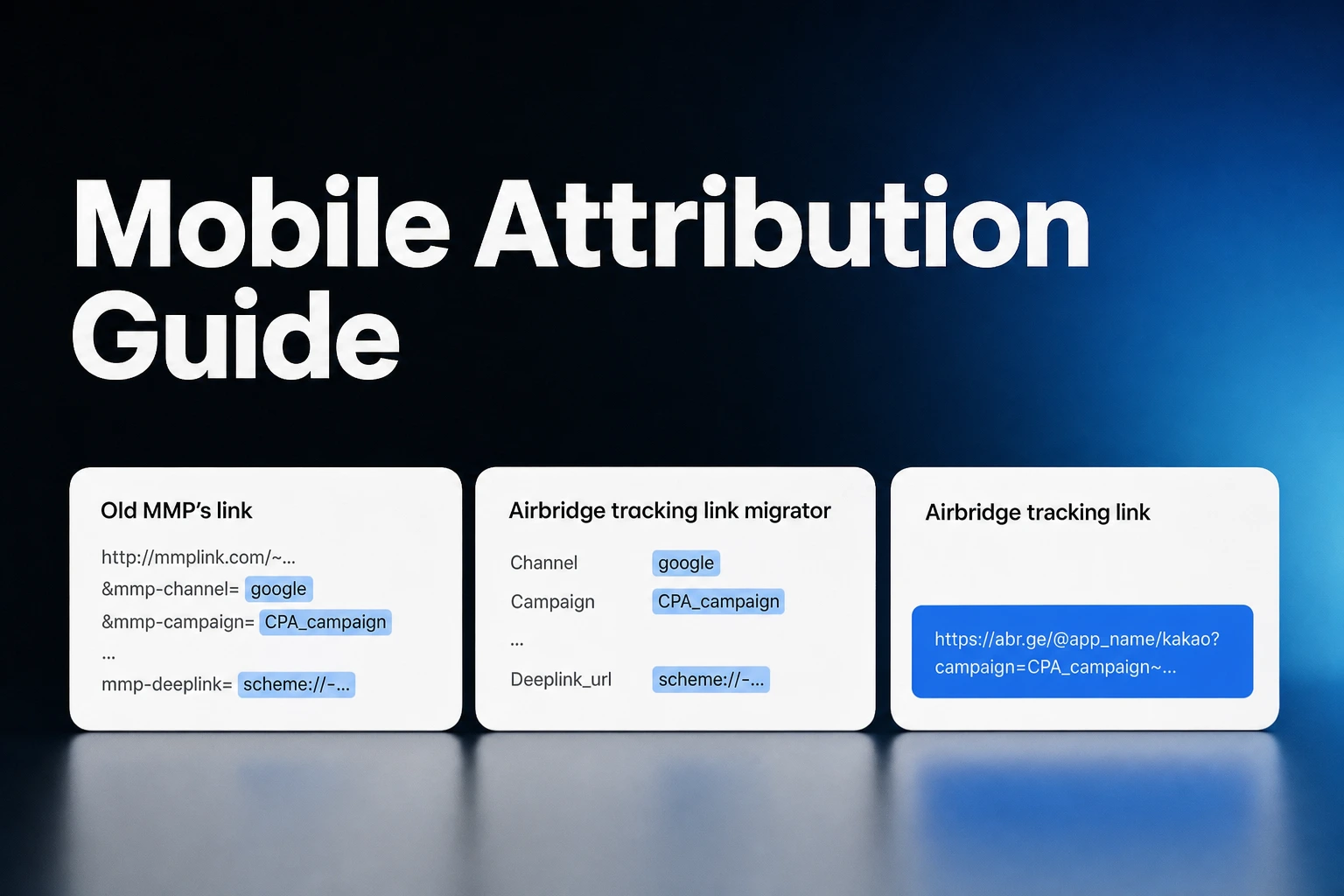
When an app needs an MMP
An app needs a mobile measurement partner when campaign decisions require an independent connection between attributed installs, trials, paid subscriptions, purchases, and revenue. Channel count and ad spend do not set that threshold. The threshold is whether the reports you use can answer which campaign brought customers who paid.
A small subscription app can reach this point on one advertising channel. You may run several campaigns, ad sets, creatives, and paywall variants within that channel. If one creative produces cheap installs but another produces more paid subscribers, CPI alone is not enough to allocate budget.
The practical problem is simple: your ads are buying downloads, but your MRR is not moving. An MMP adds an attribution layer between the ad platform and the app’s post-install outcomes. It lets the team evaluate acquisition against revenue rather than relying only on the platform that sold the ad inventory.
Use ad-platform reporting alone while a simple single-channel test answers the decisions you need to make. Add an MMP when the answer requires independent campaign-to-revenue evidence.
Signs that reporting has stopped being enough
The measurement threshold appears in day-to-day work before it appears in a budget spreadsheet.
You have crossed it when CPI improves while MRR stays flat. A lower cost per install does not establish that a campaign produces trials, paid subscriptions, renewals, or revenue.
You have crossed it when you cannot compare trial-to-paid conversion by campaign. Subscription apps often receive revenue after a free trial. A campaign report that ends at the install leaves the most important outcome outside the acquisition decision.
You have crossed it when ad-platform numbers conflict with each other or with your internal subscription records. Each platform applies its own attribution rules and reporting windows. Manual reconciliation can show differences, but it does not create a shared attribution view.
You have crossed it when campaign context disappears between an ad click and app activity. This commonly happens across app-store handoffs, deferred deep links, browser-to-app journeys, and privacy-limited iOS flows.
You have crossed it when a founder is maintaining a spreadsheet to decide where the next $1,000 should go. The work is not the spreadsheet itself. The problem is that the inputs do not consistently connect spend to the subscription outcomes that pay for the spend.
Do you need an MMP for one advertising channel?
Not always. Reporting from one platform can be enough during early testing when you have a small number of campaigns and only need directional install or conversion feedback.
One channel becomes an MMP use case when the channel report cannot answer which campaigns lead to valuable customers. This is common when a subscription app needs to compare trial starts, first payments, renewals, refunds, or revenue across campaigns and creatives.
An MMP is also appropriate on one channel when you need deferred deep linking. A deferred deep link preserves destination context when a user installs the app before opening it. That context helps connect the acquisition journey to the right in-app experience.
Fraud checks can also change the decision. Paid acquisition reporting is more useful when the team can use the Abnormal Installs Report to investigate anomalous installs and post-install activity before assigning more budget.
Future expansion is a valid reason to establish attribution early, but it is not required. Do not add a second measurement system merely because you expect to test another channel later. Add it when the current decisions already need independent evidence.
MMP vs. product analytics: different questions
An MMP answers an acquisition question: which campaign, channel, or creative should receive credit for an attributed install and the outcomes that follow it?
Product analytics answers a product question: what did users do after they arrived? It is used for activation funnels, retention, feature usage, paths, experiments, and session-level investigation. PostHog describes this work as turning product behavior into trends, funnels, retention curves, paths, and SQL queries.
A product analytics tool can store campaign properties that your implementation passes into events. That does not make it an independent acquisition referee. It does not decide how competing ad-network claims should be attributed, and it does not replace privacy-preserving mobile attribution methods.
An MMP can provide attribution-oriented funnels and retention reporting. It is not a substitute for detailed product-behavior analysis. If the team needs both budget allocation and product optimization, run an MMP alongside product analytics.
MMP, product analytics, and subscription platforms in one stack
Each system should own a different job.
| System | Primary job | What it should not own |
|---|---|---|
| Ad-platform reporting | Campaign setup, spend, delivery, and the platform’s own reported conversions | Independent cross-channel acquisition credit |
| MMP | Attribution from campaign to attributed installs, trials, purchases, and revenue | Subscription entitlements and detailed feature investigation |
| Product analytics | Activation, funnels, retention, feature usage, paths, and experiments | Independent ad-network attribution |
| Subscription platform | Subscription state, entitlements, billing events, renewals, and refunds | Campaign-level acquisition credit |
RevenueCat, Adapty, and Superwall can remain the subscription layer in this stack. They establish subscription and entitlement outcomes. The MMP connects those outcomes to acquisition campaigns. Product analytics uses the resulting context to examine behavior after acquisition.
This separation prevents a common reporting mistake: treating every dashboard as though it should produce the same number. An MMP may use an attribution window. A subscription platform may record a billing event. Product analytics may count an event based on its own identity and event rules. Define which system owns campaign credit, subscription status, revenue events, and product behavior before comparing reports.
Why mobile attribution differs from web attribution
Web attribution usually begins with browser sessions. Teams commonly use UTMs, first-party cookies, pixel tags, first-party data strategies, and server-side tracking to connect visits and conversions.
Mobile attribution crosses different boundaries. A user can tap an ad, move through an app store, install an app, grant or deny tracking permission, and open the app later. The measurement system needs mobile SDK events, app-store-aware attribution logic, and deep links that carry a user to the intended destination.
Apple’s App Tracking Transparency framework requires authorization when an app collects and shares data with other companies for tracking across apps and websites. Apple Developer Documentation sets this requirement for apps that collect and share data for tracking across companies.
Privacy changes do not eliminate mobile measurement. They change the form of the evidence. SKAdNetwork provides signed attribution postbacks and conversion values without user- or device-specific data. This means some iOS results are aggregated or conditional rather than available as user- or device-level evidence.
Apple AdAttributionKit also uses privacy-limited attribution. Apple states that click-through attribution covers installs within 30 days of an ad click, while view-through attribution covers installs within 24 hours of an ad view. These rules shape what an MMP can report.
Web-to-app measurement has another boundary. A person may begin on a landing page and convert in an app. Browser identifiers, app-store transitions, mobile SDKs, and privacy rules do not create perfect identity resolution across that journey. A useful measurement stack reports the supported signals, applies consistent rules, and avoids pretending every user can be linked across every surface.
Choose the smallest stack that answers the decision
| Option | Choose it when | Main benefit | Main limitation |
|---|---|---|---|
| Ad-platform reporting only | You are running an early, simple test on one channel | Lowest setup burden | The platform reports on its own performance |
| Product analytics without an MMP | Your main work is activation, retention, and feature behavior | Detailed product evidence | It does not independently assign campaign credit |
| MMP without separate product analytics | You need campaign-to-revenue attribution and do not need deep product analysis | Independent acquisition measurement | Limited answers for feature usage and qualitative product questions |
| MMP plus product analytics | You must make both acquisition and product decisions | Attribution context plus behavioral analysis | Requires shared event definitions, QA, and reconciliation |
| Airbridge Core Plan | You run paid subscription acquisition and need campaign-to-subscriber evidence across supported channels | Self-serve MMP setup with subscription revenue connections | Core has defined channel, integration, and web measurement limits |
The combined stack is not automatically the right stack. It is the right stack when acquisition allocation and in-product optimization both materially affect revenue. If your team is still validating one acquisition motion and one onboarding flow, begin with the tool that addresses the current blindspot.
Where Airbridge fits
Airbridge Core Plan fits lean consumer subscription app teams advertising on Google, Meta, TikTok, or Apple Ads that need campaign-to-subscriber and revenue evidence without replacing their existing subscription or product analytics tools.
Airbridge Core Plan is built for lean teams advertising on Google, Meta, TikTok, and Apple Ads. It includes attribution, revenue and funnel reports, subscription revenue aggregation, deferred deep linking, SKAN reporting, and web-to-app attribution.
Core works with RevenueCat, Adapty, and Superwall. Those platforms remain the source for subscription events and entitlements. Airbridge connects trial conversions, first payments, renewals, and refunds to the campaign that acquired the user.
The entry point is practical for a team that cannot justify an annual procurement cycle. Core includes a 30-day free trial, then costs $40+/mo. It includes 500,000 data points per month, with $0.0001 per additional data point, two third-party integrations, and no annual contract. See the current Airbridge pricing details before estimating volume.
Core is not full web event measurement. It supports web-to-app tracking, while full web event measurement belongs to Airbridge Growth Plan. Core also supports the listed four ad channels, standard events, and up to two third-party integrations. These limits make the selection clear: choose Core when the immediate need is paid mobile acquisition and campaign-to-subscription evidence, not an unlimited analytics implementation.
Implementation checkpoints
An MMP implementation succeeds when ownership is clear before the SDK is installed.
Start with event names. Define the events that matter to acquisition decisions, such as install, onboarding completion, trial start, first payment, renewal, refund, and purchase. Use the same business definitions across the MMP, subscription platform, and product analytics tool.
Assign the source of truth for each outcome. The subscription platform should own billing and entitlement status. The MMP should own attribution credit. Product analytics should own behavioral analysis. This prevents duplicate revenue events from becoming competing reports.
Connect subscription revenue before judging campaign quality. A campaign that drives trial starts can look successful until first payments, renewals, and refunds arrive.
Configure attribution links and deferred deep links where campaign context needs to survive an install. Test the route from ad click to app store to first app open and intended in-app destination.
Set privacy configuration deliberately. ATT status, SKAN or AdAttributionKit outputs, and channel integrations determine whether results are deterministic, aggregated, delayed, or conditional.
Validate with controlled checks. Confirm that test installs, trial events, subscription outcomes, and campaign names appear where expected. Confirm that one team member owns the recurring review of spend, attributed installs, trial-to-paid conversion, and revenue.
Airbridge Core states that one SDK installation takes about an hour on average. The SDK is one part of the work. Event ownership, subscription connections, privacy choices, validation, and reporting habits determine whether the resulting data can support budget decisions.
FAQS
FAQ
Can an MMP and product analytics run together?
Yes. An MMP provides the acquisition attribution layer. Product analytics examines what users do in the product. They should share event definitions and identity rules, but they should not be expected to answer the same question.
Does an MMP replace RevenueCat, Adapty, or Superwall?
No. A subscription platform remains the source for subscription status, billing outcomes, refunds, and entitlements. An MMP connects those outcomes to the campaign that acquired the user.
Does ATT stop deterministic attribution?
ATT limits tracking across apps and websites unless the user authorizes it. Apple’s ATT documentation defines that permission requirement. Mobile measurement can still use privacy-preserving attribution methods, but some iOS results are aggregated, delayed, or conditional.
Can an MMP measure a journey that starts on the web and converts in an app?
Yes, when the selected MMP supports web-to-app attribution and the journey is implemented correctly. The result remains subject to browser, app-store, device, and privacy constraints. Airbridge Core supports web-to-app tracking; full web event measurement requires Growth Plan.
Connect campaign spend to subscription outcomes
Start a free trial and validate the acquisition signals your next budget decision needs.