What Is a Mobile Measurement Partner (MMP)? Attribution and Analytics Explained
A mobile measurement partner is a third-party platform that reports attributed installs and post-install outcomes across ad channels. Learn how MMPs handle self-attributing networks, differ from product analytics, and fit a one-channel app.
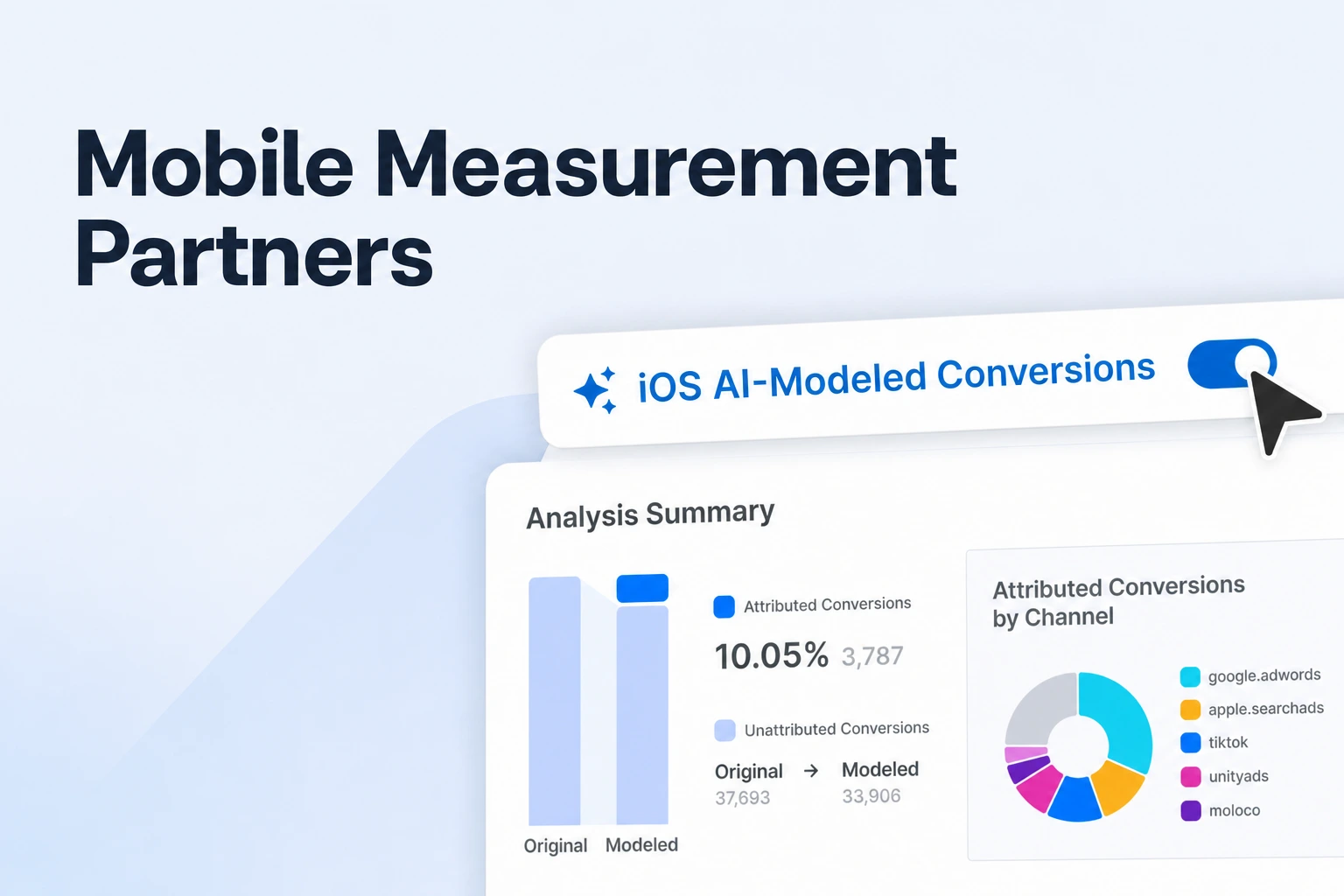
What does MMP mean in mobile marketing?
An MMP is a mobile measurement partner. It is a third-party platform that assigns credit for app installs and post-install outcomes, such as trials, purchases, subscriptions, renewals, and revenue.
In mobile marketing, an MMP connects advertising activity to what happens after someone installs the app. It can report which campaign, channel, or creative received credit for an attributed install. It can then connect that acquisition record to downstream events inside the app.
The term MMP has unrelated meanings in other fields. In app advertising, it means mobile measurement partner.
An MMP does not prove that an ad caused a conversion. It applies attribution rules to assign credit. That distinction matters when a founder sees strong reported install numbers but flat MRR. Attribution answers, “Which source receives credit under these rules?” Incrementality answers, “What additional outcome did this spend cause?”
The category definition is consistent across the measurement industry: an MMP is a third-party system that attributes and organizes app campaign data across channels. The Airbridge glossary sets out the same definition alongside the related terms this page uses, including mobile attribution, attribution modeling, self-attributing network, SKAdNetwork, and deferred deep linking.
What an MMP measures
Acquisition comes first.
The first stage is acquisition. This includes ad clicks, ad impressions, installs, and re-engagements. The result is an attributed install: an install assigned to a campaign or channel under the configured attribution rules.
The second stage is post-install activity. This can include onboarding completion, free-trial starts, first payments, renewals, refunds, and revenue. These events show whether a campaign bought users who became subscribers rather than users who only installed.
For a consumer subscription app, this changes the question from “What was our CPI?” to “Which campaign brought trial users who converted to paid subscribers and renewed?”
Airbridge Core connects subscription events from RevenueCat, Adapty, and Superwall to acquisition campaigns. It reports trial conversions, first payments, renewals, refunds, subscribers, revenue, and funnel outcomes. The subscription platform remains your choice—Airbridge Core includes up to two third-party integrations in its base plan.
How mobile attribution works in practice
Mobile attribution starts before the install.
A person sees or clicks an ad. An ad network sends information about that interaction to the measurement system. The interaction may use a tracking link, an ad identifier, a platform signal, or another approved measurement method.
The user then reaches an app store. This creates a break in the journey. The app is not installed until after the store handoff, and the measurement system must connect the install back to a prior ad interaction using the signals available for that platform.
After installation, the app SDK records events. These can include app open, account creation, trial start, purchase, or subscription renewal. The MMP applies its attribution rules and links eligible post-install events to the attributed acquisition source.
The MMP can then send a postback to an ad network. A postback is a server-to-server message that tells a network that a selected conversion event occurred. Networks use these signals for reporting and campaign optimization.
This workflow requires deliberate setup. The app needs an SDK or server-to-server implementation. The team needs to map the events that matter. A subscription app also needs its billing events connected. If trial starts and first payments are not sent consistently, the report cannot show those outcomes.
Airbridge Core uses one SDK installation, which takes about one hour on average. It also requires event mapping, ad-network integrations, and a subscription connector. Airbridge MCP can guide SDK setup through supported AI tools.
What attribution modeling decides
An attribution model is the set of rules that decides which marketing touchpoint receives credit for a conversion.
The rules usually include a touch rule and an attribution window. A touch rule determines whether the credited interaction was a click, an impression, or another eligible engagement. An attribution window determines how long after that interaction an install or event can receive credit.
For example, a user may click an eligible ad campaign, install the app two days later, and begin a trial. If the click falls inside the configured window, the model can assign the install and trial to that campaign.
A different user may install without an eligible recorded ad interaction. That install is usually reported as organic or unattributed. Organic does not mean the user never saw marketing. It means no eligible paid touchpoint received credit under the reporting rules.
Attribution models create a consistent reporting method. They do not measure causal lift. A campaign can receive last-touch credit even when another touchpoint influenced the decision earlier. That is why attribution reporting and incrementality testing serve different jobs.
What is a self-attributing network?
A self-attributing network is an ad network that can claim conversions using its own matching and attribution systems.
This matters because more than one source can have a plausible claim on the same user. A network may report a conversion in its own dashboard while another channel has a click that also falls within its attribution window.
Without an independent source of truth, channel totals can overlap. Adding up each network’s claimed conversions can produce a number larger than the app’s actual installs or purchases.
An MMP applies a consistent attribution policy across connected channels. This process is called deduplication. It reconciles competing claims so one attributed install is not counted as multiple paid acquisitions in a cross-channel report.
Native reporting still has value. It is where you configure campaigns and where networks receive optimization signals. It is not a neutral cross-network referee. The network reports performance according to its own conversion rules.
For a founder buying ads on one network, this distinction can look unnecessary at first. It becomes important when the business needs an independent record of trial-to-paid performance, when a second channel is added, or when network reports no longer match subscription revenue.
Mobile attribution vs. web attribution in practice
Web-to-app attribution connects web journeys to app measurement.
Mobile app attribution includes an app-store handoff and app SDK events that record post-install activity. An ad click can lead to an app store. The user installs the app later. The app opens in a different environment from the browser or ad placement. The measurement system must connect these steps with app SDK events, device-level signals where permitted, deep links, and platform-provided attribution frameworks.
Deep links send a user to a specific location in an app. Deferred deep links preserve the intended destination through the app-store install flow, then route the user after first open.
Privacy rules also shape the result. Apple requires AppTrackingTransparency authorization when an app tracks users across apps and websites by sharing data with other companies for tracking purposes. Apple Developer documents this requirement.
When identifier-level signals are unavailable, aggregate measurement becomes more important. Apple’s SKAdNetwork documentation describes privacy-preserving campaign measurement through postbacks that do not include user- or device-specific data. Privacy thresholds can also limit what those postbacks contain.
Mobile reports can be delayed, aggregated, or less granular than a browser-based last-click report. An MMP organizes the available signals, but it does not remove platform privacy limits.
MMP vs. product analytics tool
An MMP answers acquisition questions. A product analytics tool answers behavior questions.
An MMP assigns credit for attributed installs and post-install outcomes. It gives campaigns and channels the acquisition context. It helps answer which source brought a paid subscriber, how much revenue that source produced, and whether two networks are claiming the same conversion.
A product analytics tool examines what users do inside the product. It can analyze onboarding, feature adoption, retention, funnels, audiences, and custom events. It helps answer where users abandon signup, which feature correlates with retention, and how behavior differs between cohorts.
Google Firebase describes Google Analytics for Firebase as an app measurement solution for app usage and user engagement. It supports automatic and custom event collection. It does not independently reconcile competing ad-network attribution claims.
The tools often share events. A subscription app can send trial-start, purchase, and renewal events to both systems. The MMP uses those events to connect revenue to acquisition. The product analytics tool uses them to understand user behavior and product funnels.
A stack can combine an MMP for paid acquisition measurement, product analytics for in-app behavior, and RevenueCat, Adapty, or Superwall for subscription operations. Airbridge subscription connectors can connect trials, first payments, renewals, and refunds to acquisition campaigns.
Do you need an MMP if you advertise on one channel?
You may not need an MMP immediately if you run one channel, have simple goals, and only need the network’s own install or conversion reporting.
This combination may be sufficient for a one-network app with simple goals:
- You advertise through a single network.
- You only need basic install or purchase measurement.
- You do not need an independent attribution record.
- Your subscription workflow is simple.
- You can tolerate rebuilding your measurement baseline when you add channels later.
The cited ad-network documentation supports app conversion measurement for installs, purchases, and other selected actions. That can be enough for the earliest stage of paid acquisition.
An MMP becomes useful when you need to connect campaign performance to subscription outcomes. This is the revenue blindspot: ads buy downloads, but the founder cannot see which campaigns produce paid subscribers and renewals.
Independent measurement becomes useful for campaign-level trial-to-paid reporting:
- Campaign-level trial-to-paid reporting.
- Revenue and renewal outcomes tied to acquisition.
- A consistent baseline before adding a second channel.
- Web-to-app measurement.
- Deferred deep links.
- A source-of-truth policy that does not rely on a network grading its own performance.
Starting before channel expansion can provide a consistent baseline before another channel is added. If you first measure everything inside separate network dashboards, then later introduce cross-channel attribution, establish a consistent baseline for reporting.
For a US consumer subscription app spending $1,000–$5,000 per month, the decision is not whether an MMP sounds sophisticated. The decision is whether the team needs an independent answer to “Which ads bring paid subscribers?” before another month of spend disappears into installs that do not become MRR.
How to choose a measurement option
Choose based on the question you need answered now. A general MMP explainer should clarify the measurement category; vendor-by-vendor price comparisons belong in a dedicated, date-stamped pricing review.
| Option | Best use | What it can answer | Main limitation |
|---|---|---|---|
| Native ad-network reporting | A very early app advertising on one network | How that network reports its own campaigns and configured conversions | It is not an independent view across networks and may use different attribution rules from another platform. |
| Product analytics | Onboarding, feature adoption, funnels, and retention | What users do after they enter the product | It does not independently assign acquisition credit across ad networks. |
| Mobile measurement partner | Paid acquisition across networks, web-to-app journeys, or subscription revenue attribution | Which eligible channel or campaign receives credit for an install and later conversion under one attribution policy | It adds SDK, event, privacy, and reporting configuration that must be maintained. |
| Airbridge Core | A lean subscription team that wants to test independent measurement without an annual commitment | Attributed installs plus trial, payment, renewal, refund, subscriber, revenue, funnel, and retention reporting | Core covers mobile and web; PC, console, CTV, raw-data export, and fraud protection are Growth capabilities. |
For a small subscription app, the practical starting test is whether one controlled campaign can connect an attributed install to the subscription events the team already trusts. Airbridge Core provides a 30-day free trial, then starts at $40+/mo with 500,000 data points per month, $0.0001 per additional data point, and no annual contract.
That entry point matters when one overloaded developer must install the SDK while the founder is also running acquisition, reviewing creative, and watching MRR. Compare broader vendors separately when the team needs more channels, data destinations, fraud tooling, or enterprise terms, and verify current pricing before purchase.
FAQS
Measurement edge cases FAQ
Why do MMP totals and native ad-network totals disagree?
They use different attribution rules, windows, identifiers, and reporting methods. A network may claim a conversion under its own rules. An MMP applies a cross-channel source-of-truth policy and deduplicates overlapping claims. Privacy-driven aggregate reporting can also create timing and granularity differences.
Can an MMP and a product analytics tool use the same events?
An MMP uses configured post-install events for acquisition and campaign reporting. A product analytics tool uses in-product events for behavioral and product analysis.
What changes when ATT limits identifiers?
User-level matching becomes more limited where authorization is required and not granted. Measurement shifts toward permitted signals and aggregate frameworks such as SKAdNetwork. Reports can contain less user-level detail, and postbacks can be delayed or limited by privacy thresholds.
Is attribution the same as ROAS?
No. Attribution assigns credit for an install, trial, or purchase. ROAS, or return on ad spend, compares attributed revenue with advertising cost. ROAS depends on the attribution rules used to assign that revenue.
Does an MMP replace subscription infrastructure?
No. RevenueCat, Adapty, and Superwall manage subscription workflows. An MMP connects subscription outcomes back to the campaign that acquired the user.
Measure subscription revenue by acquisition source
Start with independent attribution before adding another channel.