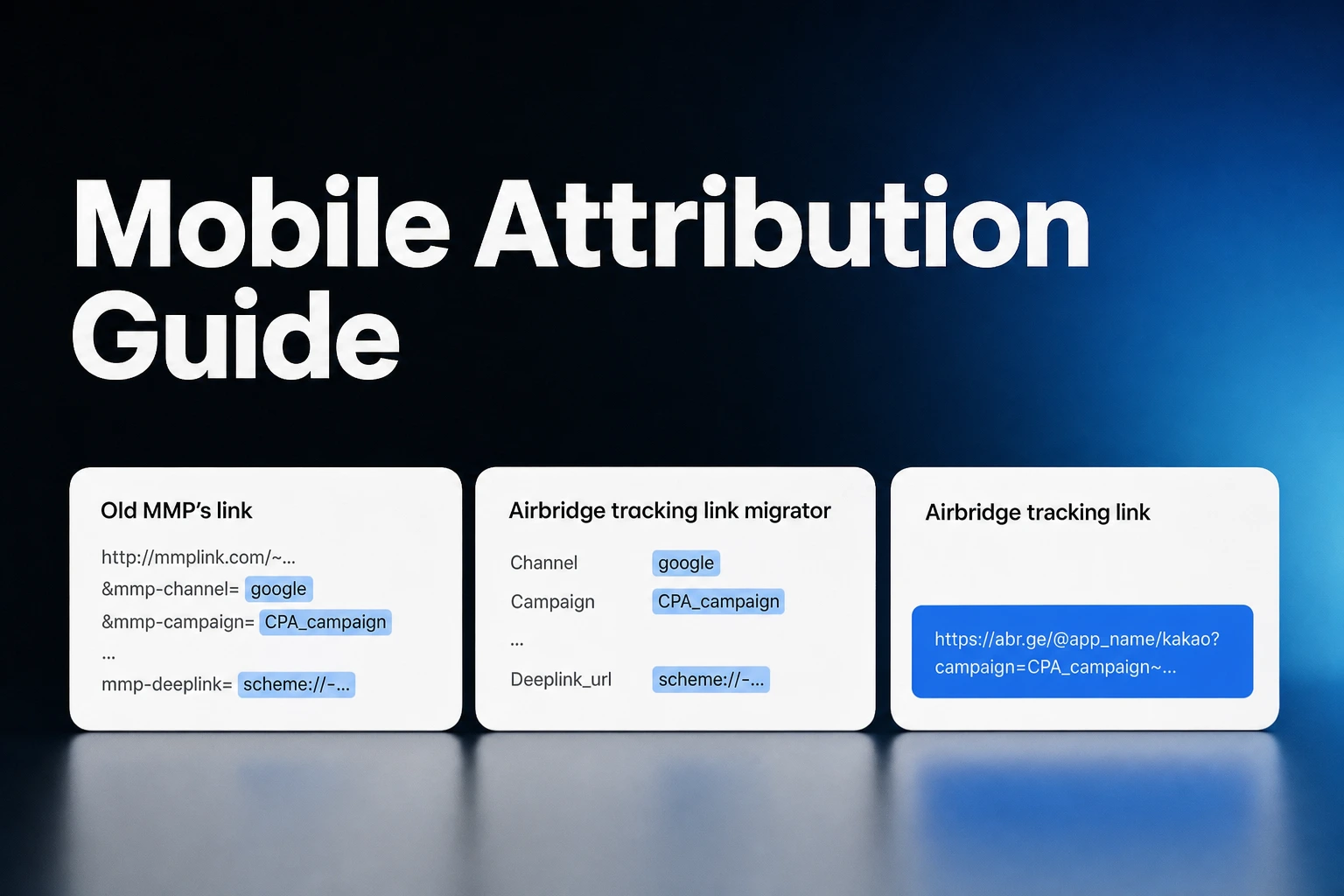
Mobile attribution for new app: when to add an MMP
Mobile attribution for new app starts with product analytics, adding an MMP when paid campaigns need subscriber or revenue outcomes, with a tool comparison.
For founders asking about mobile attribution for new app: begin with product analytics and add an MMP when campaign decisions need subscriber or revenue outcomes.
- Start with product analytics while your decisions center on onboarding, paywall use, trial starts, and subscriber behavior.
- Add an MMP when paid campaign decisions need credit for attributed installs and outcomes such as trials, paying subscribers, or subscription revenue.
- For a lean subscription team buying on Google, Meta, TikTok, or Apple, Airbridge Core connects campaign spend to subscription revenue and identifies campaigns driving paying subscribers.
- Airbridge Core offers a 30-day free trial, then $40+/mo, with 500,000 data points included each month and $0.0001 per extra data point.
Choose measurement around your next decision: product analytics explains what people do inside the app; an MMP connects acquisition sources to attributed installs and later outcomes your team wants to grow.
What mobile attribution answers that product analytics does not
Product analytics answers, “What did people do after opening the app?” Mobile attribution answers, “Which paid campaign brought in the people who installed, started a trial, or became subscribers?” A small team may need both, but it can begin with the first while its immediate work is improving the app experience.
Firebase Analytics logs some events automatically and lets an app log additional events with logEvent() (Firebase’s event guide). In Firebase’s event reference, tutorial_begin marks onboarding start and tutorial_complete marks completion; pairing them in a funnel shows how many users finish onboarding. A funnel shows where people drop between steps, such as opening the app, finishing onboarding, viewing a paywall, and starting a trial.
Attribution adds acquisition context to those outcomes. At first app launch, AppsFlyer determines install attribution; later in-app events on the same device are attributed to the install’s original media source (AppsFlyer’s in-app event guide). That connection lets a founder ask whether a campaign drove subscribers, rather than stopping at the number of downloads.
If it is “Which onboarding screen loses new users?”, product analytics can answer it. If it is “Should I move next week’s budget from campaign A to campaign B because one produces more paid subscribers?”, attribution must connect the campaign to subscription events and spend.
What to measure before the first paid campaign
Write one event map that gives each subscription step the same name and meaning across your app, analytics, and billing setup. Start with events that match real product actions, then check that the event fires once at the correct moment.
- Choose an activation event. Pick the first action that shows a new user reached value, such as completing onboarding or finishing a first core task.
- Map the subscription path. Record paywall viewed, trial started, first payment, renewal, and refund when those events apply to your billing model. Keep the names distinct so a trial is not counted as a paying subscriber.
- Use consistent names and values. For detailed event reports, log the relevant recommended Firebase events and their prescribed parameters (Firebase’s event guide). For Firebase’s
begin_checkoutandview_cartevents, include a currency parameter whenever you send a value parameter so revenue metrics can be calculated accurately (Firebase’s event reference). - Review a simple funnel. Compare onboarding starts with completions, then paywall views with trial starts and first payments. This gives the team product-level conversion rates to improve before it evaluates channel performance.
On Android, Google Play’s Install Referrer API reference returns the referrer URL along with client-side and server-side click and install timestamps. That gives a new app an Android acquisition breadcrumb when the referral URL carries campaign information. It is a useful narrow input for source and timing checks, alongside product analytics and the store’s own reporting.
Before launch, verify that your event names reflect the business question, that the purchase amount has a currency, and that the test flow produces the expected event sequence. For example, a founder can install a test build, finish onboarding, start a test subscription flow, and confirm the app reports each step once. This creates a baseline for product fixes without asking an attribution tool to solve a product instrumentation problem.
When an MMP becomes worth adding
Add an MMP when you are spending on paid acquisition and a budget decision depends on connecting campaign data to what users do after install. Multiple channels make cross-channel comparison especially useful, but one channel can justify attribution too if its campaign reporting does not answer the question you need to act on.
Use these signals to decide:
- You need to compare paid campaigns by trial starts, first payments, or subscription revenue, rather than installs alone.
- Your ad reports and subscription records use different campaign or outcome definitions, so you cannot confidently tie spend to paying subscribers.
- You are buying across multiple networks and need one view of attributed installs and downstream outcomes.
- You need campaign-level iOS results; Apple’s SKAdNetwork documentation describes attribution through privacy-protected postbacks.
SKAdNetwork postbacks omit user- or device-specific data and may include values from the ad network and advertised app only when Apple’s privacy threshold is met. Starting in iOS 16.1, conversion-value updates across three windows can result in up to three postbacks for ads signed with SKAdNetwork version 4. With AdAttributionKit, an app developer can receive a copy of the winning postback by opting in with a server endpoint in the app’s information property list (Apple’s postback guide).
The decision, then, is whether the campaign-level result you can receive is useful enough for the budget choice you need to make. Define the outcome before you select a tool: a team optimizing for trial starts needs reliable trial events; a team evaluating subscriber acquisition needs first-payment or subscription-revenue events connected to spend.
Which attribution option fits a new app?
Start with the job you need done: in-app behavior, campaign-to-subscription outcomes, deep-link routing, or spend aggregation. The table compares each option on the documented function relevant to a new consumer subscription app. Pricing and feature availability can depend on the provider’s plan and setup, so use the capability that addresses your current decision as the selection criterion.
| Option | Documented fit | Best match for a new-app requirement |
|---|---|---|
| Firebase Analytics event guide | Logs in-app events and supports reports and event funnels. | Fit for improving onboarding and paywall conversion before campaign-level budget decisions. |
| AppsFlyer in-app event guide | Ties in-app events to the original install’s media source. | Fit for connecting attributed installs to post-install actions such as trials and purchases. |
| Adjust attribution guide | Attributes installs and post-install events to their source; Adjust says its Fraud Prevention product blocks common types of fake installs. | Fit for teams evaluating campaign attribution and fraud prevention together. |
| Branch deep-linking guide | Sends users without the app to relevant content after the first install. | Fit when referrals or links should route new users to a specific in-app destination. |
| Singular mobile attribution overview | Measures installs, re-engagements, and conversions. | Fit for teams evaluating cross-channel attribution alongside marketing-cost reporting. |
| Airbridge Core | Connects campaign spend to subscription revenue for lean teams advertising on Google, Meta, TikTok, and Apple. | Fit for a lean subscription team that needs campaign-to-subscriber reporting. A 30-day free trial, then $40+/mo; 500K data points/month included, then $0.0001 per extra data point; no annual contract. |
Branch’s deep-linking documentation explains deferred deep linking: a user can open relevant content after installing the app from a link. This solves a routing problem, such as taking someone who tapped an invitation to the matching screen after app installation. A team focused on campaign-to-revenue measurement can prioritize attribution and event integration; a team relying on referral links may give routing equal weight.
Per Singular’s cost aggregation documentation, Singular gathers cost types each network exposes, including paid media, affiliate fees, podcast and influencer sponsorships, and offline marketing costs. It also collects campaign metadata at the deepest level each network supports, such as creative, bid, audience, publisher, keyword, and geographic data. For a founder reconciling network costs with campaign results, this cost view addresses a different task from mapping in-app events.
Airbridge Core connects a billing platform such as RevenueCat, Adapty, or Superwall so trial conversions, first payments, renewals, and refunds can be tied to the campaign that brought the user in.
A staged setup and review for your first campaigns
Treat attribution as a staged workflow. Establish product events first, add campaign measurement when a budget decision requires it, then review the same defined outcome across your chosen reporting sources.
- Before paid spend, test the event map. Confirm that activation, trial, and payment events match the actual product flow. Keep product questions, such as onboarding drop-off, in product analytics.
- At campaign launch, select for the question you need to answer. List the networks you plan to buy on and the outcomes that matter. Choose an MMP whose documented coverage and event integrations match those needs. For a lean subscription app buying on Airbridge Core’s documented channels, connect the billing events that tie subscription outcomes back to campaigns.
- After a complete reporting period, compare like with like. Use the same event definition and date range when you review campaign spend, attributed installs, trials, and paying subscribers. For iOS comparisons, use campaign-level postback results: they omit user- or device-specific data, and include app or ad-network values only when Apple’s privacy threshold is met.
- Change one budget decision at a time. If a campaign produces fewer trials but more paid subscribers, judge it by the outcome your business set as its goal. Keep the event map stable while you review, so a change in tracking does not look like a change in campaign performance.
This sequence prevents a common small-team failure: spending money before the app can report what a useful subscriber did. First make the in-app journey legible. Then add attribution when campaign-level evidence can change where next week’s spend goes.
FAQS
FAQ
What is mobile app attribution?
Mobile app attribution connects an app install or later in-app outcome to an acquisition source, such as a paid campaign. It helps a team compare campaigns by attributed installs, trials, purchases, or subscription revenue.
What are the best mobile attribution platforms?
For a new app, use Firebase Analytics for in-app funnels; choose AppsFlyer or Adjust when you need install and post-install attribution, Branch when deferred deep links matter, Singular when you need cost aggregation with attribution, and Airbridge Core when a lean subscription team needs campaign spend tied to paying subscribers on its documented channels.
Is product analytics enough before paid acquisition?
Yes, when the immediate decisions concern in-app behavior such as onboarding completion or paywall conversion. Product analytics gives the team a baseline; campaign attribution becomes useful when paid spend must be compared by downstream outcomes.
When should a new app add an MMP?
Add one when a paid-campaign decision depends on attributing trials, paying subscribers, or revenue to acquisition campaigns. That can be at launch if the campaign needs those answers from the start.
Get Started Free
See how these criteria hold up on the real thing.
Related reading