Mobile Attribution Without Coding: A Founder-to-Engineer Guide
You can own attribution planning without coding, but app integration still needs testing; compare developer, builder, AI-assisted, and specialist routes.

The short answer: you can own the setup without writing SDK code, but your app still needs implementation.
- You can define what to measure, prepare campaign and app details, and configure available dashboard settings.
- A developer connects the mobile SDK, maps the events your app sends, and tests the build.
- Airbridge Core offers a developer-led self-serve path with guided setup and log verification.
- Use AI assistance to get platform-specific instructions, then confirm the integration in the app and test it before launch.
Yes, a founder can set up mobile attribution without personally writing code. The important distinction is between owning the measurement plan and making changes inside the iOS or Android app. You can lead the first job and prepare almost everything for it; app-install and in-app-event measurement still needs a working app integration and a test.
For a small subscription app, make the work a short handoff: you define the conversion questions and campaign needs, your developer installs the SDK and connects the events, and both of you verify that test activity reaches the attribution dashboard. If your team uses Airbridge Core, its self-serve setup is explicitly developer-installed, while Airbridge's onboarding article describes AI-guided instructions and log verification.
Can I set up mobile attribution without writing code myself?
Yes. You can own the plan and dashboard work while an engineer handles the app-side integration. Mobile attribution connects marketing interactions to outcomes such as an attributed install or an in-app purchase, so the app must send the relevant install and event information to the measurement service.
The founder decides what counts as success and which campaigns need a fair comparison. The developer makes the app collect and send the signals that let the measurement service report those outcomes.
For Airbridge Core, the Core Plan setup overview says a developer installs the software development kit (SDK), logs predefined events, and uses the Test Console to validate the setup before launch. The same article describes a Quick Start Guide that walks through setup.
Some vendors also support server-side event APIs. For example, Branch's Attribution API documentation describes sending install, reinstall, and open events server-side, while its mobile SDKs handle those event types by default. A server-side route still needs someone to connect the app or backend, define the payload, and verify the events. For a lean team, treat that as another engineering route, not a dashboard-only shortcut.
Your first decision is therefore practical: who can make and test an app change? If an engineer on your team can take the SDK task, you can own the rest. If no one can, use a builder-supported integration or hire a qualified implementation specialist, then keep the same testing requirement.
Which setup work can I own as the founder or marketer?
You can make the attribution setup easier by arriving with clear answers instead of asking an engineer to guess what marketing needs. Start with the business question: do you need to compare paid campaigns by attributed installs, trial starts, paid subscriptions, or later renewals? For a subscription app, list the funnel steps that change a budget decision, such as trial start and first paid conversion.
| Workstream | Founder or marketer owns | Developer contributes |
|---|---|---|
| App identity | Select the app entry and confirm the store listing, brand name, and the platforms in scope. | Confirm the app's technical identifier and build framework. |
| Campaign plan | Name the paid channels and campaigns you plan to measure, and decide how you want results grouped. | Identify the app framework and platforms, then confirm that the chosen SDK supports them before implementation. |
| Events | Define each event in everyday language, the moment it occurs, and the fields needed for subscription reporting. | Map the defined event to the actual app action and implement its call in the right place. |
| Links | Set campaign names and choose where a click should send a user, such as the app or store page. | Implement and test any app-side deep-link behavior the campaign needs. |
| Launch check | Agree what a successful test looks like in the dashboard. | Build and run the app, trigger the test, and confirm the events arrive. |
For Airbridge, identify the registered app and its Airbridge app name before the engineer starts. In Airbridge, the General App Settings guide says the app name is its unique ID within Airbridge and that the ID is used for SDK integration and tracking-link generation. Choose it carefully before registering the app, and give the exact name to your developer.
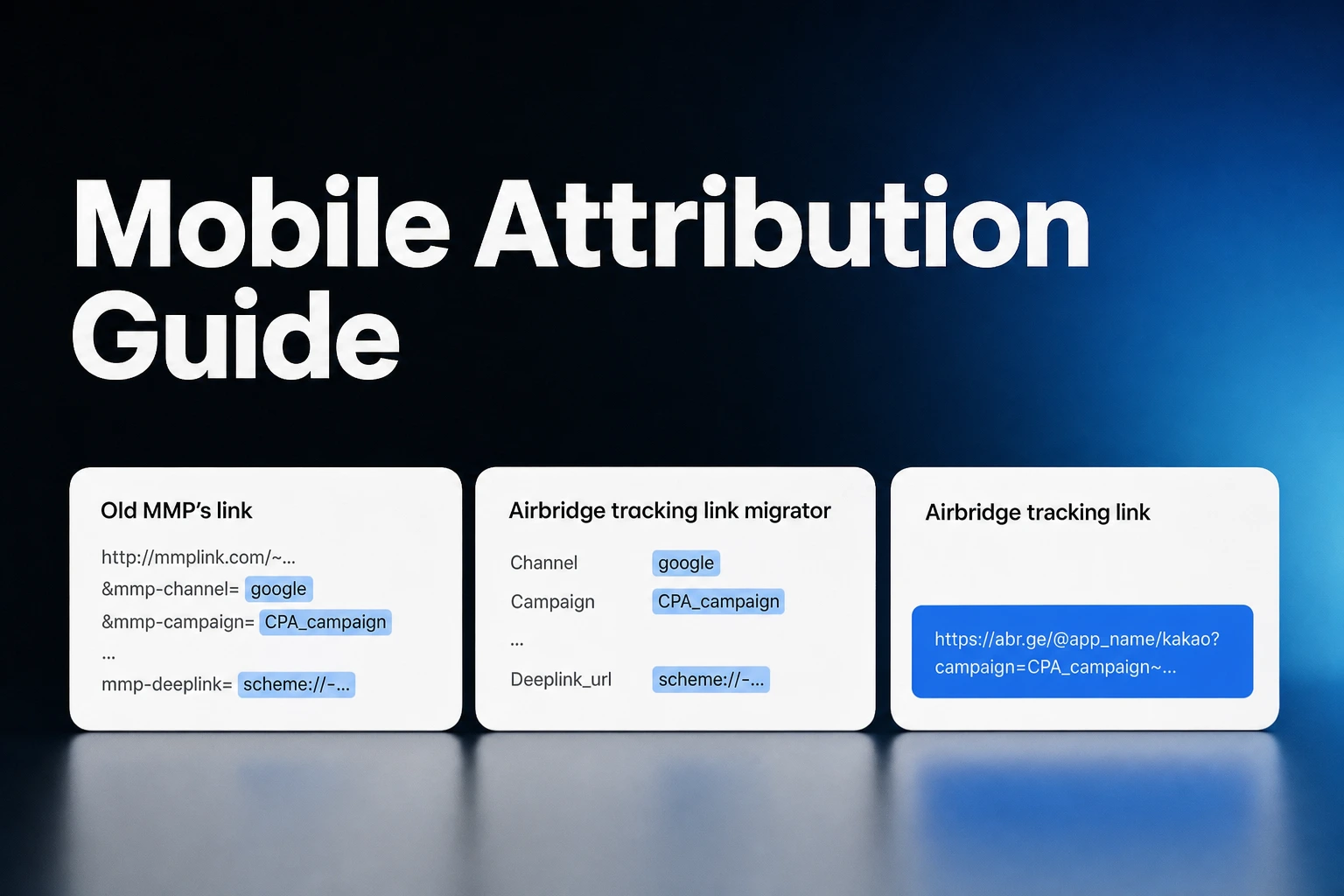
A tracking link is a campaign URL that carries source details through a click and later measurement. Airbridge's Create Tracking Link reference describes using links to attribute click, post-click install, and post-install purchase outcomes. You can prepare a naming pattern for channel, campaign, ad group, and creative so each link answers a real reporting question. For example, use a campaign label that distinguishes a spring offer from an always-on campaign, rather than sending the engineer an unstructured list of ad URLs.
Airbridge's Core Plan overview says 25 standard events come preconfigured, including subscription events such as Start Trial, Subscribe, and Unsubscribe. Use that as a starting point for your event plan: check which standard events match your trial and paid-subscription steps, then identify the exact points in your app where they happen. Your developer maps each selected event to the app action that triggers it, such as a trial start or paid-subscription state.
Before asking for implementation, send your developer a one-page brief with five items: the app platform and framework, the attribution outcomes, the campaign channels, event names and triggering moments, and any links that need to open a specific app screen. This gives the engineer a concrete task and gives you a shared definition of done.
What exactly should I hand to the app developer?
Hand over decisions, identifiers, and test expectations. The engineer should receive the app and build details, access to the vendor's platform-specific instructions, a short event map, and a person who can answer product questions about when an event should fire.
Use this checklist to prepare the ticket:
- App and build: Name the app, operating systems, development framework, and the build or repository the engineer should change. Include the app's current store listing and technical identifier so the engineer can match the right product to the right configuration.
- Attribution goal: State whether the first launch needs install measurement only, install plus trial events, or install plus a fuller subscription funnel. Keep launch scope focused on events that will inform the next marketing decision.
- Event definitions: For every event, give its business meaning and trigger. “Trial started” should mean the user has actually entered the trial state, for example, rather than simply opened a paywall.
- Campaign plan: List the media sources and campaign naming pattern you plan to use. Note any campaign link that should route users to a particular app destination.
- Test outcome: Agree that the developer will install a test build, trigger the intended events, and show you the matching results in the attribution tool before the live campaign relies on them.
- Access and ownership: Identify who can access the dashboard and who will maintain the app integration when the app changes. Share credentials through the team's approved secure process.
Airbridge's iOS software development kit (SDK) guide and Android SDK guide provide separate, platform-specific installation instructions. That matters because “install the SDK” means different project steps in iOS and Android builds. The developer should follow the instructions for the app's actual framework and the currently supported SDK setup, then compile and run the project.
Your role is to make “the right events” concrete. Tell the developer when a trial begins, when a subscription becomes paid, and which subscription actions matter in the first reporting view. The engineer can then map those business rules to app behavior instead of inventing them.
Ask for a handoff that includes the changed project files or pull request, the SDK version and platform configured, the event names implemented, and the test results. Those deliverables give the next developer enough context to update the integration later. They also give you a clear record that the test checked both the technical connection and the events your campaigns need.
How can AI help with Airbridge setup, and what work remains with a developer?
Airbridge's Core onboarding article describes AI-guided SDK installation through platform selection, step-by-step setup, and real-time log verification. It lists iOS, Android, React Native, Flutter, and Expo, with MCP-assisted setup through Cursor or Claude Code and a manual path.
Airbridge MCP lets AI services such as Claude, Claude Code, ChatGPT, and Codex access Airbridge data and tools, as described in the Airbridge MCP Help Center guide. Its Setup SDK Install tool generates a platform-specific Airbridge SDK installation guide. Airbridge MCP is documented as a beta feature.
A useful founder workflow is:
- Select the app platform and framework. Tell the assistant whether the app is iOS, Android, React Native, Flutter, or Expo. Ask for instructions that match the repository's current setup.
- Give the generated guide to the developer. The engineer compares the guide with the app's build and applies the needed SDK changes. Keep the app project, release process, and final code review under your team's normal engineering control.
- Run a test build and inspect the logs. Use the guided log verification and the vendor's test tools to confirm that the SDK starts and the expected events arrive.
- Resolve app-specific questions with the engineer. Event triggers, build configuration, and deep-link handling depend on how the app works. The developer can confirm those details in the project.
Does generated SDK code mean I can skip the developer?
No. Generated instructions do not replace a developer applying SDK changes in the app and testing the resulting build.
| Setup aid | Documented output | Developer's remaining work |
|---|---|---|
| Airbridge AI-guided onboarding | Platform selection, guided setup, and real-time log verification across the listed platforms, with manual or MCP-assisted setup. | Apply the instructions in the app project, map the required events, and test the build. |
| Airbridge MCP Setup SDK Install | A platform-specific Airbridge SDK installation guide. | Compare the guide with the app framework, implement the app-side integration, and test the outcome. |
| AppsFlyer SDK integration wizard | The official iOS and Android wizard guide says a developer supplies credentials and choices, then receives code snippets to copy into the project. | Copy and adapt the snippets in the app, then follow the wizard's journey through successful testing. |
The AppsFlyer wizard asks for the App ID and AppsFlyer Dev Key, plus choices such as SDK mode and whether to receive conversion data. Its event flow asks the developer to choose event names and parameters. Those inputs illustrate why code generation still needs someone who knows which app is being changed and what its business events mean.
The AppsFlyer Android integration guide makes the app-side tasks concrete: the app's applicationId must match the app ID in AppsFlyer, the developer imports and initializes the SDK in the app's global Application class, and the developer tests the integration. Its test workflow includes using an attribution link, installing on a registered test device, and inspecting conversion data. An assistant can provide instructions, but a developer must connect those details to the actual Android project.
If an engineer can edit the app, generated instructions give them a starting point for following the documented integration route. If you have no engineer, choose a route with a documented integration that a builder or implementation provider can complete, and ask for test evidence before treating it as live.
What if my app developer can install the SDK?
Use the developer-led route. It gives your team a clear owner for the project changes and lets the person who knows the app connect the measurement events to actual product behavior. For a subscription app, it also makes it easier to catch a mismatch such as recording a paywall view when your reporting question is about a paid subscription.
A practical sequence is:
- Confirm the app identity and build. For Airbridge, give the engineer the registered app name and say whether the task covers iOS, Android, or both. Give the developer the appropriate vendor account access and the SDK guide for the right platform.
- Install and initialize the SDK. The engineer follows the current platform instructions in the app project and confirms the project builds and launches.
- Map agreed events. Connect business events such as a trial start or paid subscription to the app's corresponding state changes. Keep the event list small enough to test in the release window.
- Run SDK and event tests. The engineer triggers test installs and events, checks the vendor's logs or test console, and records whether the intended result appears.
- Review together before launch. You confirm the campaign and event names match your reporting plan; the engineer confirms the app implementation and build are ready.
Choose Airbridge Core when your small subscription team has a developer available and wants guided setup.
An iOS integration can also involve details that a founder should leave to the person maintaining the build. Airbridge's current iOS instructions, for example, include a project build-setting requirement before installation and specify SDK package setup. The engineer should use the current documentation for the app's configuration rather than rely on a copied snippet from another project.
Can a no-code or low-code app platform handle attribution for me?
A no-code or low-code builder can handle attribution when its official documentation covers your provider, app platforms, and required events. Choose the builder route only when its official guide names the attribution provider, supported mobile builds, in-app events, and test steps.
Ask the builder's documentation or support team these questions before committing to the route:
- Does the integration support both iOS and Android builds you publish?
- Does it connect an attribution SDK inside the app, or does it cover only website or campaign-link activity?
- Does it collect attributed installs and the in-app events you need, including your trial and paid-subscription milestones?
- Can it pass event values and campaign details required for your reports?
- Does the builder support deep links to the app screens your campaigns need?
- Where does the builder show test installs and in-app events before launch?
Treat a builder integration as ready when its published documentation names the mobile platforms and tells you how install and in-app events get from the app to the attribution product. A website-only integration measures the web funnel; use a mobile app integration for campaign questions about app installs and in-app activity.
If the builder supports the right SDK and events, follow its integration guide and ask whoever owns the build to run the same test checks you would require from a developer. If the builder supports only part of the job, use the native integration for the rest or assign the remaining app change to a developer. This avoids spending a launch week discovering that the builder's “tracking” setting measures a different step from the one your campaign needs.
When should I hire an implementation specialist?
Hire an implementation specialist when the app needs a code change and no one on your team can own it, or when your app framework and measurement plan need experience your current developer lacks. The specialist can handle the app-side installation, while you retain ownership of campaign goals, account access, and deciding whether the test results answer your question.
Scope the work around the outcome instead of buying a vague “attribution setup.” Give the provider a written brief that names the app framework, the iOS and Android builds, the chosen attribution product, required events, and any deep-link behavior. Ask for a clear handoff with the project changes, the event names implemented, the test procedure, and results visible in the attribution dashboard.
Agree on who controls credentials and who maintains the integration after the contract ends. Keep account ownership with your company, share only access needed for the implementation, and make sure the final instructions and project changes are available to your team. A specialist who installs an SDK but leaves without event definitions or test results has completed only part of the outcome you need.
A specialist is a practical route when you lack engineering capacity; a dashboard-only setup is not a substitute for app-side implementation. If you already have an engineer who can follow a documented SDK guide, delegate the install and retain the specialist budget for a specific gap such as complex deep-link routing or a framework the team rarely uses.
Is web-to-app tracking enough if I want to avoid an app SDK?
Web-to-app measurement is enough when your question is about the website journey, such as which campaign brought a visitor to a mobile web page. It is a different scope from connecting an ad interaction to an attributed app install and an in-app event such as a trial start.
Branch's documentation on attribution methods describes its Web SDK for web-to-app use cases and conversions that happen on mobile web. It also explains that deterministic attribution of an app install to a Branch-link click depends on the service having seen the link click and paired the browser cookie with the device ID, with a device ID available at install. The distinction is useful: web activity can support the web journey, while attribution to what happens in the app uses app-side signals and the vendor's supported matching method.
For a web campaign that sends someone to a website and measures a web signup, web measurement may answer the business question. For a campaign whose goal is an app install, trial, or paid subscription inside the app, use a route that reports those app outcomes. The Branch event reference distinguishes mobile SDK and Web SDK events, including web_session_start for a Web SDK open; the event source affects what the report means.
A server-side route can handle certain app events as well. Branch's Attribution API supports server-side install, reinstall, and open events, while mobile SDKs send those event types by default. That route shifts the technical work to the backend and event payload, so it can suit a team with server engineering capacity. Choose it for a defined implementation plan, not as a way to remove implementation from the project.
How do I choose a route and know the setup is ready?
Choose by the outcome you need and the person who can implement it. Use this sequence to make the call:
- Name the measurement outcome. If you need campaign-level app installs and subscription events, plan for an app SDK or a supported server-side implementation. If you need website conversions only, scope the work to web measurement.
- Use a developer-led route when an engineer can own the app change. The engineer can follow the platform guide, integrate the SDK, and run the test build.
- Choose a builder integration only when its documented coverage matches your measurement job. Confirm that its guide covers your provider, mobile platforms, and required events, then assign any unsupported app change to an engineer or specialist. Assign an engineer or specialist to any gap.
- Use AI assistance for platform-specific instructions and log verification. For Airbridge, choose the manual or MCP-assisted onboarding route that fits the developer's workflow.
- Hire a specialist when no one on the team can implement the required app change. Define the implementation and handoff deliverables before work starts.
- Test the result before relying on campaign reports. Match the test to the outcome, then confirm the corresponding event in the dashboard.
The Airbridge Android SDK testing guide separates event collection from install attribution: an organic-install test confirms event collection, while an attributed-install test checks that Airbridge collects and attributes the install. For the latter, the documented test expects an Install event and an attribution channel marked airbridge_sdk_test. The Airbridge iOS SDK testing guide gives the corresponding iOS test instructions.
Use this final launch checklist with your engineer:
- The test build launches with the SDK initialized.
- The expected install appears in the test view.
- A test attributed install shows the expected test attribution source.
- Each required in-app event appears after the team performs its real trigger in the test build.
- Event names match the agreed definitions, so trial start and paid subscription represent the intended app states.
- Any campaign link opens the intended destination and carries the campaign information the team plans to report.
- The engineer records the SDK version, project change, and test results for future app updates.
AppsFlyer's iOS SDK integration guide describes tests for SDK startup, connection to the attribution service, and correct attribution-data transfer. Use that as a useful model for what “tested” means across vendors: the app runs, the service receives the data, and the data represents the intended attribution outcome. A setup is ready when your evidence matches the launch question, not merely when an SDK package appears in the project.
FAQS
FAQ
Can I configure mobile attribution from a dashboard?
Yes. Prepare your app identity, campaign names, and required subscription events before implementation. Give the developer those decisions as a short handoff with the platforms and builds in scope.
Does an AI setup assistant install the SDK for me?
No. Airbridge's AI-guided setup provides instructions and log verification; the developer still makes and tests app changes.
What should I ask my developer to test first?
Start with an install test and the one or two subscription events that drive your next campaign decision.
Can a website pixel replace an app SDK?
A website measurement tool can report web activity, such as a mobile-page conversion. Branch's Attribution API documentation describes server-side INSTALL, REINSTALL, and OPEN events.
Get Started Free
See how these criteria hold up on the real thing.
Related reading