CPI vs. CPA for Subscription Apps: Look Beyond Installs
Compare install cost, trial-start cost, and first-paid acquisition cost across the same subscription app cohorts.
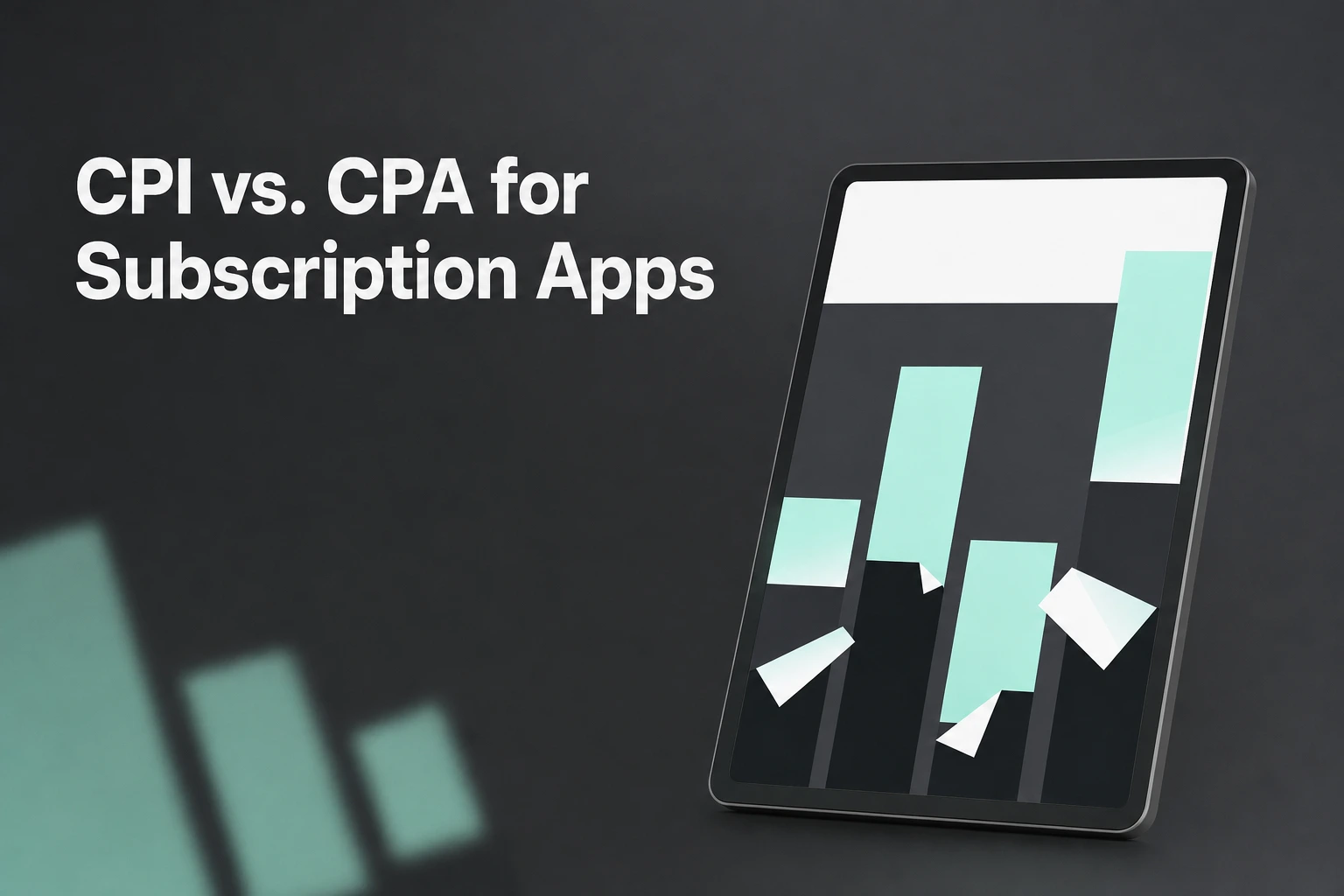
Cost per install (CPI) tells you how much you spent to acquire an install. Cost per action (CPA) tells you how much you spent to acquire a defined outcome. For a subscription app, name that outcome explicitly: a trial start and a first paid subscription are different actions and can rank channels differently.
Compare the same spend with three distinct outcomes
| Metric | Calculation |
|---|---|
| Cost per install | Campaign spend divided by attributed installs |
| Cost per trial start | The same spend divided by unique users starting a trial in that cohort |
| Cost per first paid subscriber | The same spend divided by unique users becoming paid subscribers in that cohort |
Count only one first paid conversion per user. Include users who purchase directly if your metric covers all first paid acquisitions. If you only want trial-to-paid performance, define the trial starter group separately. An event count that includes renewals cannot substitute for either measure. Airbridge provides 25 preconfigured standard events, including three subscription events: Start Trial, Subscribe, and Unsubscribe. With the default RevenueCat mapping, both trial conversions and renewals map to Subscribe, so the total does not represent first paid subscribers.
A lower CPI can lead to a higher paid acquisition cost
| Illustrative campaign | Spend | Installs | Trial starters | First paid subscribers | CPI | Trial-start CPA | First-paid CPA |
|---|---|---|---|---|---|---|---|
| A | $1,000 | 500 | 80 | 20 | $2.00 | $12.50 | $50.00 |
| B | $1,000 | 250 | 75 | 40 | $4.00 | $13.33 | $25.00 |
Campaign A brings in installs at half the cost and has a slightly lower cost per trial start. Campaign B costs half as much per first paid subscriber. If paid acquisition is your goal, that changes which campaign looks more efficient. Neither number by itself establishes profitability; you also need revenue, margin, and a time horizon.
Keep the measurement comparable
Use the same install-cohort definition, attribution settings, cost scope, and follow-up window for both campaigns. A cohort whose trial period has not ended can look artificially weak. Leave zero-conversion rows undefined rather than treating them as zero cost. In Airbridge, use the Actuals report for the supported cost and event breakdowns and check your subscription data for the first-paid definition and cohort window before dividing the totals.