3 Attribution Routes for a Five-Person Team With No Analyst
Compare CRM, ecommerce and app attribution by conversion record, setup and cost, with Airbridge Core’s six reports and $40+/mo price for app teams.
Choose the attribution route by the conversion you need to explain.
- CRM or B2B pipeline attribution connects marketing activity to a qualified lead, opportunity, or closed deal.
- Ecommerce attribution connects campaigns to online-store orders and revenue.
- A mobile measurement partner connects paid campaigns to attributed installs and later app events.
- For a subscription app team, Airbridge Core includes six built-in reports and has a published Core Plan price.
If the team is five people and nobody owns analytics full time, start with the business record that proves a customer outcome. A CRM deal, an ecommerce order, and an app install followed by a subscription event are different records, so each calls for a different attribution route.
This choice matters when ad spend rises but the team cannot tell which campaign led to a trial, purchase, or renewal. A clear route keeps the setup tied to the data your business already uses and the question you need answered each week.
Start with the conversion record you need to explain
Attribution assigns credit to marketing touchpoints that precede a conversion. The right system depends on where that conversion is recorded and how people reach it.
| Your valuable outcome | Conversion record to use | Attribution route | First candidates to assess |
|---|---|---|---|
| A qualified lead, sales opportunity, or closed deal | CRM contact, account, opportunity, and deal stages | CRM-native or B2B pipeline attribution | A CRM attribution feature, or a B2B pipeline tool if the journey spans several marketing and sales interactions |
| An online purchase | Ecommerce order, order value, and store customer record | Ecommerce attribution | Triple Whale or the reporting already available in your commerce and analytics stack |
| An app install followed by a trial, purchase, renewal, or other in-app action | First app open and later app events | Mobile measurement partner, or MMP | Airbridge, AppsFlyer, Adjust, or Branch |
Choose the row that matches the business record your team uses to confirm a conversion.
A team may instead need to compare campaigns by attributed installs, trial starts, paid subscriptions, or revenue after a defined period.
Set a single primary outcome for the first evaluation. A team that tries to explain every event at once can spend weeks connecting tools before learning whether the main report helps anyone make a decision.
If a qualified lead or deal is the outcome, start with CRM or B2B attribution
Choose this route when the result you want to improve appears in the sales pipeline. A paid search click that turns into a qualified lead and later becomes a closed deal needs to be read alongside those lead and deal records.
A CRM-native attribution feature suits a team whose marketing and sales process already centers on a single CRM. A separate B2B pipeline attribution product suits a team that needs a broader view across marketing activity and a longer sequence of sales interactions.
Map the path in the terms your sales team uses: campaign or referral source, known contact, qualification status, opportunity, and closed revenue. Define what counts as a qualified lead, when an opportunity begins, and which record marks a deal as won before the first dashboard review.
Give each pipeline stage one shared meaning and one owner who can explain when a record moves forward. If sales and marketing use “qualified lead” differently, the report will combine unlike outcomes.
Capture campaign source when a lead is created, and decide how the team will label a lead whose source is unknown. If sales stages are rarely updated, establish that routine before relying on deal-level channel reports.
Use a short handoff check to keep the first evaluation focused:
- Which system holds campaign source, contact, account, opportunity, and deal-stage records?
- Which exact stage or revenue event counts as the result, such as qualified lead, opportunity created, or closed-won revenue?
- Can the team capture campaign source at lead creation and update the stage consistently as sales progresses?
Open a sample lead from a known campaign and follow its source field as it moves to sales and through the stages. Confirm that the report reflects the same source and stage as the CRM record; repair gaps in source capture or stage updates before expanding the evaluation.
If you sell online, shortlist ecommerce attribution
Choose an ecommerce-focused tool when the purchase occurs in a web store and an order is your trusted revenue record. The decision is about how campaign and customer activity relates to store orders, order value, and repeat purchases.
Triple Whale's ecommerce dashboard guide describes bringing Shopify, advertising platforms, email and SMS, and site data into one reporting environment. The same guide names Shopify and WooCommerce as store connections and Meta ads as a marketing source to connect, then suggests adding other platforms the business uses.
A practical first validation is to choose a known store order and confirm that it appears in the reporting setup with the store's order value and the campaign sources the team expects to compare. Keep the store record as the reference for whether that test purchase occurred.
Triple Whale's guide says teams can connect Shopify, select a dashboard template or start from scratch, and customize views for different roles. It also describes seven attribution models, from single-touch through multi-touch, that can be selected for a dashboard.
A single-touch model assigns credit to one interaction; a multi-touch model distributes credit across interactions. Choose a model that answers the team's campaign question, then keep that rule consistent when comparing results.
Triple Whale's Clicks & Deterministic Views overview describes a model that combines first-party click data with eligible view-through data from paid social platforms, including Meta, TikTok, and Pinterest. This matters for a store whose customers can see an ad, later return through another route, and purchase without clicking the original impression.
A team should tie the model choice to the buying cycle it wants to understand: a direct-response promotion may be assessed through click-based interactions, while a store evaluating campaigns that influence later visits may want to examine view-through credit as well.
Triple Whale's marketing attribution explanation describes its total-impact model as assigning credit to touchpoints across a customer's journey. That provides another way to examine channels beyond a single last interaction, with the store's own order record remaining the outcome to reconcile.
A five-person ecommerce team can keep the first setup focused. Connect the store, one or two paid channels that receive meaningful spend, and the email or SMS source that influences repeat visits. Start with one report that helps answer a current decision, such as which campaign led to orders or whether a customer segment returns to buy again.
If paid campaigns lead to app installs and subscriptions, shortlist an MMP
Choose a mobile measurement partner when the team buys app installs and needs to relate those campaigns to actions that happen after the app opens. Apple's overview of mobile measurement providers describes MMPs as working across marketing channels to measure app downloads and post-install events. Apple also notes that providers can use attribution windows and that their methods can differ from Apple Ads reporting.
For an app team, an install outcome starts with a person opening the app for the first time. A later session may then carry events such as starting a trial, completing a purchase, or creating an account. The important question becomes which campaigns are associated with valuable events after the first open, not only which campaigns produced a download.
Airbridge belongs in this app measurement route. Its onboarding documentation describes Airbridge as a mobile measurement partner that brings attribution from data collection through performance measurement into a unified dashboard.
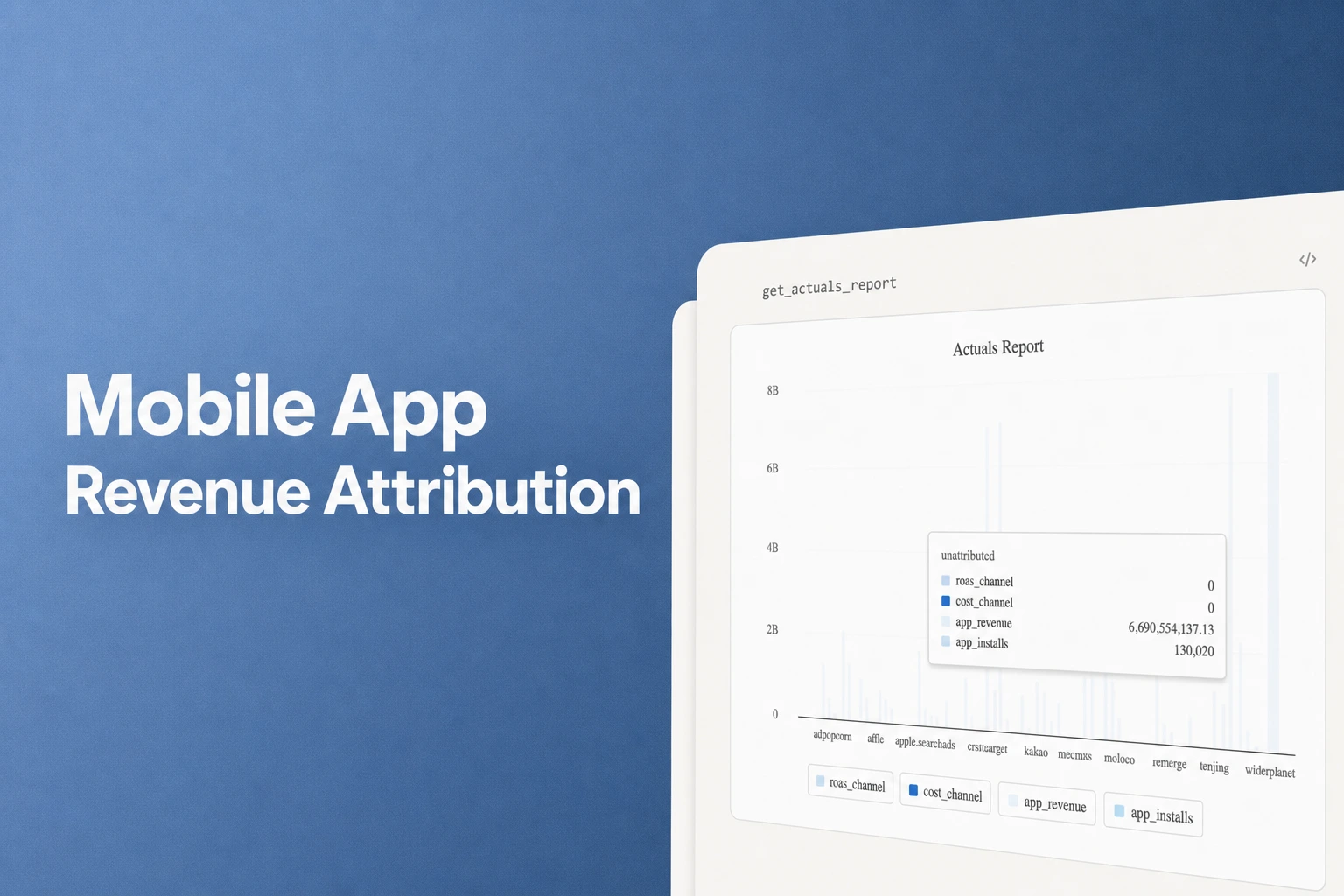
For a small subscription-app team, Airbridge Core is worth evaluating when its reports match questions about paying subscribers, trial drop-off, and users who stay. Airbridge's Marketing Analytics page says Core includes six built-in reports, with no custom dashboards to design and no data team required. The Actuals Report shows the funnel by channel, campaign, and ad group; the Funnel Report follows install to signup, signup to trial, and trial to paid by acquisition channel. The Retention Report shows Day 1, 7, and 30 retention by campaign source.
The report names give a lean team a practical place to start: choose one decision, such as which campaign leads to paid subscriptions or where trial users stop converting. Define the app events for trial start and paid subscription consistently so those reports reflect the outcomes the team wants to compare.
| Candidate | Documented measurement detail | Setup or reporting detail to weigh |
|---|---|---|
| Airbridge | Onboarding documentation describes Airbridge as a mobile measurement partner; Core marketing analytics lists six built-in reports. | Onboarding includes app registration and settings, SDK integration, attribution setup, and connection to ad-channel accounts. |
| AppsFlyer | The in-app events overview says its Events page shows LTV in-app-event performance across media sources. | A developer implements event code where applicable. The raw-data event report includes chronological activity and event parameters, and raw-data reporting is a premium feature; optional Customer User ID can help cross-reference data. |
| Adjust | The attribution-window guide defines the time an ad engagement can qualify for install attribution. | The team must understand the configured click and view windows when reviewing campaign credit; an engagement outside its window does not qualify for that install. |
| Branch | The attribution overview covers installs, app opens, and in-app activity. | Attribution depends on method, platform requirements, consent status, and configuration. The Attribution API supports server-side INSTALL, REINSTALL, and OPEN submissions; that route makes session management the developer's responsibility. Branch also describes anonymous custom user IDs for connecting app and web events, and direct ad-platform integrations that confirm qualifying interactions. |
For a concrete window example, Adjust's attribution guidance says a click within seven days and a view within 48 hours can both qualify, while the click wins under the attribution waterfall. An install nine days after the click falls outside that example's click window, so another eligible touchpoint can receive credit or the install can be attributed to organic if none exists.
What a five-person team owns after choosing a route
A small team can operate attribution when it assigns ownership for inputs and recurring checks before launch. A platform can provide reports, but the business still needs a reliable record of what counts as a conversion and someone who notices when a source stops sending it.
For CRM or B2B pipeline attribution, assign an owner for lead source, qualification, opportunity, and close-stage definitions. Sales and marketing should use the same labels and agree on the date that starts the reporting clock.
For ecommerce attribution, assign an owner for store, order, campaign, and customer connections. The person who reviews the report should know which revenue figure to use, including how the team handles discounts, refunds, and repeat orders in its own accounting process.
For app attribution, assign a developer to app instrumentation and a growth owner to campaign rules and report checks. Airbridge's onboarding steps start with app registration and settings such as time zone and standard currency, then SDK integration, attribution setup, and channel or event connections.
An SDK is a software component that sends app activity to a measurement service. This work commonly needs product or engineering time because the app has to send the events the growth team wants to analyze. A report can only answer a trial-to-paid question when the app sends a consistent trial event and a consistent paid event.
Use this operating checklist for the initial implementation:
- Name one conversion that determines whether the platform works for the team.
- Identify the business system that owns the conversion record, such as CRM, ecommerce store, or app event stream.
- List the campaign sources the team actually funds and the connection needed for each source.
- Define the event or pipeline stage that represents a real customer outcome.
- Assign a developer or administrator to connect and test the data source.
- Assign one growth or product owner to review the report and maintain campaign and event definitions.
- Schedule a recurring comparison between the attribution view and the business record used to confirm leads, orders, or subscriptions.
AppsFlyer's in-app event guide recommends lowercase alphanumeric event names and says event names are case-sensitive in raw data. Consistent names help a small team keep a trial event distinct from a paid conversion in reports and exports.
For each app event, write down its name, trigger, and source of truth. A trial-start event should represent the moment the trial begins, and a paid event should represent the successful subscription payment. The team can then check a test user journey against the event stream before it uses campaign summaries to move budget.
AppsFlyer's attribution measurement guide recommends comparing MMP data with platform-reported figures regularly and investigating discrepancies that lack an explanation.
Attribution also answers a different question from incrementality. Attribution assigns credit according to a chosen rule; an incrementality test asks whether a campaign caused outcomes that would not otherwise have happened. AppsFlyer's guide recommends using incrementality testing alongside attribution when a team needs to test whether a credited channel actually drives additional conversions.
Compare cost within the route you need
Keep cost comparisons inside the category that measures your conversion. A CRM pipeline product, store attribution tool, and MMP can use different pricing units and reporting packages, so compare the total cost of the one data path your team needs rather than counting features across unlike products.
Airbridge Core includes a 30-day free trial, then costs $40+/mo with 500K data points per month included; each additional data point costs $0.0001, and there is no annual contract.
Use the allowance as a budget input rather than assuming each event costs the same across vendors. Estimate the events the app will send in a typical month, compare that volume with the included data points, and use the published extra-point rate to model a month above the allowance.
For the three routes, the cost check should follow the work required:
| Route | Cost item to align with the business outcome | A useful first question |
|---|---|---|
| CRM or B2B pipeline | Contacts, users, connected marketing sources, or plan access to deal attribution | Does the plan cover the records and pipeline stages your team will report? |
| Ecommerce | Store volume, order data, connected ad sources, or reporting package | Does the plan include the store and channels that influence your orders? |
| Mobile app | Event volume, included data points, SDK and integrations, and access to needed reports | Does the included usage cover the events used to measure installs, trials, and paid subscribers? |
The cost comparison becomes useful when it includes the labor behind each setup. A platform with the right report and manageable connections may suit a five-person team better than a broader package that requires the team to create custom pipelines or maintain extra dashboards.
Run a short evaluation before committing
A short test should prove one complete conversion path, from marketing activity to the business outcome. Keep the test narrow enough that a small team can review the setup and report together.
For a subscription app, make the test path concrete: identify a paid campaign, the first app open, the event that marks trial start, and the successful payment event. The growth owner can compare the campaign report with the app and subscription records for that journey, then decide whether the reported outcome answers the budget question.
- Write the decision in one sentence. For example: “We need to know which paid campaigns lead to paid app subscribers,” or “We need to connect campaign spend to closed deals.”
- Choose the right route. Use CRM or B2B pipeline attribution for qualified leads and deals, ecommerce attribution for online orders, and an MMP for app installs followed by in-app events.
- Map the records and events. List the campaign source, the identifier or connection that relates the source to a person or account, and the lead stage, order, install, or app event that proves conversion.
- Confirm the source integrations. Check the actual CRM and campaign connections, store and ad connections, or app SDK and channel setup needed for the selected candidate.
- Assign implementation work. Give a developer the app SDK and event work when the team chooses an MMP. Give the CRM, store, or marketing administrator ownership of the corresponding records and connections for other routes.
- Test a representative journey. Follow a real or test lead through a pipeline stage, a store visit through an order, or an app open through a trial or paid event. Confirm that the source record and attribution report describe the same outcome.
- Review how credit is assigned. For an app MMP, document attribution windows and event rules. For ecommerce, pick an attribution model the team can apply consistently. For pipeline, agree on the stage that counts as a qualified outcome.
- Set the recurring owner and review date. One person should check that sources keep sending data and compare the report with the CRM, store, or app records that define the outcome.
Use the test to answer an operational question as well as a product question: can the team keep the data connections and conversion definitions current without adding a full-time analytics role? Airbridge Core is a relevant app-route candidate when six built-in reports match the team's campaign, funnel, retention, or revenue questions, and its documented SDK integration gives the developer work a clear place in the evaluation.
FAQS
FAQ
Which attribution category fits an app subscription business?
A mobile measurement partner fits when paid campaigns lead to app installs and the team needs to connect those attributed installs to trials, purchases, or subscription revenue. Apple's mobile measurement provider overview describes MMPs as measuring app downloads and monitoring post-install events across marketing channels.
Does a five-person team still need a developer for an MMP?
Yes, when the app needs SDK integration or in-app event code. Airbridge onboarding includes SDK integration, and AppsFlyer says developers implement in-app event code where applicable; the growth team can own campaign definitions and recurring report checks.
When should an online store use ecommerce attribution instead?
Use ecommerce attribution when the order and revenue record live in an online store and the team wants to understand how marketing sources relate to purchases. Triple Whale documents store, advertising, email/SMS, and site data within an ecommerce reporting environment.
What is the fastest way to test whether a tool fits?
Test one representative journey from campaign to the actual conversion record. Compare the report with the CRM deal, store order, or app event that confirms the outcome, then assign someone to repeat the check.
Get Started Free
See how these criteria hold up on the real thing.