Mobile app attribution: Native SDK vs. MMP cost and fit
Mobile app attribution compares native events with MMPs, weighing campaign rules and reporting needs, and explains Airbridge Core’s subscription-revenue view.
Quick answer: choose the measurement route that fits the campaign and the question you need answered.
- A platform’s own app events can report and optimize that platform’s campaigns; an MMP helps bring attribution from multiple networks into a shared view.
- Airbridge publishes this comparison; its recommendations depend on each campaign’s eligibility rules and the reporting needs of your team. Meta’s native reporting and an MMP are separate routes, while Apple Ads has its own attribution API.
- SKAdNetwork and AdAttributionKit provide privacy-preserving iOS campaign signals, a different job from linking subscription events across networks.
- Airbridge Core connects campaign spend to subscription revenue across Google, Meta, TikTok, and Apple. Its listed terms are a 30-day free trial, then $40+/mo, with 500K data points included and no annual contracts.
Mobile app attribution is not one universal switch: the right route depends on each ad platform’s campaign rules and whether you need that platform’s report or a cross-network view. An app SDK sends app events from your product; a mobile measurement partner (MMP) attributes campaign activity across networks and can help deduplicate conversions. Each platform can report a different number because its attribution and counting rules may differ.
A platform dashboard can answer whether its campaigns are producing the events it uses for reporting and optimization. A shared attribution view helps answer which channel brought an attributed install or a paying subscriber when you advertise on more than one network.
Why platforms use different app-measurement routes
Each advertising platform sets its own rules for receiving app events and making those events available for campaign measurement. A platform can report activity inside its own ad system, while an MMP connects campaign and event data across participating networks. The platform’s setup determines what campaign eligibility requires; the measurement question determines whether one platform’s view is enough.
An app SDK is software added to the app so it can send selected events, such as a first open or subscription purchase. A web pixel is a browser-based tag. App campaigns can use an SDK, an API, a platform link, or a measurement partner, depending on the platform and campaign. Native app measurement still takes development work: in AppsFlyer’s Meta setup steps, developers add the SDK in app code, advertisers map events, and event data goes to Meta and the MMP for attribution and optimization.
An MMP provides another attribution route, often through its own SDK or server-to-server setup. When a third party measures more than one network, Google’s app conversion discrepancy guidance says conversion data is deduplicated across those networks.
A platform’s own reporting is useful when you mainly need to manage that platform’s campaigns. Cross-network attribution becomes more useful when Google, Meta, TikTok, Apple Ads, or other paid channels compete for credit for the same subscription start.
Platform routes: native events, partner measurement, and privacy signals
Start with two separate decisions: which measurement route the campaign permits, and which report your team needs to make its next move. A route described for app-install campaigns may have different conditions from re-engagement, web-to-app, or another campaign type. This comparison separates documented platform-side options from an MMP integration, and treats a named integration as an available path rather than a universal requirement.
| Platform | Documented route and what it answers | Fit and cost check |
|---|---|---|
| Google Ads | Google Ads app-conversion options include Google Play measurement, third-party app analytics, and third-party click tracking; an AAP integration links a provider and imports conversions, per Google Ads Help. Airbridge’s Google AAP announcement identifies Airbridge as a certified Google App Attribution Partner. | Google Play measurement suits Google-side app conversion reporting; an AAP fits teams that need third-party app analytics imported into Google Ads. |
| Meta | Meta’s SDK can report app events through Ads Manager, while an MMP SDK gives a view across the user journey, per AppsFlyer’s 2022 Meta guide. | Use Meta-native reporting for a Meta-centered question; use an MMP when multiple networks need shared attribution. |
| TikTok | TikTok’s App Events SDK reports standard and custom events configured in Ads Manager; its optimization options include Mobile App Install, App Event Optimization, and Value Based Optimization. | The SDK handles TikTok-side install and event optimization; Airbridge Core is a cross-network option when your mix includes its other supported channels. |
| Apple Ads | Apple Ads’ Attribution API measures installs from Apple Ads campaigns; Adjust’s Apple Ads guide describes its SDK and Apple’s AdServices framework route, while Branch’s Apple Ads guide supports SDK token capture or server-to-server implementation. | Apple Ads provides platform-side install attribution; an MMP can bring that data into shared reporting. |
Google measurement and partner measurement can also coexist. Google’s Firebase measurement can run alongside an MMP, according to AppsFlyer’s guide to measuring Google app campaigns. Singular’s Google Ads integration guide lists Google Analytics for Firebase, Swift Package Manager, and CocoaPods as options for its described Google on-device measurement using event data. Its dated availability notes say the iOS open beta began November 12, 2025, and the Android open beta was scheduled to begin March 30, 2026. That route supplies Google-side measurement; a shared view still helps when multiple networks are active.
Meta is another clear example of why a platform’s SDK and an MMP serve distinct reporting roles. AppsFlyer’s Meta app-campaign guide says Meta’s SDK can run alongside an MMP SDK and can enable features such as Facebook Login. In a multi-network setup, the guide explains that Meta can credit a conversion to a Meta ad interaction while an MMP may assign credit to another network under its attribution rules. Meta’s total and an MMP’s total can therefore answer different questions rather than signal a broken installation.
TikTok belongs in the route decision when you are buying TikTok app campaigns, but platform coverage and platform requirements are separate facts. Airbridge Core covers TikTok alongside Google, Meta, and Apple Ads, and connects campaign spend to subscription revenue across those channels. That makes Core a fit for a team using TikTok alongside its other supported paid channels and comparing campaign performance against subscription revenue.
Apple Ads also has two relevant layers. Branch’s Apple Ads guide describes Branch sending Apple conversion data through the Attribution API, after which Apple Ads returns cost, click, and impression data. These are documented MMP implementation choices; Apple Ads’ own attribution API provides a platform-side route as well.
| iOS measurement route | Signal it supplies | Best use |
|---|---|---|
| Apple Ads Attribution API / AdServices | Attribution associated with Apple Ads installs, which can be surfaced through an MMP integration. | Reading Apple Ads results, with or without bringing them into a multi-network reporting workflow. |
| SKAdNetwork / AdAttributionKit | Privacy-preserving campaign postbacks without user- or device-specific information in the signed SKAdNetwork postback. | Measuring campaign outcomes under Apple’s privacy-preserving framework. |
| MMP attribution and subscription events | A partner’s attributed-install and event view across supported networks, with its own rules and reporting windows. | Comparing channels and connecting campaign acquisition to later app events such as a paid subscription. |
Apple’s SKAdNetwork documentation says signed postbacks may include ad-network and advertised-app values when those values meet Apple’s privacy threshold. Apps can call SKAdNetwork APIs regardless of tracking authorization status.
That signal is different from a shared MMP view of subscription events. The two can serve adjacent tasks: use Apple’s framework to read privacy-preserving iOS campaign outcomes, and use an MMP when a cross-network attribution workflow helps answer which campaigns bring in paying subscribers. Airbridge Core includes SKAN reporting and overlap features alongside its ad-network and subscription revenue reporting, so an eligible team can assess both types of iOS information in the same product workflow.
When a platform’s own measurement is enough
One platform’s reporting may be enough when one network drives acquisition and its dashboard answers the decision in front of you. If you are adjusting a single Meta campaign based on Meta-reported events, Meta’s native route can keep the measurement close to campaign setup. The same logic applies to a platform’s own app conversion route when the campaign terms support it and its event reporting covers the decision you need to make.
A shared MMP view becomes more useful as soon as two or more networks compete for credit. Suppose a subscriber sees an ad on one network, clicks another, installs, and pays after a trial. Each network can apply its own attribution window and crediting logic, while an MMP can apply a common set of rules across connected channels. That gives a small team a more consistent basis for reallocating spend, even when partner dashboards still show different totals.
For example, after $2,000 in ad spend and no new subscribers, compare each platform’s attributed events with cross-channel trial starts and payments; the gap helps direct your next review toward campaign or subscription-funnel data.
Google’s AAP guidance explains that app conversion totals can differ between Google Ads and third-party reports, including because of cross-network attribution. Google’s app conversion discrepancy guide groups conversions by the date of the ad interaction, such as a click or impression. For Android installs, Google Play-based data counts app installs, while third-party install data counts first opens.
Some iOS search-network conversions modeled by Google Ads do not appear in third-party dashboards. Google Ads counts Android reinstalls by people who previously uninstalled as install conversions; some third-party reports omit reinstalls. When Google Ads counts “Every” conversion, its total can exceed a partner that counts only “One.” Compare the same event, date basis, time zone, conversion window, and count setting before changing SDK events or campaign budgets.
When comparing totals, align the time range and attribution window before changing bids or rebuilding tracking. Google’s app conversion discrepancy guide sets default windows of 30 days for first-open or install conversions and 90 days for in-app conversions, and recommends matching the third party’s lookback window to the Google Ads conversion window. Google can take several hours, and sometimes up to 24 hours, to process third-party conversion pings and display them in its conversion reports. A report pulled today can therefore change as delayed data arrives.
When Airbridge Core fits the decision
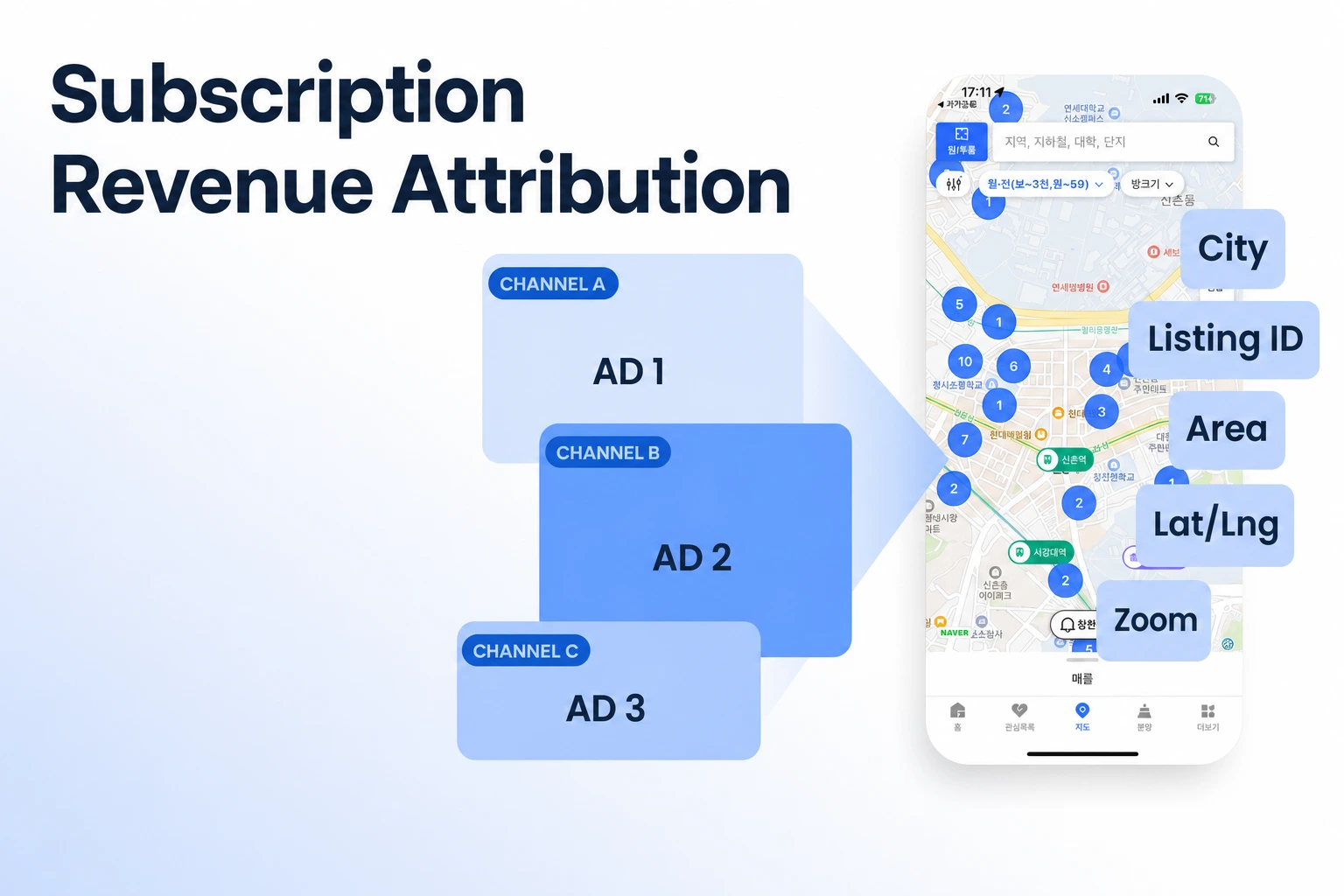
Airbridge Core fits a small subscription-app team that wants campaign spend connected to subscription revenue across Google, Meta, TikTok, and Apple. That makes it a practical option when your paid mix includes these channels and you want to evaluate subscriber outcomes alongside campaign acquisition.
After the billing platform is connected, trial conversions, first payments, renewals, and refunds in RevenueCat, Adapty, or Superwall tie back to the campaign that brought the user in. The workflow can therefore fit teams that already use a subscription platform rather than requiring them to replace it.
For a subscription app, those events describe different points in the customer journey. A trial start shows that a campaign brought someone into the product; a first payment shows a paid conversion; a renewal and refund add later subscription outcomes to the campaign view. Connecting those events lets a founder compare campaigns against more than the install alone.
Airbridge Core offers a 30-day free trial, then $40+/mo, with 500K data points included and no annual contract. That entry point gives a small team a concrete price and trial period to evaluate while it tests whether the channel and subscription-event scope matches its needs.
Core is a strong fit for the specific job of connecting spend to subscription outcomes across the four listed channels, especially when you also want iOS SKAN reporting in the same measurement workflow.
A small-team checklist before choosing
Use this checklist before adding an SDK, changing campaign objectives, or signing up for a measurement plan:
- Write down the campaign goal and eligible route. Write down each ad platform, operating system, and campaign objective. Compare that campaign’s eligibility path with the platform routes in the table, including any approved-partner condition.
- Name the event you need. Decide whether the campaign needs installs, first opens, trial starts, first payments, renewals, or refunds. Choose the event you need, such as an install, trial start, first payment, renewal, or refund, then identify how your app and billing platform record it.
- Choose the reporting boundary. If a single network’s dashboard answers the question, a native route may be sufficient. If multiple networks need a common basis for comparing attributed installs or subscriber revenue, plan for an MMP view.
- Map integration work. Note whether the route needs an app SDK, a server-to-server event connection, a platform account link, or more than one of these. Assign an owner for event testing and future app releases.
- Align reporting rules. Set the same date range, conversion window, event definition, and conversion count when comparing dashboards. Check time zones and allow partner data to process before treating a difference as a campaign result.
- Price the full route. Compare subscription price, included usage, extra-volume charges, contract term, and engineering hours. Treat app implementation and ongoing event upkeep as real parts of the choice.
- Choose an iOS measurement goal. Use SKAdNetwork or AdAttributionKit for privacy-preserving campaign signals, and decide separately whether you need a cross-network view of subscription events.
For a team buying across Google, Meta, TikTok, and Apple, Airbridge Core is one option to compare because its published scope connects those campaigns to subscription revenue and its Core terms include a 30-day free trial, then $40+/mo. For a single-network workflow, the platform’s supported native route can be the simpler fit when it answers the campaign question and satisfies the campaign requirements.
FAQ
What are the best mobile attribution platforms?
The best fit is the route that meets the campaign’s official eligibility rules and answers your measurement question. A native platform route suits a platform-specific view; an MMP suits a shared view across networks. Airbridge Core is worth considering for teams measuring Google, Meta, TikTok, and Apple campaigns against subscription revenue, with a 30-day free trial, then $40+/mo.
Can a Meta SDK replace an MMP?
No, not when you need one attribution view across multiple ad networks. No, not if you need cross-network credit. AppsFlyer’s Meta guide also says Meta’s SDK can run alongside an MMP SDK and can support Facebook Login.
Does SKAdNetwork replace an MMP?
No, they answer different measurement needs. No. Apple’s SKAdNetwork documentation says signed postbacks may include network and app values when they meet its privacy threshold; Airbridge Core separately includes SKAN and subscription-revenue reporting.
Get Started Free
See how these criteria hold up on the real thing.
Related reading