AdAttributionKit vs. SKAdNetwork: What Changes for Subscription App Attribution
Compare iOS attribution frameworks, their marketplace and re-engagement coverage, interoperability, and how Airbridge reports subscription revenue and overlap.
Key Takeaway
- SKAdNetwork and AdAttributionKit both match iOS ad impressions to installs on-device without user-level identifiers, while AdAttributionKit expands measurement to alternative app marketplaces and re-engagement.
- Both frameworks are designed to interoperate so that ads rendered with SKAdNetwork parameters can still convert and generate postbacks alongside AdAttributionKit.
- You can manage SKAN 4.0 conversion values, view SKAN overlap, and aggregate subscription revenue on the Airbridge Core Plan.
Apple now runs two install-attribution frameworks side by side. SKAdNetwork still reports iOS ad installs, while AdAttributionKit adds re-engagement and alternative app marketplaces, and Apple documents how the two interoperate. For a small subscription team the practical question is narrower: which postbacks arrive, from which ad networks, and how do you avoid counting the same paid subscriber twice?
On-Device iOS Attribution Roles
SKAdNetwork (SKAN) is a privacy-preserving framework that matches ad views and taps to app installs directly on the user's iOS device, sending cryptographic, anonymized postbacks without exposing the IDFA. Once the user launches your app and triggers early funnel events, the operating system waits through a randomized timer before sending an aggregated conversion payload to the winning ad network.
AdAttributionKit builds on this same on-device, cryptographically signed architecture for iOS 17.4 and later. It extends attribution to alternative app marketplaces where eligible, supports custom-rendered ads, and, from iOS 18, adds re-engagement measurement for users who already have your app installed. For a subscription app founder, both frameworks serve the same core job: letting the operating system verify which campaign drove an install and early trial behavior when users opt out of ATT tracking.
How the Frameworks Interoperate
You do not need to rip out your existing SKAdNetwork implementation to accommodate AdAttributionKit. The two frameworks are engineered to interoperate at the operating-system level across impressions, conversions, and postbacks.
Apple says to call the update API of the framework your ad network uses, or both APIs if you work with both. When an app calls the SKAdNetwork update APIs, SKAdNetwork mirrors the call into AdAttributionKit. When both frameworks register competing ad interactions before an install, iOS evaluates the impressions together to determine a single winning attribution rather than firing duplicate winning postbacks for the same conversion event.
Ad Network Postback Changes
Even when iOS handles on-device matching, the resulting postback goes to the ad network first. For your attribution dashboard to show those conversions, an ad network should forward SKAdNetwork postbacks to Airbridge using the Airbridge SKAN Postback API.
Under SKAN 4.0, iOS can send up to three postbacks per install, and your app event data is represented by fine and coarse conversion values. Instead of getting a single snapshot within the first couple of days, those three postbacks span longer measurement windows, giving subscription apps visibility into whether a user only opened the app on day one or stayed active through a trial period. Fine conversion values (64 values from 0 to 63) are delivered only in the first postback when crowd anonymity thresholds are met, while coarse values (low, medium, high) can appear across all three postbacks when traffic volume is lower.
Subscription App Setup Checks
When you only spend a few thousand dollars a month on paid acquisition, each campaign generates a small number of daily installs, which means your SKAN postbacks frequently fall into coarse conversion tiers. Fine and coarse conversion values can be configured per postback to measure a wide range of user behavior. If you want to track whether users keep coming back, note that retention measures whether a user used the app during set periods, and is available only when configuring coarse conversion values.
To tie those early retention and conversion signals to actual cash flow, your billing stack needs to feed revenue events into your attribution tool. The Core Plan includes subscription revenue aggregation and up to 2 third-party integrations, such as RevenueCat, Adapty, or Superwall.
Side-by-Side MMP Reporting
When a user consents to ATT, your MMP can attribute the install via IDFA while iOS simultaneously records a SKAdNetwork conversion for that same user. Without deduplication, adding your SKAN installs to your MMP attributed installs inflates your paid acquisition numbers.
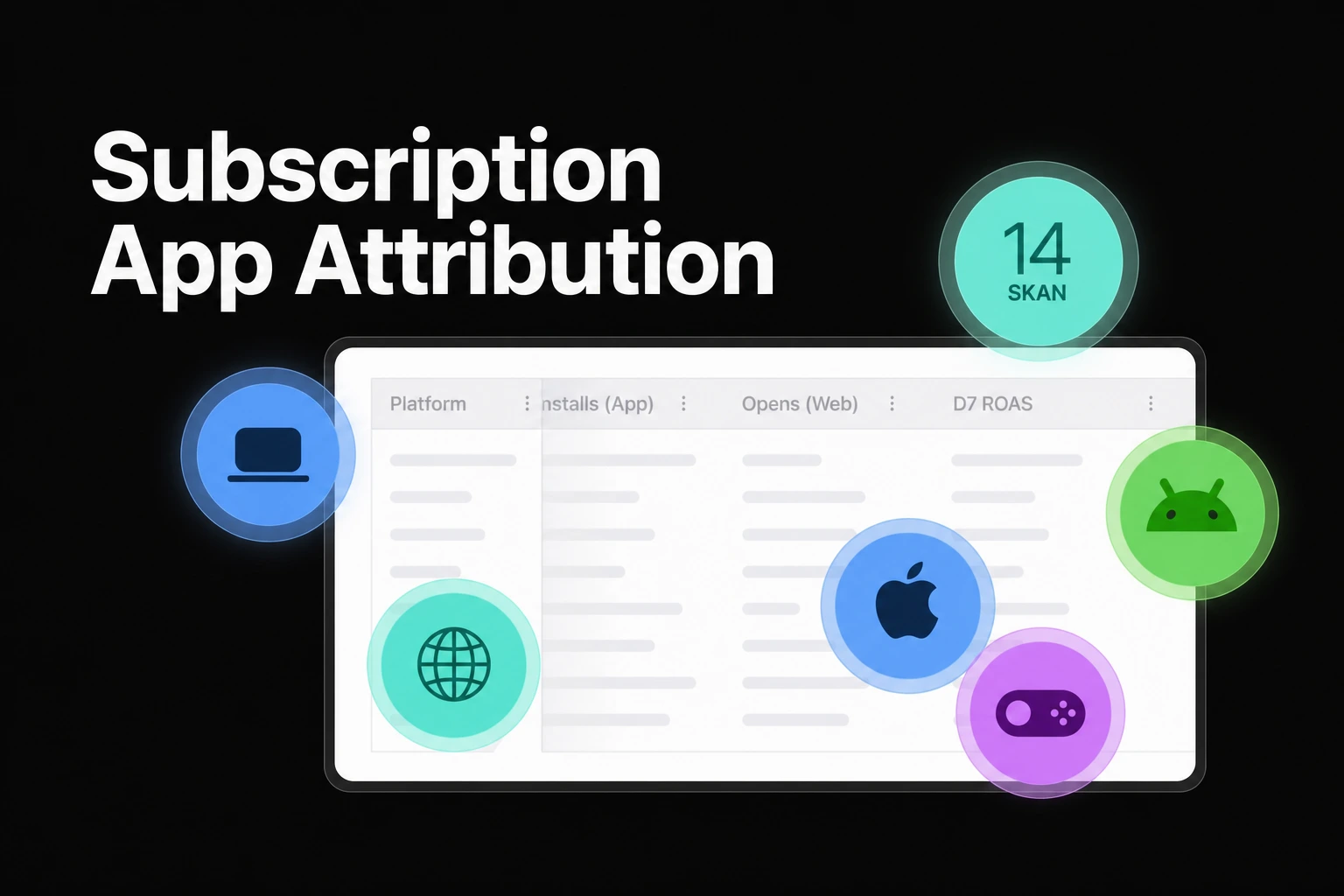
On the Airbridge Core Plan, you get SKAN 4.0 reporting, the conversion value manager, and SKAN overlap analysis included alongside Predictive LTV, Revenue, Funnel, Retention, and Cohort reports, and cost and ad spend aggregation. In your SKAN 4.0 reports, SKAN Overlap Installs (App) measures SKAN installs that are also attributed by Airbridge using IDFA. Right beside it, SKAN Dedup Installs (App) measures SKAN installs attributed only via SKAN.
The “SKAN Is Also Attributed by Airbridge (IDFA)” GroupBy returns “true” for installs attributed by SKAN and Airbridge using IDFA, “false” for installs attributed by SKAN only, and no value if Attribution Overlap is absent from the conversion-value mapping or the install is attributed to Meta Business.
FAQS
FAQ
How much does the Airbridge Core Plan cost after the free trial?
As of November 2026, the Airbridge Core Plan starts with a 30-day free trial and then costs $40+/mo, which includes 500,000 data points per month and $0.0001 per additional data point, with no annual contract and the ability to cancel anytime.
How do SKAN postbacks reach Airbridge from an ad network?
An ad network forwards SKAdNetwork postbacks to Airbridge through the Airbridge SKAN Postback API.
Get Started Free
See how these criteria hold up on the real thing.